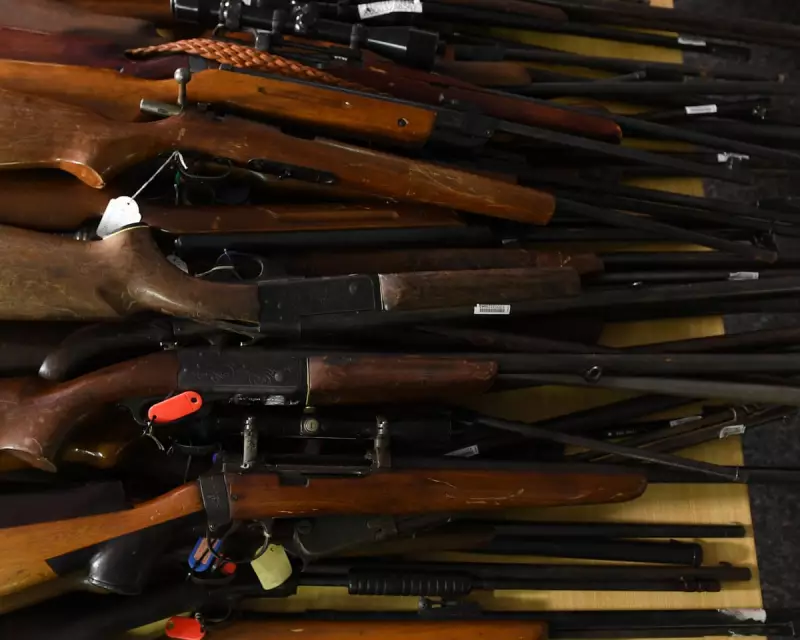
Prime Minister Anthony Albanese is set to urge national cabinet to finalise the details of a federal gun buyback program, a scheme projected to cost hundreds of millions of dollars. This push comes despite significant opposition from Queensland and the Northern Territory, who have refused to endorse the initiative.
State Resistance and Funding Concerns
The meeting of national cabinet, primarily focused on health and disability funding, will also address the urgent rollout of the buyback. The program was established through laws hastily passed by parliament last week in response to the Bondi beach terror attack. The federal government has described the cost as significant, with plans to split it evenly with state governments on a 50:50 basis.
Queensland Premier David Crisafulli has publicly rejected the need for a gun buyback, emphasising that his state's priority remains combating antisemitism and hatred. He argued that focusing on preventing criminals and terrorists from accessing firearms would garner broader public support. Similarly, Northern Territory Chief Minister Lia Finocchiaro has demanded full federal funding for any buyback and opposed new restrictions on firearm ownership limits.

Varied State Responses and Legal Frameworks
Other states have shown mixed reactions. South Australia supports the buyback in principle but highlights unresolved issues such as costs and whether ammunition will be included. The state prides itself on having robust firearms laws, including rigorous assessments and citizenship requirements for licences, which it believes could serve as a national model.
In Tasmania, Police Minister Felix Ellis expressed concerns over the estimated cost of more than $20 million for the state alone, stopping short of endorsing the national scheme. He emphasised support for evidence-based measures like improved intelligence sharing and a National Firearms Register to enhance community safety.
Implementation and Historical Context
Under the new federal laws, state governments will be responsible for collecting and processing surrendered firearms, while the Australian Federal Police is expected to lead the destruction of these weapons. The buyback is scheduled to conclude by January 2028, though no final cost has been released. For context, the Howard government's buyback after the Port Arthur massacre in 1996 destroyed over 650,000 firearms at a cost of $371 million, equivalent to about $770 million in today's currency.
Victoria has announced a rapid review of its gun laws, led by former top police officer Ken Lay, to consider limits on individual firearm ownership. The state has nearly 975,000 registered guns, and Lay is due to report findings in March. Meanwhile, Western Australia recently completed its own $64 million buyback, resulting in over 61,000 firearms surrendered.
Opposition from Stakeholders and Cost Estimates
The plan faces opposition from sporting shooters and farmers, with advocacy group Firearm Owners United estimating the total bill could reach $1.6 billion, rising to $2 billion when storage, transport, and destruction costs are included. The group advocates for market-value compensation to avoid inequity among lawful owners, warning that discounted offers could undermine the scheme's effectiveness.
With over 4 million registered guns in Australia today, the success of this buyback hinges on swift agreement and cooperation between federal and state governments, balancing public safety concerns with practical and financial considerations.