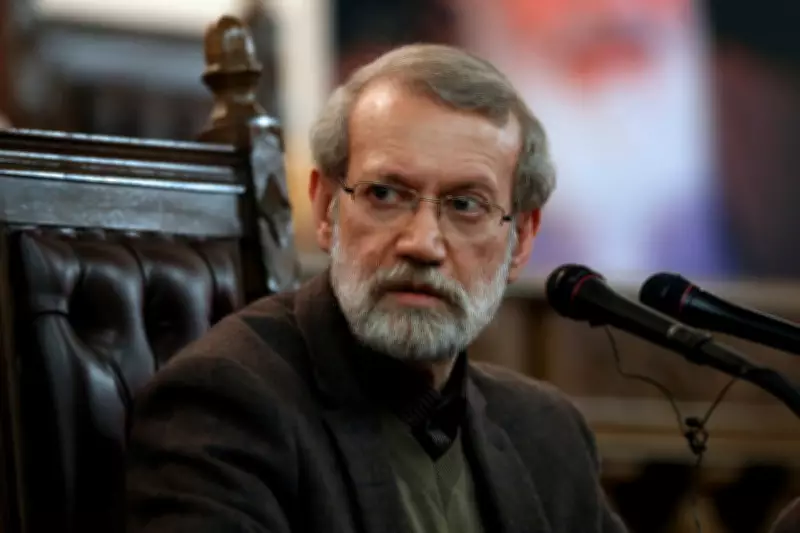
Ali Larijani's Fatal Strike: A Guardian Interview Reveals His Western Hostility Fears
Ali Larijani, the former speaker of Iran's parliament, was killed in an apparently targeted Israeli airstrike, according to recent reports. This tragic event has brought renewed attention to a 2006 Guardian interview, where Larijani expressed his unwavering conviction that Western powers were determined to destroy Iran's revolutionary regime. His death now serves as a grim validation of those long-held suspicions.
A Revealing Moment of Clarity
In June 2006, Larijani, then serving as secretary of Iran's supreme national security council, engaged in tense negotiations with the West over Iran's nuclear program. During an interview with three Guardian journalists, he became animated when questioned about the sincerity of Western concerns regarding uranium enrichment. "Sir, I think you know the answer to that question," he stated, fixing a clear-eyed gaze on the reporter. "If it was not the nuclear matter, they would have come up with something else … the pressure they are putting us under is reason enough for us to be suspicious." This moment offered a rare glimpse into the mindset of a man often perceived as inscrutable.
Prophetic Warnings and Personal Encounters
The interview has since taken on an eerie prophetic quality. Larijani warned that "the price of oil will skyrocket" in the event of conflict and discussed the potential closure of the Strait of Hormuz. Beyond these forebodings, the encounter included a personal touch: at the end, the reporter thanked Larijani in Farsi, prompting a warm smile, though its meaning remained ambiguous. This was not the first interaction; earlier, during the 2005 presidential election campaign, Larijani had appeared as a relatively colourless figure, overshadowed by the volatile Mahmoud Ahmadinejad, who ultimately won the election.

Internal Struggles and Loyalty to the Regime
As national security supremo under Ahmadinejad, Larijani often clashed with the president's provocative rhetoric on nuclear issues, viewing it as an obstacle to reaching a security accord with the West. He attempted to resign multiple times, finally succeeding in October 2007, a move interpreted as Ayatollah Ali Khamenei siding with Ahmadinejad. Despite this, Larijani remained a loyal figure within the establishment, later becoming parliament speaker and staying within Khamenei's orbit, even when his views diverged, such as his reported opposition to supporting Bashar al-Assad in Syria.
Political Ambitions and Family Ties
Larijani made two further attempts to run for the presidency, but his candidacy was rejected by the guardian council, a clerical vetting body. Analysts speculated that this rejection might have been due to his daughter living in the US and nephews in the UK and Canada. Ironically, opposition activists highlighted these Western connections during Iran's recent protest movements, as Larijani's star rose again under Khamenei's directive to crush the protests with ruthless efficiency.
Legacy and Unanswered Questions
Reports suggest that Larijani opposed the potential succession of Khamenei's son, Mojtaba, as supreme leader, favoring a more moderate candidate to ease tensions with Iranians. His death has rendered such discussions moot, but his long-ago premonition of Western pursuit of regime change remains a poignant part of his legacy. The Guardian interview stands as a testament to his clear-eyed, if fatalistic, worldview, now underscored by the lethal outcome of his life.