

Australia's Submarine Fleet at Risk if Aukus Deal Unravels
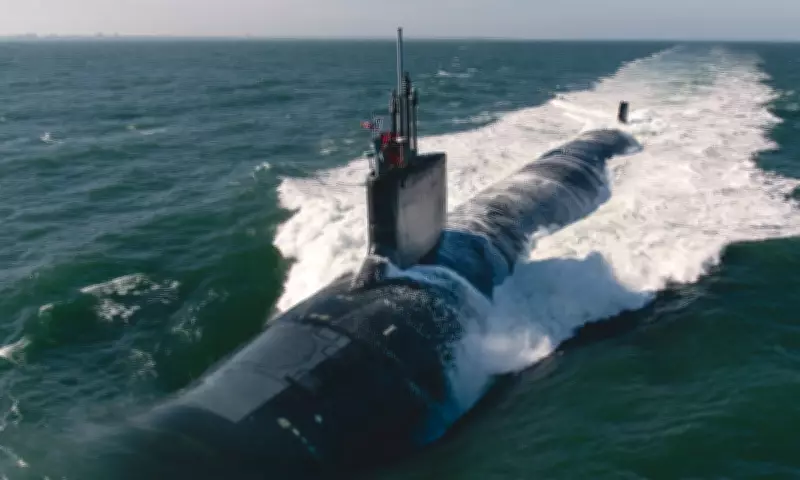
A senior Australian defence official has issued a stark warning that the nation could be left without any operational submarines if it walks away from the controversial Aukus security pact with the United States and United Kingdom. The caution comes amid growing scrutiny over the $368 billion agreement to acquire eight nuclear-powered submarines, with concerns mounting about delivery timelines and industrial capacity in partner nations.
No Alternative Plan as Defence Focuses Solely on Aukus
Defence department deputy secretary Hugh Jeffrey told a Sovereignty and Security Forum in Canberra that Australia has no publicly acknowledged "Plan B" should the promised Virginia-class and subsequent Aukus-class submarines fail to materialize under Australian command. "Defence has been directed to pursue Aukus and we are pursuing Aukus and that's our plan," Jeffrey stated, declining to speculate about alternatives.
The official's comments came in response to pointed questioning from former prime minister Malcolm Turnbull, who asked what Australia would do if the promised submarines never arrive. "What is the Plan B if we end up with no new subs and we're left with the creaking hulls of the Collins?" Turnbull inquired, referring to Australia's ageing conventionally powered Collins-class submarines whose operational lives have already been extended beyond original forecasts.

Billions Committed Without Guarantees
Australia has already transferred more than $2 billion to the United States and United Kingdom as part of a $9 billion commitment to boost their submarine industrial capacities, despite having no guarantees that vessels will actually be delivered. The massive expenditure has drawn intense criticism over the deal's opacity and concerns about lagging shipbuilding rates in both partner countries.
Retired rear admiral Peter Briggs told the same forum that neither the United States nor United Kingdom could deliver submarines on schedule and suggested Australia should abandon Aukus entirely. Jeffrey countered this position by noting this represents Australia's fourth attempt since the 1980s to replace its submarine fleet, with previous efforts failing due to domestic political interference.
Political Controversy Surrounds Submarine Program
Turnbull, whose own government had negotiated a conventionally powered submarine deal with French manufacturer Naval Group before it was cancelled by the subsequent Morrison administration in favor of Aukus, has been a consistent critic of the nuclear submarine agreement. He highlighted restrictive American legislation that prevents submarine sales if they would "degrade the United States undersea capabilities" and pointed to consistently slow shipbuilding rates in the United States.
Jeffrey emphasized the need to move beyond political controversy surrounding defence capabilities. "If you really want to be in a position where we have no submarines then 'turn back'," he told critics. "I do think, speaking as an apolitical public servant, we need to get out of this relentless politicisation of defence capabilities."
Strategic Implications of Submarine Gap
The potential submarine capability gap raises significant strategic concerns for Australia's national security posture in the Asia-Pacific region. Without operational submarines, Australia would face diminished maritime surveillance capabilities and reduced deterrence capacity in contested waters.
Jeffrey maintained that discussing alternatives to Aukus falls outside his responsibilities as a public servant. "It's not my job as a public servant to talk about 'Plan Bs', that's the prerogative of government," he stated, reinforcing the defence department's singular focus on implementing the current Aukus agreement despite mounting concerns about its viability and timeline.






