Panic Sweeps Beirut as Israeli Evacuation Order Ignites War Fears
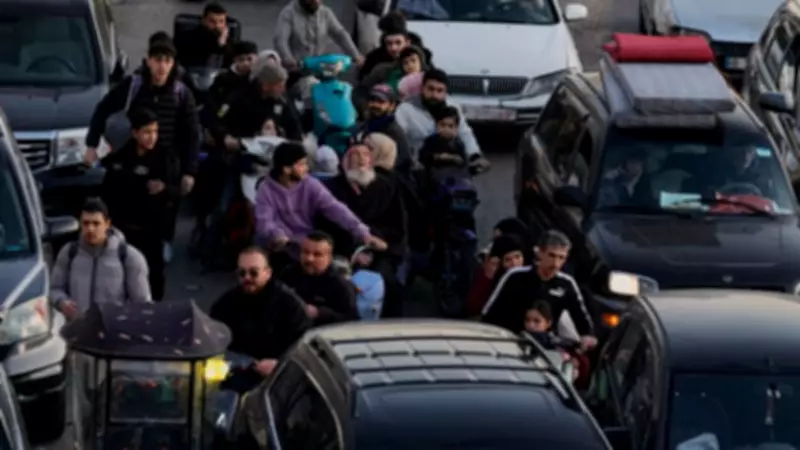
In a scene of chaos and desperation, the streets of Beirut were gripped by panic as hundreds of thousands of residents fled their homes following an Israeli military evacuation order. The directive, issued for several districts in the city's southern suburbs, has sparked widespread fear of an impending all-out war, with rhetoric from Israeli officials amplifying the anxiety.
Mass Exodus from the Lebanese Capital
News of the evacuation spread rapidly, leading to a frantic exodus from the capital. Eyewitnesses reported residents cramming into cars or attempting to leave on foot, carrying whatever belongings they could manage. The Israeli military's order targeted four separate districts, prompting an estimated half a million people or more to take to the streets, united by a single aim: to escape Beirut as quickly as possible.
The fear among the populace is palpable and self-evident, driven by concerns that Israeli planes and drones could obliterate their homes. One man preparing to flee with his family on a moped expressed the prevailing sentiment, stating, "The whole place is under threat; it seems they're going to strike, we've got to pick up our family and flee." His wife added, "With all these threats and strikes, it's so dangerous, it is not safe at all."

Inflammatory Rhetoric Amplifies Tensions
The anxiety in Beirut has been further heightened by the words of far-right Israeli cabinet minister Bezalal Smotrich, who declared that the Beirut suburb of Dahiya would resemble the decimated city of Khan Younis in Gaza. "You wanted to bring hell on us, you brought hell on yourselves. Dahiyah will look like Khan Younis. Our citizens of the north will live quietly, in peace and in security," he asserted.
For many in Lebanon, it is clear that Israel is now dictating the rules of engagement. Residents in southern Lebanon have also been ordered to leave their homes and head north beyond the Litani River, with Israeli air campaigns already underway in coastal cities like Tyre. In Tyre, a bomb site revealed a destroyed power station, with a giant diesel tank punctured and a solar panel tower collapsed, leaving the city without electricity and reeking of smoke.
Residents Trapped by Circumstances
Despite the dangers, some residents have chosen to stay, constrained by financial hardships. Hussein Chehadeh, a resident in the south, explained his predicament: he has "no money" and faces the pressure of paying for children, petrol, houses, and rent. "Our problem here in the south," he said, "we have nowhere to go."
This decision puts Chehadeh and many others at significant risk, as exclusive footage shows the Israel Defence Forces (IDF) taking up positions in the southern Lebanese hills. Lieutenant General Eyal Zamir, Israel's military chief of staff, indicated a willingness to escalate the conflict, stating, "We are striking forcefully, deeper inside Lebanon, and we will strengthen control in the south. We will not stop until Hezbollah is disarmed."
Escalation Towards All-Out War
The situation threatens to morph into a full-scale war, with the potential to become a catastrophic contest that could engulf the entire region. As panic continues to spread and evacuation efforts intensify, the people of Beirut and southern Lebanon face an uncertain future, caught in the crossfire of escalating military actions and inflammatory political rhetoric.