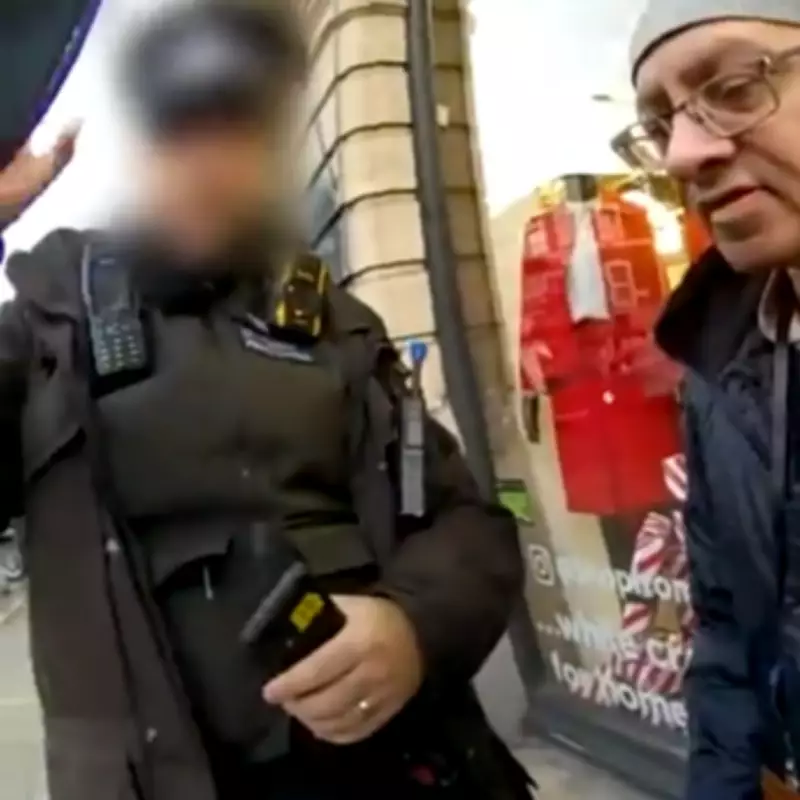
A child sex offender who had been evading police capture was successfully apprehended on a busy London street thanks to the Metropolitan Police's advanced Live Facial Recognition (LFR) technology. Mohammed Patel, a 61-year-old resident of Stoke Newington in Hackney, was identified and arrested on Kingsland High Street in Dalston after the system flagged him as a wanted individual.
How the Technology Led to the Arrest
The arrest occurred on December 19, 2025, when a police van equipped with LFR cameras scanned the area and matched Patel's face against a watchlist of offenders wanted by authorities. Officers were immediately alerted to the positive match, leading to his detention on the street. Dramatic video footage captured the moment police accosted Patel after he was recognised by the sophisticated surveillance system.
Details of the Offences and Court Proceedings
Patel had previously pleaded guilty to serious child sex offences, including engaging in sexual communication with a child and attempting to meet a girl under the age of 16 following grooming. The crimes took place between March and August 2020, when Patel communicated with a 12-year-old girl in an online chatroom, making sexually explicit comments and inquiring about her clothing.

Following a police investigation, he was charged on May 30, 2025, but failed to appear at Highbury Corner Magistrates' Court on June 27, 2025. This non-appearance prompted police to list him as wanted, setting the stage for his eventual capture through facial recognition technology.
Sentencing and Official Response
On February 2, 2026, Patel received a 12-month prison sentence, suspended for 12 months, and was placed on the Sex Offenders Register for a decade. Lindsey Chiswick, the Met's lead for facial recognition, emphasised the importance of this technology in enhancing public safety across London.
"The Met is committed to making London safer, using technology to identify offenders that pose a significant risk to our communities," Chiswick stated. "This is a prime example of why the technology is vital. Without it, Patel could have continued to evade police and cause further harm to other victims. LFR is a powerful and game-changing tool, which is helping us to catch dangerous individuals and deliver justice for victims."
How Live Facial Recognition Works
The LFR system operates by capturing live footage of individuals in public spaces and comparing their facial features against a pre-established watchlist of wanted offenders. When a potential match is detected, the system alerts officers, who then make the decision whether to approach and speak with the individual. This process represents a significant advancement in policing methods, allowing for more efficient identification of suspects in crowded urban environments.
Broader Impact and Statistics
Since the beginning of 2024, this innovative technology has contributed to the removal of more than 1,700 offenders from London's streets, including individuals wanted for serious crimes such as rape and acts of serious violence. The successful apprehension of Mohammed Patel serves as a compelling case study in how modern policing tools can enhance community safety and ensure that those who evade justice are brought to account.
The deployment of Live Facial Recognition continues to be a subject of both praise and scrutiny, balancing technological innovation with considerations about privacy and civil liberties. However, cases like Patel's demonstrate its practical effectiveness in tracking down individuals who pose genuine threats to public safety, particularly in a densely populated metropolis like London.