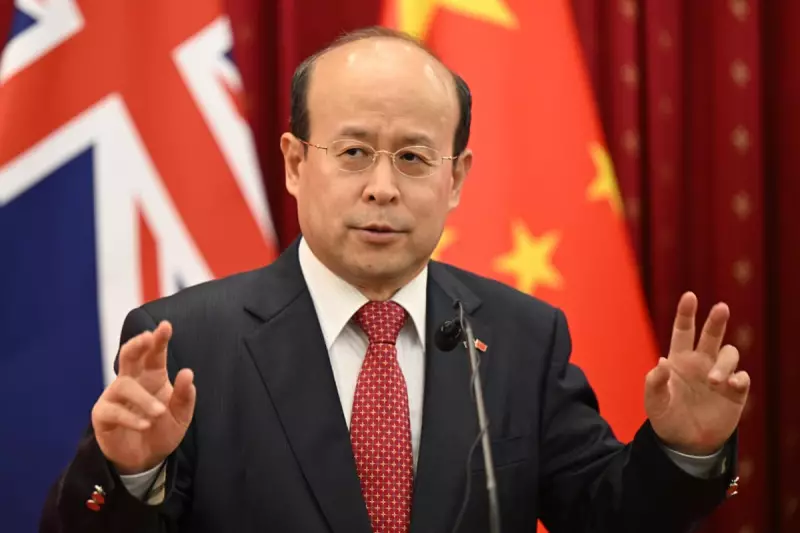
Chinese Ambassador Issues Stern Warning Over Port of Darwin Dispute
China's ambassador to Australia has delivered a forceful warning to the Albanese government, stating that plans to remove Chinese ownership from the Port of Darwin could jeopardise future trade growth and compel Beijing to intervene directly. Ambassador Xiao Qian made these remarks during a press conference at the Chinese embassy in Canberra, addressing growing tensions over the strategic northern Australian port.
Economic Concerns Over Forced Sale Policy
Ambassador Xiao strongly criticised Labor's policy to force Chinese-owned company Landbridge to sell its 99-year lease on the Port of Darwin. The policy emerged from pre-election national security concerns shared by both major Australian political parties, though the government has not yet announced a specific timeline for the forced sale.
"When you're losing money, you lease it to foreign country company, and when it has started making money, you want to take it back. That's not a way to do business," Xiao stated bluntly during his media appearance. He emphasised that Landbridge had invested significantly over the past decade, with the port only recently transitioning from losses to profitability.

Financial Performance and Investment Protection
Landbridge, owned by Chinese billionaire Ye Cheng, originally paid $506 million to secure the 99-year controlling lease in 2015. The company recorded a $9.6 million profit in the last financial year, a remarkable turnaround from a $37 million loss the previous year. This financial improvement has occurred despite initial concerns from Australian security agencies and even former US president Barack Obama when the sale first occurred.
Xiao made clear that while Landbridge would decide its own ongoing role in the port, "the Chinese government has an obligation to protect the legitimate interests of Chinese companies overseas." He warned that any forced measures against the company would trigger protective actions from Beijing.
Broader Trade Implications
The ambassador highlighted the significant economic relationship between the two nations, noting that China remains Australia's largest two-way trading partner. Last financial year, China accounted for 24% of all Australian goods and services trade, representing a substantial $309 billion in economic exchange.
"Should Landbridge be forced to leave that port, I think it might also affect the substantive investment, cooperation and trade between Chinese companies and that part of Australia," Xiao cautioned. "That is not in the interest of Australia either."
Political Context and Security Reviews
Prime Minister Anthony Albanese announced the forced sale plans during a hastily scheduled radio interview in last year's election campaign, claiming Landbridge had not invested sufficiently in port operations. This announcement came despite previous assurances that the government would not cancel the lease.
Interestingly, two separate government reviews of the port sale - commissioned by both the Coalition and Labor governments - concluded there were no national security grounds to terminate the lease. Following the original sale, the Coalition government strengthened the Foreign Investment Review Board's powers to prevent similar situations in future.
Regional Military Activities and Taiwan Stance
During the press conference, Xiao addressed concerns about Chinese People's Liberation Army navy deployments near Australian waters last year. He described incidents where defence tracked Chinese ships in December and a naval task group that circumnavigated Australia in February 2025 as "a coincidence."
The ambassador also reiterated China's position on Taiwan, urging Canberra to prepare for dealing with a "reunified China" and describing opposition to Beijing's control over Taiwan as unacceptable. "The question of Taiwan is not a question the region should compromise or be flexible with," Xiao stated firmly. "There's no room for us to do that."

This diplomatic exchange occurs against a backdrop of ongoing negotiations between Canberra, Beijing, and Landbridge owners regarding the port's future, with discussions continuing since the 2025 election. The situation represents a significant test for Australia-China relations as both nations navigate complex economic and security considerations.