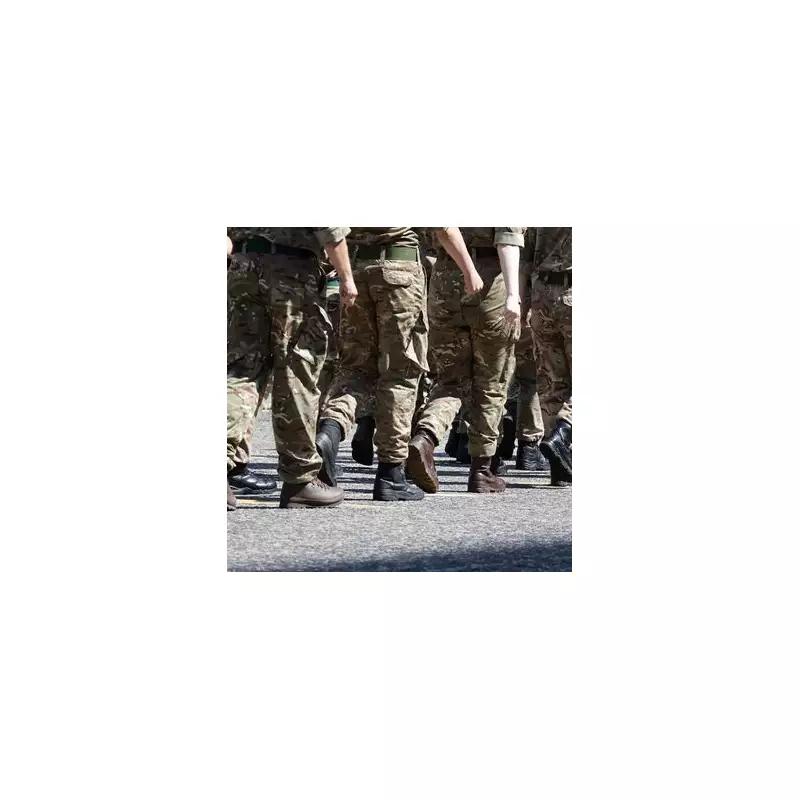
With global tensions remaining high at the start of 2026, a serious debate has ignited over whether Britain might ever need to reintroduce wartime conscription. The discussion follows stark warnings about the UK's shrinking military manpower and the threats of a new era of conflict.
An Army at a Historic Low
The conversation was sparked by comments from Liberal Democrat MP and former Army officer, Mike Martin. He argued that Britain would have no choice but to bring back conscription if a major conventional war with Russia erupted. His concern is rooted in a startling statistic: as of January 2025, the British Army had just 73,847 trained regular personnel.
This figure represents the smallest standing army the UK has maintained since the Napoleonic era. Defence expert and former tank commander Stuart Crawford echoed this, noting the army is at its weakest since the Battle of Waterloo and lacks the numbers for a sustained large-scale conflict.

The Complicated Legacy of National Service
To understand the future, experts are looking to the past. Professor Richard Vinen, a historian at King's College London and author of a key work on post-war National Service, explains the military has a conflicted view of conscripts.
"The Army tends to say conscripts were more trouble than they were worth," Professor Vinen said. "They prefer the idea that the Army is a super-professional force and that these 'half-witted' young men were useless."
However, he points out a telling contradiction: when National Service was finally abolished, the last conscripts were kept on for an extra six months because the Army couldn't manage without them. "In many ways, the Army certainly needed them," Vinen added.
He also highlights how modern, technical warfare requires extensive training, making short-term draftees less useful. Conscription was originally ended after the 1957 Sandys Defence Review, which pivoted strategy towards nuclear deterrence. A post-war baby boom later provided enough volunteers to finally phase out the draft by the early 1960s.
A Changed Society and Modern Threats
Professor Vinen identifies a profound shift in British society that would make conscription today far more challenging. The generation called up in the 1950s had lived through the Blitz and accepted military service as a given. Today's society, he argues, has a much lower tolerance for military casualties.
"There was very little sense that the state 'owed' these families something for being killed. Today, that would be completely different," Vinen explained. "It is much harder for a modern state to be that 'brutal' with young conscripts."
The nature of the threat has also evolved. The focus is no longer solely on Cold War nuclear standoffs but on "hybrid" or limited conflicts involving frontline combat. "This actually makes the situation more alarming for young people," Vinen noted, "because it involves the possibility of soldiers actually fighting on a frontline again."
Former Conservative Defence Minister Tobias Ellwood believes the public is largely unaware of the growing dangers. He suggests an updated national resilience programme, incorporating cyber, AI, and community defence, could be necessary and might gain parliamentary support.
For now, the Ministry of Defence firmly states there are "no plans" for conscription. It is instead promoting voluntary schemes, including a military gap-year trial for under-25s, launching with 150 places in March 2026. Yet, with recruitment struggles persisting and the world appearing increasingly unstable, the question of how Britain would muster sufficient personnel for a future war is becoming impossible to ignore.