Cyprus Bomb Shelter Crisis Exposed by Drone Attack, Officials Admit Ill-Preparedness
Civil defence force officer Valentinos Pangalos has revealed that Cypriots have been living in fear since a recent drone attack, stating bluntly, 'people have felt very scared'. This sentiment echoes across the island as security concerns escalate to levels not seen since the 1974 Turkish invasion.
Emergency Alert at Paphos Airport
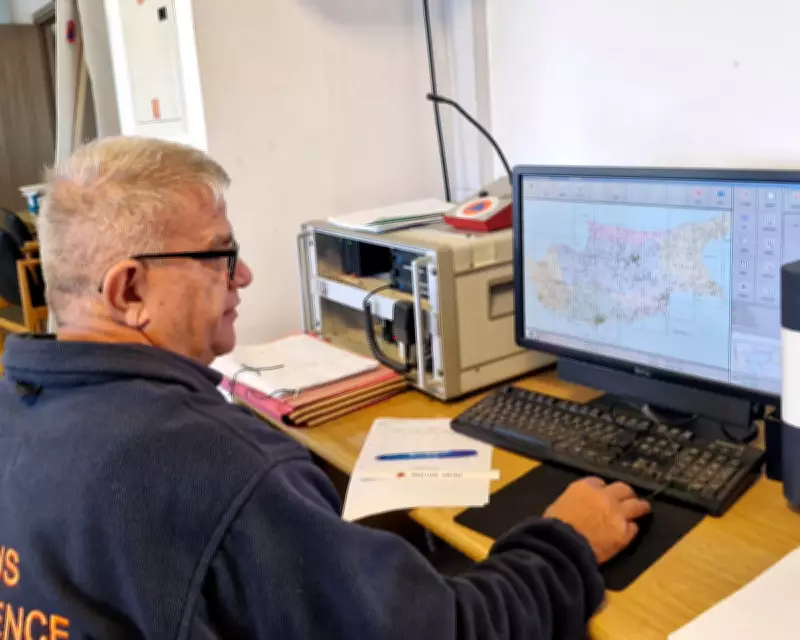
At precisely 12:33 PM on March 2nd, Pangalos received unprecedented orders to activate emergency sirens at Paphos International Airport. A suspicious object, believed to be an explosive-laden drone, was detected heading toward the facility. This came just hours after an Iranian-made Shahed-type drone crashed into a hangar at RAF Akrotiri, forcing immediate airport evacuation.
'In 24 years of service, I'd never received such an abrupt, intense order,' said Pangalos, one of the civil defence force's longest-serving officers. 'But this was only the beginning of our awakening.'

Civil Defence System Overwhelmed
The US-led aerial bombardment of Iran and subsequent retaliatory attacks have placed Cyprus on high alert, with the civil defence force's operations room receiving non-stop calls for days. Initial reports suggest additional attempted drone strikes from Lebanon, located merely 150 miles away.
Pangalos, now working extended shifts at the force's dilapidated Nicosia headquarters, described elderly Cypriots—those with traumatic memories of the 1974 invasion and refugee displacement—as particularly vocal in their fears. 'We receive calls at all hours asking about nearest refuges and emergency procedures,' he admitted. 'Unfortunately, we're severely understaffed to handle this volume.'
Shelter Shortage Revealed
Civil defence chief officer Maria Papa conceded that the emergency caught Cypriot authorities completely unprepared. 'This security crisis has exposed just how ill-prepared we are,' she sighed, noting that improvement is urgently needed across shelters, staffing, and infrastructure.
Residents checking pinboard lists of neighborhood refuges are discovering many are merely pokey garages or dilapidated cellars in unkempt buildings. Official data reveals approximately 480 of the 2,480 listed bomb shelters are either unsuitable, inaccessible, private, or completely non-existent.
Papa, who is leaving her post within days—reportedly due to the shelter crisis—emphasized that shelter availability has historically been voluntary. 'To date, we've asked people to make shelters available out of the goodness of their heart,' she explained.
Government Response and Public Outcry
President Nikos Christodoulides acknowledged the grim reality, stating bluntly, 'We're not at all happy with the shelter situation.' He revealed that current bunkers can accommodate no more than 45% of Cyprus's 1 million residents, particularly concerning given the island's history of invasion and ongoing Turkish military presence in the north.
In response, Christodoulides announced plans to appoint a national coordinator based on European standards and draft legislation offering construction incentives for apartment block bunkers. Meanwhile, Israeli civil protection experts will visit Cyprus to share best practices from one of the world's toughest civil defence systems.
Public Fear and Political Pressure
The sight of European warships and fighter jets forming a protective cordon around Cyprus—requested by Nicosia—has paradoxically heightened public anxiety about being dragged into wider regional conflicts.
'I won't hide it, I'm scared,' confessed Yiota Andreou, 67, a Nicosia pastry shop owner living near the US embassy. 'Why are all these ships here if we're safe? Governments have turned a blind eye, wasted money, and not cared about us.'

Stefanos Stefanou, leader of the main opposition AKEL party, emphasized the urgent need for 'effective and fast solutions' to improve a civil protection system that failed during both drone alerts and deadly forest fires last summer. 'People fear what they perceive,' he noted, describing panic in Paphos and around British bases where sirens triggered supermarket rushes. 'The time has come for solutions that will allow everyone to feel safe.'
As Cyprus confronts its shelter deficit and civil defence shortcomings, the drone attacks have served as a stark wake-up call about national security preparedness in an increasingly volatile region.