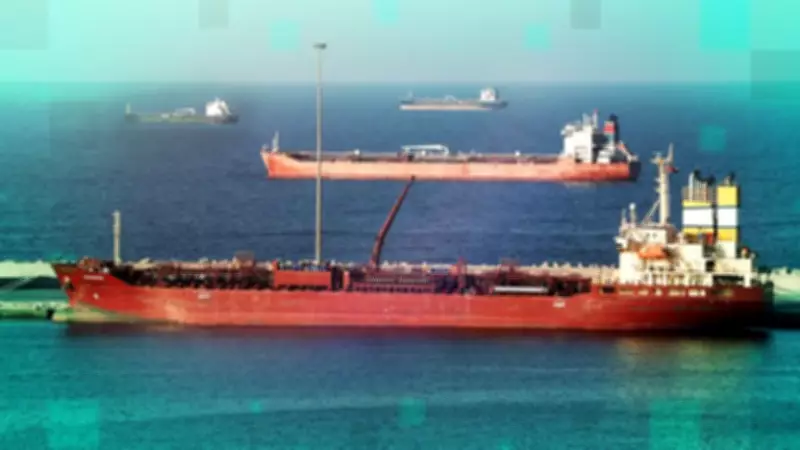
Dark Ships and Shadow Fleets Defy Iran's Closure of Strait of Hormuz
Using advanced tracking data, maritime intelligence, and verified video evidence, Sky News' Data & Forensics team has uncovered the vessels continuing to transit the Strait of Hormuz as Iran intensifies its control over this critical waterway. Iran's efforts to shut the strait have nearly halted shipping through the 24-mile stretch, with only a few ships making crossings in recent days, many of which are linked to shadow fleets or have disabled their tracking systems.
Tracking the Crossings Amid Threats
Richard Meade, editor-in-chief of Lloyd's List Intelligence, noted that while Iran cannot physically block such a large waterway, the threat remains significant, citing Iran's history of using ballistic missiles and drones. The team focused on 13 ships that transited between March 2 and 9, though the actual number is believed to be higher due to ships going dark by turning off tracking. Data from IMF Portwatch indicates that under normal conditions, about 30,000 ships, or 82 per day, pass through the strait annually, but traffic has dramatically decreased.
Many of the identified ships have connections to Iran, China, or Russia, with others from Greece, India, the UAE, and Singapore. For instance, five vessels managed by Greek firm Dynacom have crossed since the conflict escalated, according to Kpler data. U.S. President Donald Trump has encouraged shipowners to continue sailing despite the risks.

Shadow Fleets Dominate and Attacks Escalate
Shadow fleet tankers, which transport sanctioned oil from Iran, Russia, or Venezuela, are leading the current crossings. Of the 13 large oil and gas carriers that crossed from March 2 to 9, eight were classified as part of this shadow fleet. Meanwhile, attacks have surged, with the International Maritime Organisation reporting ten vessels attacked in or near the strait since Iran's blockade began. Incidents include four attacks on March 1, resulting in three deaths and multiple injuries, and daily attacks through March 7.
United Kingdom Maritime Trade Operations documented 14 incidents from February 28 to March 10 in the Arabian Gulf, Strait of Hormuz, and Gulf of Oman. Ships from various flags, including the U.S., Marshall Islands, and Panama, have been affected. For example, on March 4, a Malta-flagged container ship was hit by a projectile near the midpoint, causing a fire and forcing the crew to abandon ship. Sky News verified CCTV footage of another attack that day on the U.S.-managed Sonangol Namibe, which was struck by a drone boat, leading to an oil spill.
GPS Jamming and Global Shipping Impacts
A significant increase in GPS jamming has been observed in the region, with ships appearing to cluster in small areas due to signal interference. Analysts suspect Iran is behind much of this disruption, but it may also involve other actors masking movements or responding to threats. This jamming complicates tracking and safety efforts.
The closure of the Strait of Hormuz has global repercussions for commercial shipping. Major companies like Maersk and Mediterranean Shipping Company, which account for nearly 30% of global container capacity, have suspended Middle East operations. Maersk cited safety concerns for personnel and vessels, with tracking data showing ships like the Maersk Cincinnati rerouting away from the strait. Meade explained that many ships are performing U-turns or alternative operations, leaving those already in the Gulf effectively stranded.
Additional reporting by Joely Santa-Cruz highlights the ongoing risks and adaptations in maritime logistics. The Data & Forensics team combines traditional journalism with open-source analysis to provide transparent, data-driven insights into global events.