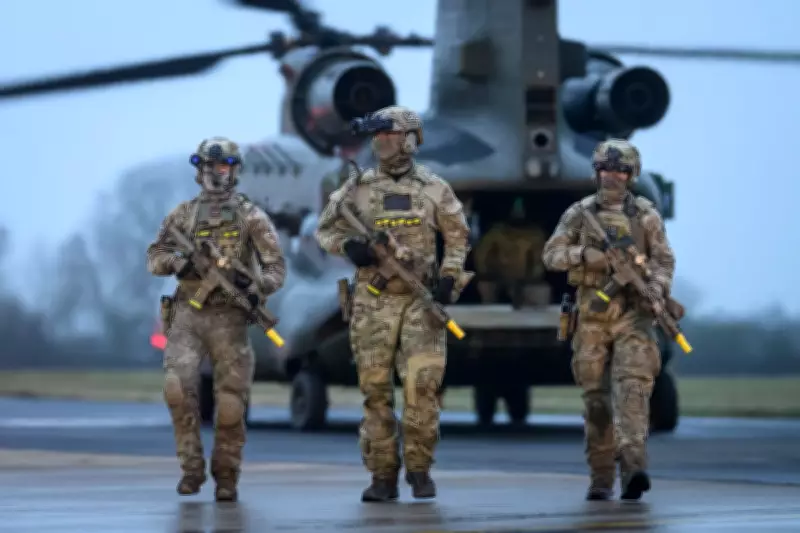
European Defence Stocks Rally as Iran Conflict Escalates Munitions Demand
European defence stocks experienced a significant surge at the beginning of the week, with investors anticipating that the widening conflict in the Middle East will dramatically increase demand for munitions and military hardware. This rally occurred despite broader market declines, highlighting the sector's unique position amid geopolitical tensions.
Major Defence Manufacturers See Substantial Gains
While the European-wide Stoxx 600 index traded 1.3 percent lower, numerous leading weapons manufacturers recorded impressive gains. In the United Kingdom, shares in BAE Systems jumped 5.8 percent, with Babcock rising 1.1 percent and Qinetiq increasing 3.4 percent. Across Europe, Italian manufacturer Leonardo saw its shares climb 4.2 percent, while German companies Rheinmetall and RENK gained 2.0 percent and 3.9 percent respectively. French defence giant Thales also experienced a notable 3.3 percent increase.
"The conflict in the Middle East has further outlined the need for defence budgets to rise as countries around the globe look to rearm as a preventative measure, after a prolonged period of relative defence underinvestment," explained Aarin Chiekrie, an equity analyst at Hargreaves Lansdown. "This has seen shares in many European defence companies rally this morning, especially those with exposure to aircraft, munitions and missiles."

BAE Systems Emerges as Primary Beneficiary
Analysts at JP Morgan identified BAE Systems as the stock "most likely to rally" following the escalation, citing its substantial exposure to the United States market. Approximately 44 percent of the company's sales go to the US, followed by RENK at 25 percent and Leonardo at about 23 percent.
"The current operation may have a higher tempo and require the US to use even more of its THAADs and other interceptors (e.g. Patriot missiles). BAE Systems provides the infrared seeker used in the THAAD guidance system," the analysts noted. THAADs – which stands for Terminal High Altitude Area Defense – represent defensive missiles designed to intercept incoming attacks. Defence experts have indicated that the stockpile of THAADs could become a crucial factor determining the US approach to the ongoing conflict.
According to reports, as many as 150 THAADs were deployed to defend Israel last year, constituting a significant portion of the United States' total inventory. Analysts estimate that fewer than 650 of these systems have been ordered since their operational debut in 2010. JP Morgan calculations suggest that BAE Systems generates approximately $1 million per THAAD system.
Air-Defence Systems Attract Investor Focus
Citi analyst Charles Armitage suggested that companies manufacturing air-defence systems will likely attract the most investor interest as the conflict intensifies. This perspective comes amid escalating military actions across the region.
Over the weekend, President Donald Trump authorized strikes across Iran, resulting in the death of Supreme Leader Ayatollah Khomenei along with several other high-ranking Iranian officials. The United States military has continued bombing sites in Iran alongside Israel, with Trump indicating that US air offensives will persist until "all its objectives" have been achieved.
Retaliatory Strikes and Regional Impact
These attacks have prompted retaliatory strikes from Iran, targeting US bases in Bahrain, Kuwait, and Qatar, alongside cities in Israel and civilian infrastructure throughout the Gulf region. In a significant development, a Saudi Aramco refinery in Saudi Arabia was struck by an Iranian drone, while tankers navigating the Strait of Hormuz have also been targeted.
Approximately 20 percent of all seaborne oil passes through the Strait of Hormuz, but the recent strikes have effectively shuttered this critical maritime passage. Military analysts believe that Iran's retaliation strategy appears designed to be attritional, aiming to exhaust United States defensive capabilities before potentially deploying higher-grade missiles later in the conflict.

The combination of escalating military actions, retaliatory strikes, and strategic positioning has created a perfect storm for defence sector growth, with investors clearly positioning themselves for what many anticipate will be sustained demand for military technology and munitions throughout the coming months.