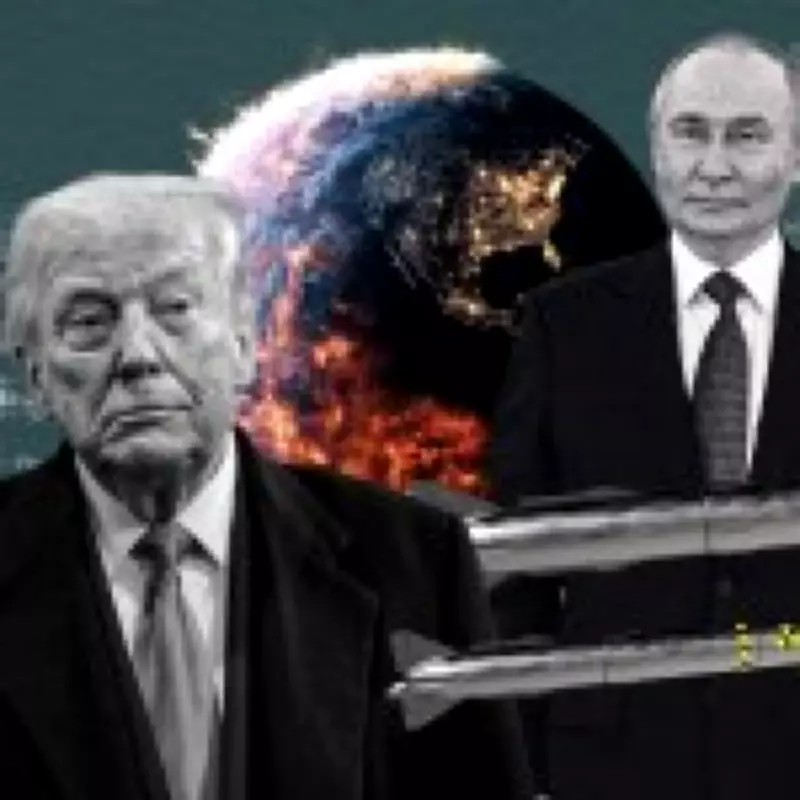
The Doomsday Clock Ticks Closer to Midnight Than Ever Before
As you read these words, humanity stands a mere 85 seconds away from symbolic catastrophe. This week, leading scientific experts have set the Doomsday Clock to its most alarming position in history, reflecting unprecedented concerns about global threats to our survival. The Bulletin of the Atomic Scientists, a nonprofit organisation, announced this stark adjustment, citing wars, accelerating climate change, disruptive technologies, and the rise of authoritarian governments as key factors driving the clock's hands forward.
What Exactly Is the Doomsday Clock?
First, it's crucial to understand that the Doomsday Clock is not a physical timepiece but a powerful metaphor created in 1947. It represents the collective judgment of experts in security, nuclear technology, climate science, and related fields regarding humanity's proximity to self-inflicted global disaster. When the symbolic clock strikes midnight, it signifies that humanity has failed to prevent an apocalyptic scenario, not necessarily instant extinction but a point of irreversible damage.
The Grim Reality of a Post-Midnight World
Should the clock ever reach midnight, what would that mean for the United Kingdom and the world? According to David Orson Newton, a combat veteran and technologist, a post-midnight world marks a dangerous threshold where global damage becomes irreversible and recovery uncertain. 'The institutions, norms, and safeguards that once stabilised civilisation begin to fail,' Newton explains. This could manifest through:

- A nuclear conflict between major powers
- Catastrophic climate events rendering parts of the world uninhabitable
- An AI-facilitated collapse of critical infrastructure like power grids
Newton emphasises that this represents a point of no return, ushering in an era dominated by survival rather than prosperity.
Life in a Post-Midnight United Kingdom
For British citizens, the aftermath would be profoundly transformative. Newton predicts that daily life would acquire an edge of uncertainty unknown to most in contemporary Britain. Regular disruptions to phone signals, internet connectivity, and electricity supplies would become commonplace. The government would likely mandate stockpiling at least three days' worth of food and water, as recommended by doomsday preparedness advocates.
Newton, drawing from his military experience in Afghanistan and Iraq, suggests that national service might be reinstated to address emerging threats. Climate-induced conflicts over water security or mass migration could erupt between nations struggling for survival. 'Our communities would gravitate to a notion of service,' Newton observes. 'From schools to workplaces, service in all its guises would be respected and lauded once again because we will all know someone who either serves or has served.'
Leisure activities like watching Netflix would be routinely interrupted by government public service announcements. 'The relative peace we have enjoyed would come to an end,' Newton warns. 'We would move into a new climate for the UK, metaphorically and literally, one of heightened anxiety, stress, and cost.' Higher taxes would likely be imposed as the government grapples with an increasingly uninhabitable world.
The Climate Perspective: Armageddon on the Horizon
Climate expert Jim NR Dale offers a similarly sobering outlook. Our continued reliance on fossil fuels, which emit planet-warming gases, is gradually altering Earth's delicate balance. Scientists have long warned of hotter summers, more intense storms, rising sea levels, and fiercer wildfires as consequences.
Dale states that a global temperature increase of 3°C above preindustrial levels is 'inevitable' within the coming decades. 'This point in itself is Armageddon,' Dale asserts. 'But if we move by 4°C, then that really is the end.' Such warming could trigger 'water wars' as continents experience increased drying, jeopardising agriculture and livestock farming. 'Hence, an incredibly loud ticktock,' Dale remarks, underscoring the urgency.
Historical Context: How Close Have We Come Before?
The Doomsday Clock has fluctuated over decades, reflecting changing global tensions:

- 2026: 85 seconds to midnight (current)
- 2025: 90 seconds to midnight
- 2023: 90 seconds to midnight
- 2020: 100 seconds to midnight
- 2018: 2 minutes to midnight
- 1991: 17 minutes to midnight (the furthest from midnight)
- 1947: 7 minutes to midnight (when first set)
Why the Clock Advanced in 2026
Several events from 2025 influenced this year's setting:
- The Russia-Ukraine war entered its fourth year, with Russia testing and showcasing nuclear weapons
- The US and Israel targeted Iranian nuclear facilities
- China expanded its nuclear arsenal while North Korea tested missile capable of carrying atomic warheads
- Escalating tensions between nuclear-armed India and Pakistan
- Donald Trump's unveiling of a space-based missile defence system, the 'golden dome'
- Climate change intensifying deadly weather events, including a European heatwave claiming thousands of lives
- Rapid AI advances enabling sophisticated misinformation campaigns
The Doomsday Clock serves as a stark reminder of humanity's precarious position. While not a literal countdown, its movement to 85 seconds to midnight underscores the urgent need for global cooperation to address existential threats before the symbolic hands reach twelve.