

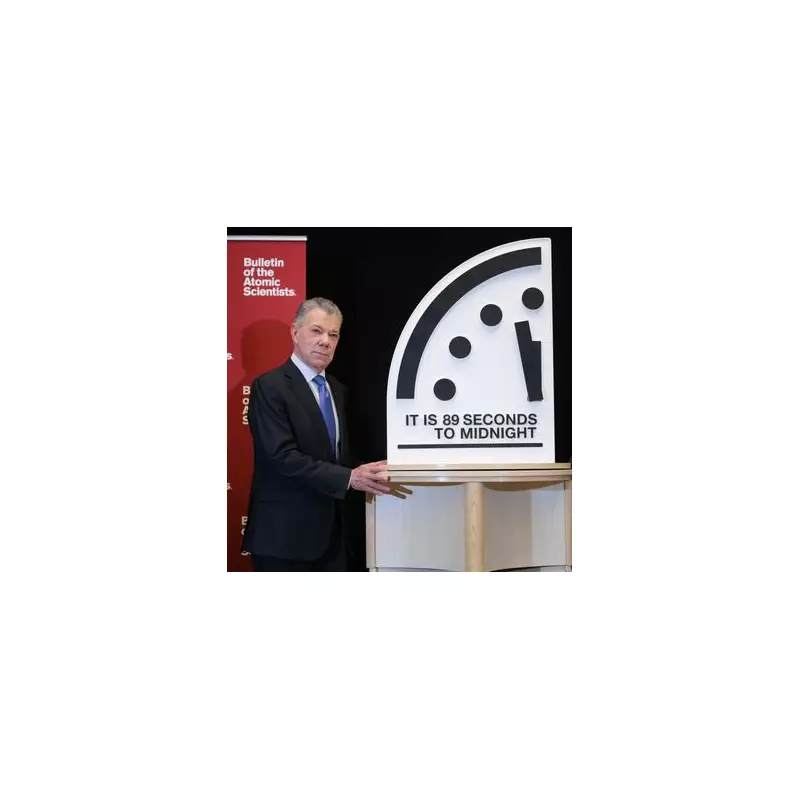
Doomsday Clock Ticks Forward to 85 Seconds to Midnight in 2026 Update
The Bulletin of the Atomic Scientists has announced a sobering update to the symbolic Doomsday Clock, moving it forward to just 85 seconds to midnight. This adjustment, revealed during a live YouTube briefing on Tuesday, January 27, 2026, marks the closest the clock has ever been to the point of global catastrophe since its inception in 1947.
A Symbol of Humanity's Peril
For nearly eight decades, the Doomsday Clock has served as a stark visual metaphor for how close the world stands to disaster, with midnight representing global annihilation. The latest setting reflects what experts describe as an unprecedented proximity to catastrophe, driven by a confluence of escalating threats.
The clock was previously fixed at 89 seconds to midnight before this update. Its hands were initially set at seven minutes to midnight in 1947, and it has fluctuated over the years in response to global events.

Factors Behind the Forward Movement
The decision to advance the clock is attributed to a troubling backdrop of:
- Geopolitical friction, including strained relations between major powers and questions over NATO's stability following political threats.
- Climate fears and environmental crises that continue to worsen.
- A rapidly expanding technological landscape that introduces new risks in bio-security and emerging tech.
Nobel Peace Prize laureate Maria Ressa joined a panel of experts in nuclear security, climate science, bio-risk, and technology to deliver the announcement, highlighting the multidisciplinary nature of the threats.
Historical Context and Fluctuations
The Doomsday Clock has not always moved in one direction. It was last set back in 2010, by one minute, due to improved diplomatic relations and cooperation on nuclear security. The safest setting ever recorded was 17 minutes to midnight in 1991, following the end of the Cold War.
However, since 2015, the trend has been steadily toward midnight. Even at the height of Cold War tensions in 1984, the clock stood at three minutes to midnight, significantly further from disaster than today's setting.
Last year marked a pivotal change when the Bulletin abandoned minutes in favour of seconds, underscoring the acute level of risk. Analysts warn that the world is entering a period of heightened nuclear instability, with global alliances under strain.
While the clock can and has shifted back and forth, its current position serves as a urgent call to action for international cooperation to avert catastrophe.






