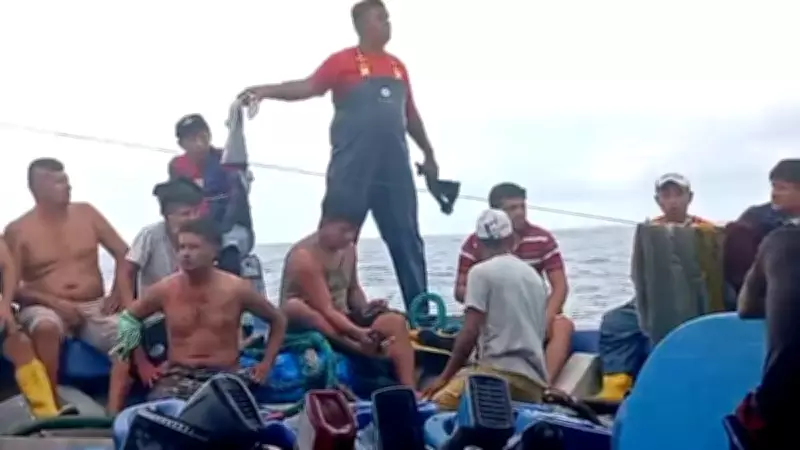
Ecuadorian Fishermen Describe Terror of US Drone Strike and Detention
In a harrowing firsthand account, the crew of the Ecuadorian fishing vessel Don Maca has detailed their ordeal as victims of a US military drone strike and subsequent detention, shedding light on the human cost of Donald Trump's militarized campaign against alleged drug trafficking in South American waters.
The attack occurred on March 26, approximately 200 miles northwest of the Galápagos Islands, as the 20-man crew was finishing a long day of fishing for swordfish and albacore. Jhonny Sebastián Palacios, one of the fishermen, described the moment when an explosion ripped through their boat. "There was a sudden crash – boom! It came from a drone," he said. The blast shattered glass, injured several crew members, and left the vessel stripped bare.
A Terrifying Sequence of Events
According to the crew, a second drone strike followed, knocking out all communications by hitting the antenna. Debris from the explosions raked through the fishermen, with Erick Fabricio Coello Saltos, 27, suffering ruptured eardrums and shrapnel wounds. "I was covered in blood," he recounted. The crew, fearing another strike, huddled at the stern, waving a white shirt as an alarm sounded.

Shortly after, a US-flagged patrol vessel approached, and the fishermen were ordered to board at gunpoint. "They handcuffed us, put hoods over our heads, and pushed us around. We were terrified they were going to kill us," said Palacios, 54. Once on the patrol boat, their phones were confiscated, and photos and videos of the attack were wiped. The US personnel then boarded the Don Maca, stealing the crew's food and beer before setting the fishing boat ablaze.
Detention and Aftermath
The crew was held for several hours on the US vessel before being transferred to a Salvadorian patrol boat. After days at sea, they were taken to a military base in El Salvador for questioning, then handed over to immigration authorities and a UN shelter. Eventually, they were returned to Ecuador and released without charge. Meanwhile, their families conducted a desperate search, frustrated by the lack of official information.
Palacios expressed his relief and anger: "Thank God we're alive! What they did to us was very cruel. They knew we were fishermen. Even the Salvadorian authorities told us things had been handled very badly." The Pentagon and White House did not respond to requests for comment, with US Southern Command stating it had "no information to provide" regarding the incident.
Legal and Human Rights Concerns
Fernando Bastias Robayo, a lawyer with the Human Rights Council, called the attack a serious violation of international law. "A US vessel intercepted them and forced them aboard. Once they were detained, their fishing boat was blown up," he said. "They were arbitrarily hooded and later abandoned on the Salvadorian coast. Any apprehension followed by incommunicado detention constitutes an enforced disappearance." He added that it was "a form of psychological torture" and noted no official response from Ecuadorian or US authorities.
The incident is part of a broader pattern, with at least 178 people killed in US military airstrikes in the Caribbean and Pacific since September, according to the Washington Office on Latin America. Adam Isacson, director for defence oversight at Wola, reported 49 attacks since early September, with five occurring between April 11 and 15 alone. He criticized the US for operating on mere suspicion, stating, "They don't offer anything else. They never identify the drug, almost never identify the armed group they suspect them to be working with, and there is never any evidence of drugs being recovered in the water."
Questioning the War on Drugs
Palacios rejected any suggestion of drug trafficking involvement, arguing that if there had been evidence, they would have been arrested. "If we had been carrying something illegal, we wouldn't be here. We'd be in the United States, in jail," he said. The experience has left him questioning the war on drugs: "All the presidents claim they're fighting drug trafficking and organised crime. But they've never actually done anything. They're just trying to make it look like they are – and instead are mistreating innocent people like us fishermen."

The trauma lingers for the crew. Palacios shared, "I get scared in the middle of the night. I can't sleep well. My ears still hurt. I think that's it for me. I'm done with fishing. Going back out there is impossible. I thought they were going to kill us." Other crew members have declined to speak publicly due to fears of reprisal.
In a related development, lawyers are investigating the disappearance of another Ecuadorian fishing vessel, the Fiorella, missing for three months with eight people onboard. A complaint has been filed with the UN Committee on Enforced Disappearances, highlighting ongoing concerns about US operations in the region.