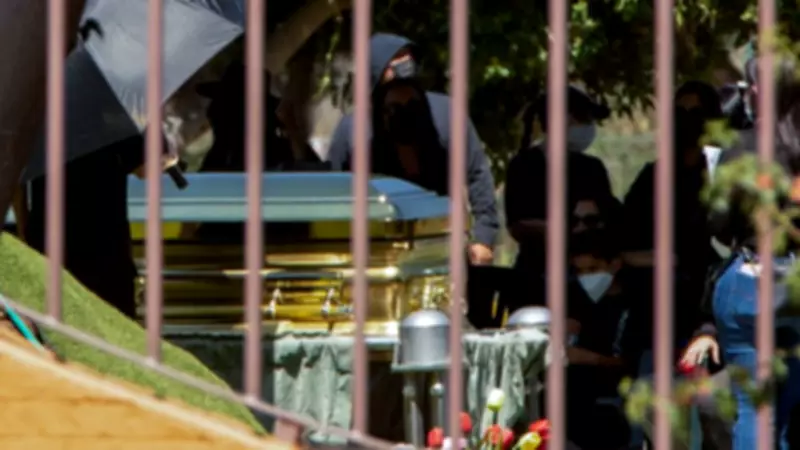
Mexican Drug Lord 'El Mencho' Buried in Golden Casket with Heavy Military Presence
The notorious Mexican drug lord Nemesio Oseguera Cervantes, widely known as 'El Mencho', was laid to rest in a shiny gold coffin during a funeral ceremony in Guadalajara, Mexico, on Monday, March 2, 2026. The event was marked by a significant military presence, with heavily armed soldiers guarding the proceedings as dozens of mourners gathered to pay their respects.
Death in a Shoot-Out and Funeral Details
Cervantes, the 59-year-old leader of the powerful Jalisco New Generation Cartel, was killed during a shoot-out with the Mexican army on February 22, 2026. Government forces raided his mountain compound, using intelligence provided by the United States to track him to his hillside villa hideout. He and two of his bodyguards were wounded in the military operation and later died while being flown to a hospital in Mexico City for treatment. The death certificate indicated that Cervantes suffered bullet wounds to his chest, stomach, and legs.
After an autopsy was performed, his body was returned to his family on Saturday, as confirmed by the Attorney General's Office. The funeral service was held on the outskirts of Guadalajara, Mexico's second-largest city, featuring enormous floral wreaths and a procession accompanied by 'banda' music, popular in the Sinaloa region. Mourners followed the casket, many carrying black umbrellas to block the view, despite it being a sunny day.

Security Measures and Cultural References
Mexican authorities have not officially disclosed the location of Cervantes's burial for security reasons, but an official confirmed the final resting place to The Associated Press. In the days leading up to the funeral, security around a nearby funeral home was intensified, with flower arrangements arriving anonymously. Some of these arrangements were shaped like a rooster, possibly referencing Cervantes's nickname, the 'Lord of the Roosters'.
The burial of drug lords in Mexico has historically been shrouded in mystery and legend. Within hours of Cervantes's death, ballads known as narcocorridos began circulating, celebrating his life and violent end. This tradition reflects the cultural impact of such figures in regions like Sinaloa, where cemeteries are known for luxury crypts and mausoleums for former kingpins, including Ignacio Coronel and Arturo Beltrán Leyva.
Violence and Aftermath
Cervantes's death on February 22 sparked widespread violence across 20 states in Mexico, resulting in more than 70 fatalities. Cartel henchmen responded by blockading highways with burning cars and torching businesses. In Jalisco's popular beach resort of Puerto Vallarta, tourists were advised to shelter in place as chaos ensued.
The military operation that led to Cervantes's killing was launched amid mounting pressure from Washington on Mexico to intensify its offensive against drug gangs. These groups are blamed for producing and smuggling fentanyl into the United States. Earlier in February, the Trump administration designated the Jalisco New Generation Cartel as a foreign terrorist organization, highlighting the international implications of the cartel's activities.
Historical Context of Drug Lord Burials
The burials of Mexican drug lords often involve elements of secrecy and folklore. For instance, Nazario Moreno, leader of the Knights Templar cartel, was famously reported killed in 2010, only to be gunned down in reality during a shoot-out with police in 2014. In another case, Heriberto Lazcano, a leader of the Zetas cartel, had his body stolen in 2012, adding to the enigmatic nature of such events.
This funeral for 'El Mencho' underscores the ongoing challenges in Mexico's fight against drug cartels and the complex cultural and security dynamics surrounding their leaders' legacies.