The Escalation Trap: How the US-Israeli War on Iran Risks Spiraling Out of Control
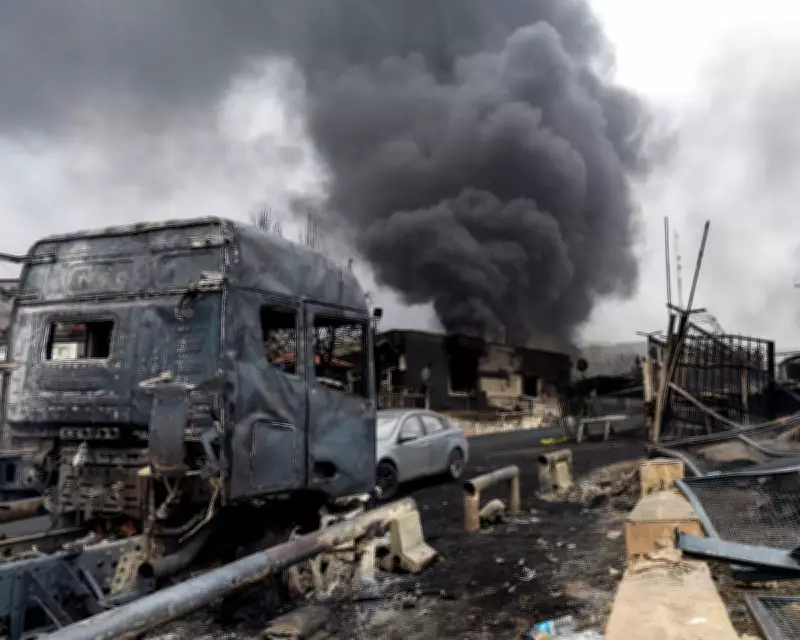
The aftermath of a US-Israeli strike on the Shahran oil depot in Tehran on March 8 has highlighted the deepening conflict, with experts warning of a 'slippery slope of incrementalism' that could lead to a more costly and complex war. As airstrikes intensify and hit more targets, the war has become a proving ground for competing concepts of military escalation, each threatening to trap the involved parties in a protracted struggle.
Competing Strategies of Escalation
On one side, Donald Trump and Benjamin Netanyahu have pursued ill-defined strategic aims, failing to secure Iran's stockpile of highly enriched uranium or fully dismantle the clerical regime, despite killing key leaders like Ali Khamenei in the opening salvo. Tehran, in response, has launched a 'horizontal escalation' long prepared by the regime, designed to widen the conflict geographically with strikes on Gulf states and increase costs to Washington and the global economy, particularly in energy supplies.
Robert Pape, a US historian who has advised multiple administrations, outlines the escalation trap in stages. 'The initial attack was tactically almost 100% successful,' he said, 'but when that doesn't lead to strategic success, you double down, moving up the escalation ladder. We are at stage two, on the cusp of stage three, where far riskier options are contemplated.' The Trump administration's 'illusion of control' based on weapon accuracy has pushed Iran toward its own model of escalation, with broader global impacts.

Iran's Tactics and Global Implications
By targeting Gulf states and shipping in the Strait of Hormuz, Iran has demonstrated its ability to escalate war costs beyond direct military countermeasures. Pape notes that these strikes aim to create wedges between the US and Gulf states, forcing public questioning of why they bear the brunt of a war driven by Israeli policies. Meanwhile, Israel has signaled further escalation, with Defense Minister Israel Katz ordering preparations to expand operations in Lebanon against Hezbollah, threatening to 'take territory' if rocket fire continues.
Robert Malley, a former US envoy to Iran, warns that Trump's psychology may define the conflict's trajectory more than strategic considerations. 'I could imagine escalation reaching levels we wouldn't have contemplated a month ago,' he said, 'including troops on the ground or targeting basic infrastructure. This could trigger Iranian reactions like terrorist attacks, leading to unpredictable responses.' He adds that Trump is comfortable on the 'escalatory ladder,' making de-escalation challenging.
Internal Debates and Future Risks
Jack Watling of the Royal United Services Institute points to internal debates driving the conflict: between US defense professionals and Trump's inner circle, between the US and Israel, and within Iran's political and military echelons. For Iran, retaliation in the Gulf is about re-establishing deterrence, and if missile strikes wane, a longer-term threat to shipping could persist. Robert D Kaplan highlights the risk of 'slippery slope incrementalism,' where a potential civil war in Iran might draw in US special forces, mirroring Vietnam's trajectory into a larger conflict.
The coming days will reveal lessons about US military power in a fragile, multipolar world, as the disparity between tactical successes and strategic aims grows. With both sides entrenched, the escalation trap threatens to draw all parties into a more complex and costly war than initially envisioned.