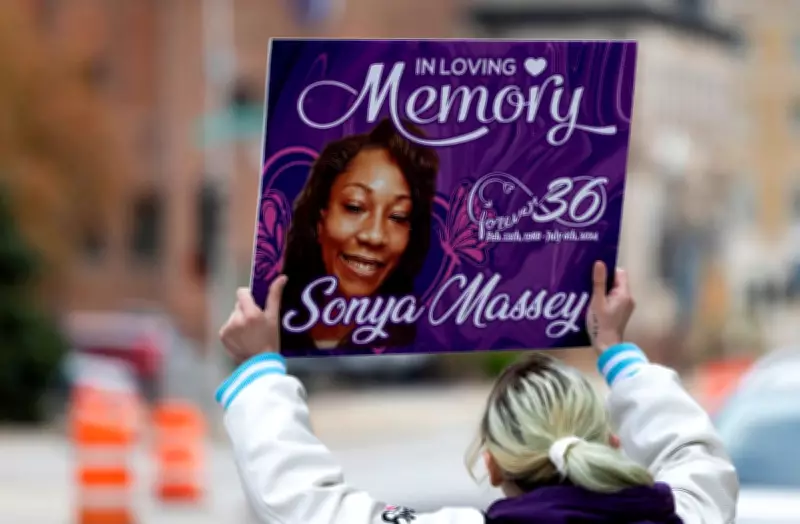
Former Illinois Deputy Sentenced to Maximum 20 Years for Fatal Shooting of Sonya Massey
In a case that has drawn significant national attention, a former Illinois sheriff's deputy has been handed the maximum possible sentence for the fatal shooting of Sonya Massey, a 36-year-old single mother. Sean Grayson, 31, was sentenced on Thursday to 20 years in prison after being convicted of second-degree murder in October 2025.
Emotional Sentencing Hearing Reveals Family Anguish
During the sentencing hearing at the Peoria county courthouse, Grayson offered a tearful apology to Massey's family. "I made a lot of mistakes that night. There were points when I should've acted, and I didn't. I froze," he stated. "I made terrible decisions that night. I'm sorry." He expressed his wish that he could bring Massey back and spare her loved ones the pain he caused.
However, Massey's parents and two children, who had actively lobbied for the maximum sentence, described how their lives had been irrevocably altered by the tragedy. Her children spoke of growing up without a mother, while her mother, Donna Massey, revealed she now lives in fear. "Today, I'm afraid to call the police in fear that I might end up like Sonya," she told the court. When the judge announced the 20-year sentence, the family reacted with a loud cheer of "Yes!" prompting an admonishment from the bench.

Details of the Fatal July 2024 Incident
The incident occurred in the early morning hours of 6 July 2024, when Massey, who struggled with mental health issues, dialled 911 to report a possible prowler outside her Springfield home. Body camera footage showed Grayson and another deputy, Dawson Farley, searching her yard before meeting her at the door. Massey appeared confused and repeatedly said, "Please, God."
After the deputies entered her house, Grayson noticed a pot on the stove and ordered Farley to move it. Instead, Massey went to the stove, retrieved the pot, and teased Grayson for moving away from "the hot, steaming water." The exchange quickly escalated, with Massey saying, "I rebuke you in the name of Jesus." Grayson drew his sidearm and yelled at her to drop the pan. She set it down and ducked behind a counter, but appeared to pick it up again, at which point Grayson opened fire, shooting her in the face. He later testified that he feared Massey would scald him.
Legal Proceedings and Broader Implications
Grayson was originally charged with three counts of first-degree murder, which could have resulted in a life sentence. However, the jury convicted him of the lesser charge of second-degree murder. Under Illinois law, a second-degree murder conviction is permitted if evidence indicates the defendant honestly believed they were in danger, even if that fear was unreasonable.
Massey's family expressed outrage at the verdict. "The justice system did exactly what it's designed to do today. It's not meant for us," said her cousin, Sontae Massey, after the decision. The case has reignited discussions about US law enforcement shootings of Black individuals in their homes, leading to a $10 million settlement with Sangamon county for Massey's relatives, negotiated by civil rights attorney Ben Crump.
Additionally, the case prompted a justice department inquiry, settled when the county agreed to implement more de-escalation training, collect enhanced use-of-force data, and forced the sheriff who hired Grayson to retire. It also spurred a change in Illinois law requiring greater transparency regarding the backgrounds of candidates for law enforcement positions.
Family Reaction and Ongoing Impact
Following the hearing, Massey's relatives thanked the public for their support and for listening to their stories about her. Her daughter, Summer, told reporters, "Twenty years is not enough," highlighting the family's continued grief. Grayson's attorneys had filed a motion for a new trial, which Judge Ryan Cadigan dismissed at the start of the sentencing, upholding the conviction.

This sentencing marks a significant moment in a case that has not only brought justice for Sonya Massey but also catalysed important reforms in policing practices and transparency within Illinois. The emotional courtroom scenes and the broader societal questions it raises ensure that this story will resonate for years to come.