

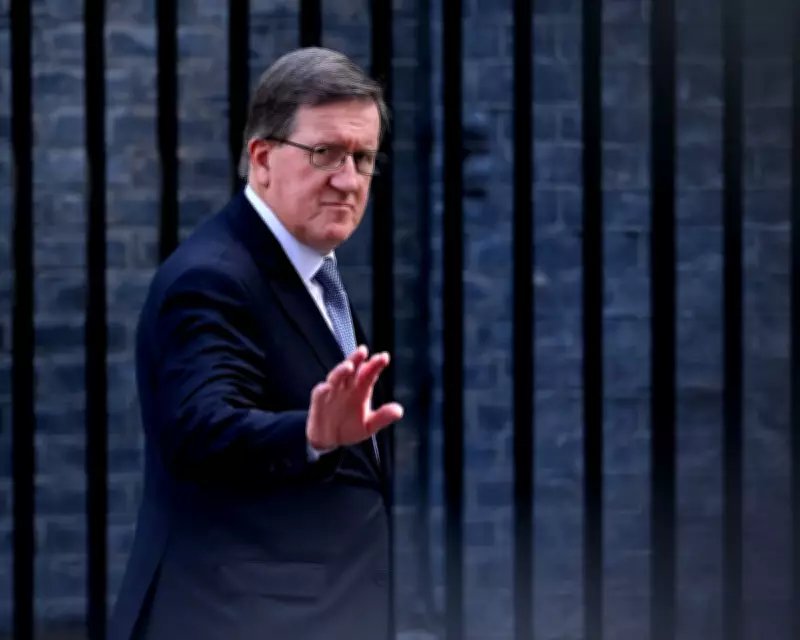
Former NATO Chief Slams Government's 'Corrosive Complacency' on Defence
George Robertson, the former NATO secretary general and author of the government's strategic defence review, has launched a scathing attack on what he describes as the prime minister's "corrosive complacency" over Britain's safety. His intervention highlights deep concerns about the nation's defence posture and funding priorities.
A Howl of Pain Over Defence Strategy
Robertson's claims have generated significant headlines, but they represent more than just political rhetoric. According to security analysts, his statements constitute a profound howl of pain rather than a sober security analysis. The former defence secretary under Tony Blair is demanding that Downing Street back his vision of Britain's global role with billions of pounds in additional funding.
His argument fundamentally assumes that Britain should continue serving as America's junior partner in global security matters – a position he characterizes as Robin to America's Batman. However, this perspective takes for granted what should be under intense scrutiny: the very nature of Britain's global military role itself.

The Fragility of Defence Assumptions
The world has become increasingly dangerous with Russia's invasion of Ukraine, ongoing conflicts involving Iran, and China's rising power creating unsettling geopolitical dynamics. Yet Robertson's claim of a £28 billion defence funding black hole assumes that the current strategic approach remains valid and appropriate.
Donald Trump's presidency has exposed significant vulnerabilities in Britain's defence assumptions. His threats regarding Greenland, disregard for international law, and reversal on the Chagos deal have demonstrated how fragile traditional alliances can become. Before committing additional billions to defence spending, experts argue that Britain must thoroughly re-examine its fundamental security commitments and strategic posture.
Questioning the Funding Gap Narrative
If Britain's current defence strategy – with its emphasis on global deployment and alliance commitments – proves questionable, then the identified funding gap might actually reflect military overstretch rather than insufficient spending. The calculation within Whitehall appears to be that Britain faces no serious imminent threat, which explains why promised increases in military spending have been largely delayed until the 2030s.
Robertson is understandably furious that current defence expenditure plans remain both underfunded and unresolved, constrained by the chancellor's self-imposed fiscal restraints. His intervention aims to force the government to commit both fiscally and politically to a defence model that positions Britain as America's junior partner.
The Historical Context of Defence Partnership
When Robertson produced his first strategic defence review as Tony Blair's defence secretary in 1998, historian David Edgerton noted that Britain was committing itself to "acting primarily with the USA in a wide-ranging programme of global policing." The structure of Britain's armed forces has been designed not for autonomous defence but specifically to enable the nation to serve as America's principal partner.
Edgerton estimated that only 15% to 20% of defence spending related to purely national defence. In this sense, the model Robertson now defends was never primarily about defending the United Kingdom itself. Instead, it focused on plugging into the American security system and piggybacking on its substantial arms industry base.
Economic and Strategic Considerations
The Treasury has legitimate reasons to question whether defence should be prioritized at this moment. Cutting welfare programs to fund defence would likely reduce consumer demand and weaken economic growth. As Khem Rogaly of the Common Wealth thinktank argues, defence spending provides relatively weak economic stimulus compared to public investment and performs even worse as a job creation mechanism.

Moreover, Britain is not using increased defence spending to build an independent military capability. Instead, the nation is reshaping its armed forces around a US-style venture capital and technology ecosystem. With Donald Trump potentially returning to office, there has never been a more critical time to ask a fundamental question: whose security are we actually funding – Britain's or America's?
The debate over defence spending and strategy continues to intensify as geopolitical tensions rise and fiscal constraints tighten. Robertson's intervention has brought these crucial questions to the forefront of national security discussions, challenging policymakers to define Britain's military purpose before committing additional billions to defence.





