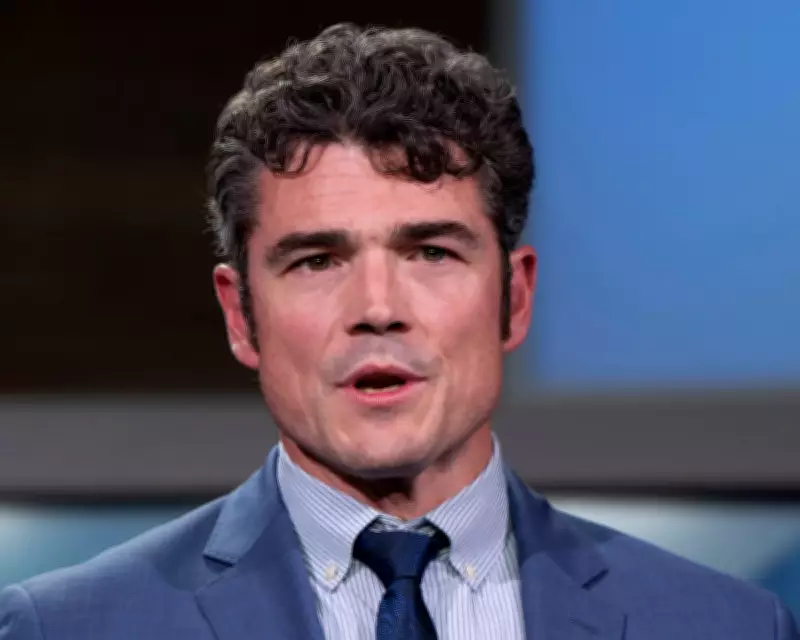
FBI Launches Investigation Into Former US Counter-Terrorism Director Following Resignation Over Iran Conflict
The resignation of Joe Kent, a prominent counter-terrorism official who publicly opposed the United States military engagement in Iran, has taken a dramatic and unexpected turn. According to multiple reports, Kent is now under active investigation by the Federal Bureau of Investigation (FBI) concerning allegations of leaking classified information. This inquiry reportedly began before his departure from the National Counterterrorism Center, where he served as director overseeing terrorist threat analysis.
Investigation Details and Official Response
Semafor and CBS News have confirmed that the FBI investigation into Kent predates his Tuesday resignation. The FBI has officially declined to comment on the existence or specifics of any such investigation, maintaining its standard protocol regarding ongoing probes. Kent became the first senior administration official to resign over the controversial war in Iran, making his subsequent investigation particularly noteworthy within political and security circles.
Kent's Explosive Interview with Tucker Carlson
In his first media appearance since stepping down, Kent appeared on The Tucker Carlson Show podcast, where he made several startling claims about the decision-making process leading to US airstrikes on Iran on February 28th. Wearing a casual blue-checked shirt, the staunch Trump ally and former Green Beret described a White House environment where dissenting voices were systematically excluded from critical discussions.

"A good deal of key decision makers were not allowed to come and express their opinion to the president," Kent stated emphatically. "There wasn't a robust debate." He carefully avoided direct criticism of President Trump while painting a picture of an administration relying on a tight inner circle that sidelined officials questioning both intelligence assessments and strategic wisdom.
Questioning the Intelligence Behind Iran Strikes
Kent challenged the fundamental justification for the military action, insisting that "there was no intelligence that said, 'Hey, on whatever day it was, March 1st, the Iranians are going to launch this big sneak attack." He emphasized that intelligence agencies found no evidence suggesting Iran was close to obtaining nuclear weapons or posed an imminent threat requiring immediate military intervention.
Instead, Kent made the controversial assertion that "The Israelis drove the decision to take this action," claiming that Prime Minister Benjamin Netanyahu and other Israeli officials lobbied President Trump with claims that contradicted established intelligence channels. He elaborated on this dynamic, noting his experience with Israeli officials sometimes presenting information "that we know from our intelligence just simply isn't true."
Political Fallout and Criticism
Kent's comments about Israeli influence have drawn swift condemnation from various quarters, with critics arguing that references to an "Israeli lobby" risk perpetuating offensive stereotypes. Tucker Carlson himself has faced similar scrutiny following previous interviews with controversial figures. Kent also cited comments by Secretary of State Marco Rubio and House Speaker Mike Johnson as evidence of Israel's significant influence over the timing of the strikes.
He highlighted what he sees as divergent objectives between the US and Israel, stating "Most folks right now at the Pentagon and the intelligence agencies would say we and the Israelis actually have a different objective here." Kent suggested that while the US appears to shy away from regime change, Israel actively seeks to dismantle the current Iranian government without clear plans for what follows.
Personal Background and Resignation Decision
Kent's decision to resign came after he concluded that his concerns would continue to be ignored. "I know this path that we're on, it doesn't work," he told Carlson. "I can't be a part of this in good conscience." His background includes 11 combat deployments as a Green Beret before joining the CIA, and personal tragedy when his wife, a Navy cryptologist, was killed by a suicide bomber in Syria in 2019.

Administration Response and Broader Implications
The White House responded forcefully to Kent's resignation, with President Trump dismissing him as "weak on security" and insisting that Iran represented "a tremendous threat." Trump suggested that those who disagreed with this assessment lacked proper judgment, stating "If somebody didn't think it was a threat, we don't want those people."
Director of National Intelligence Tulsi Gabbard, who oversaw Kent's work at the National Counterterrorism Center, emphasized that determining whether Iran posed a threat remained solely the president's decision. Gabbard, a veteran and former congresswoman from Hawaii, had previously criticized discussions about military strikes in Iran but has not commented specifically on the current situation.
This developing story raises significant questions about internal administration dynamics, intelligence assessment processes, and the complex geopolitical considerations surrounding US foreign policy in the Middle East. The FBI investigation adds another layer of complexity to an already contentious political and national security issue.