

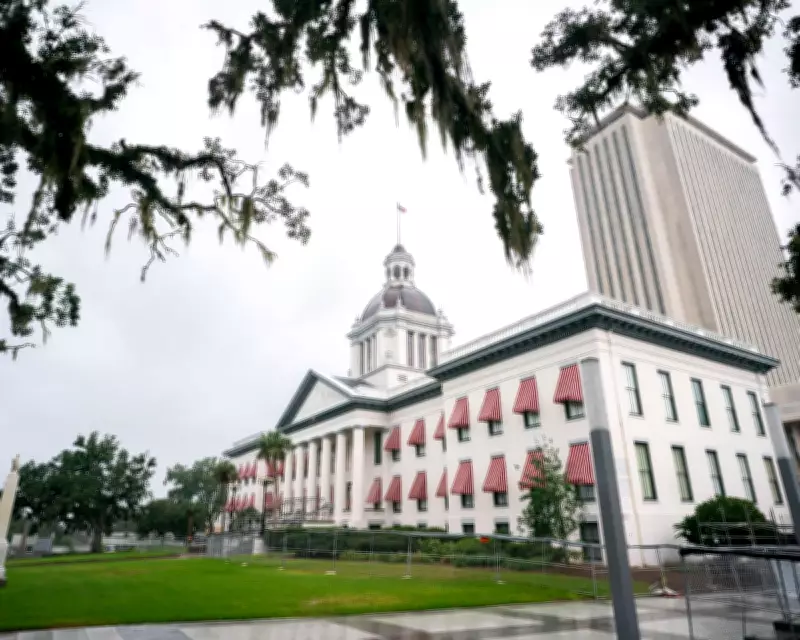
Florida's Proposed State Intelligence Office Could Trigger National Surveillance Expansion
Florida is poised to enact House Bill 945, legislation that would establish a state-level intelligence operation with unprecedented surveillance powers. This bill, if passed, would create the first CIA-style structure at the state level in the United States, fundamentally blurring the traditional boundaries between state law enforcement and intelligence activities.
A Blueprint for Nationwide Surveillance Expansion
The proposed legislation would establish an operational intelligence office tasked with identifying and disrupting perceived threats to both Florida and the United States. What makes this particularly concerning is the bill's language that allows scrutiny based on "views" and "opinions" rather than criminal activity. This standard echoes some of the darkest chapters in American surveillance history, including the FBI's Cointelpro program of the 1960s and 70s that targeted civil rights leaders and protest movements for their beliefs rather than any criminal conduct.
Republican representative Danny Alvarez, the bill's sponsor from the Tampa area, has indicated he plans to make changes to address civil liberties concerns. However, experts question whether any linguistic adjustments can salvage legislation with such broad surveillance authority at its core.

Fragmentation of National Security Infrastructure
The creation of state-level intelligence operations represents a significant departure from post-9/11 security reforms. One of the key lessons from the 9/11 Commission was that fragmented intelligence systems and siloed operations can actually undermine security rather than enhance it. In response to the September 11 attacks, Congress established the National Counterterrorism Center specifically to prevent disconnected intelligence operations from proliferating.
House Bill 945 moves in precisely the opposite direction, potentially creating a patchwork of state-run intelligence units operating outside a unified federal framework. This would recreate the very fragmentation that federal reforms attempted to fix, raising serious questions about why states should duplicate functions already handled by federal agencies that spend trillions on national security.
Historical Precedents and Current Concerns
Public outrage over surveillance abuses in the 1970s led to the Church Committee investigation and the establishment of new guardrails, including the Foreign Intelligence Surveillance Court, designed to prevent domestic spying based on ideology. Yet even federal agencies with decades of experience, extensive training, and formal oversight have struggled to resist overreach.
The 2013 disclosures by Edward Snowden revealed that Section 702 of the Foreign Intelligence Surveillance Act, originally designed to monitor foreigners abroad, was repeatedly misused to query information about American protesters, journalists, and lawmakers. Since these revelations, efforts to enact meaningful reforms have stalled, and Congress has actually expanded surveillance authority through measures like the 2024 "spy draft" amendment.
Political Context and Potential Misuse
The political environment in Florida heightens concerns about potential misuse of such surveillance powers. State officials have already labeled various advocacy groups and protest movements as security threats, and debates surrounding issues like "wokeness," Palestine activism, and immigration have increasingly been framed in national security terms.
Simultaneously, the state legislature is considering another bill, SB 1632, which would expand the definition of domestic terrorism and grant the state broader powers to combat "ideologies inconsistent with American principles." House Bill 945 would provide future state administrations, regardless of political affiliation, with a powerful tool to monitor ideological opponents.

Journalistic Freedom Under Threat
Florida's current leadership has demonstrated longstanding adversarial relationships with press freedom. Throughout American history, journalists have frequently been surveillance targets, from Nixon-era snooping to the Obama administration's seizure of Associated Press phone records to recent FBI actions targeting Washington Post journalists. There is little reason to believe state-level intelligence operations would behave differently.
The Domino Effect Across State Lines
State legislatures have spent the past decade exporting policy models across ideological lines. If House Bill 945 becomes law, lawmakers in other conservative states will almost certainly introduce similar proposals, arguing that Florida has already established the precedent. This could create a network of state intelligence offices, each empowered to scrutinize residents' beliefs, fundamentally reshaping the domestic surveillance landscape through dozens of parallel state laws rather than a single federal statute.
Chilling Effects on Free Expression
The First Amendment specifically protects unpopular opinions, harsh criticism of government officials, and controversial ideologies precisely because political majorities change over time. Even if courts eventually strike down laws that punish speech or association, litigation takes years, and the chilling effect begins immediately. The mere possibility that lawful political expression could land someone in an intelligence database can be enough to deter dissent and undermine democratic participation.
A Decentralized Surveillance Nightmare
If Florida succeeds in establishing this precedent, it could take fifty separate Church Committee-style investigations and fifty individual reform packages to begin addressing the decentralized surveillance mess that would result. The creation of state intelligence offices with broad surveillance authority represents not just a local policy experiment but potentially a blueprint for transforming how surveillance operates across the United States, with profound implications for civil liberties and democratic norms.





