

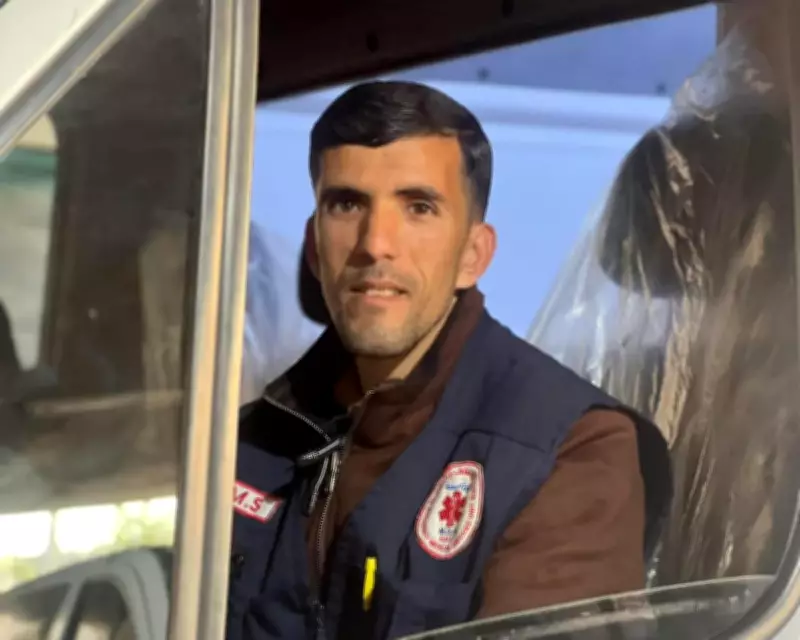
Gaza Volunteer Ambulance Driver Killed in Drone Strike Despite Ceasefire Agreement
Abed Elrahman Hamdouna, a 31-year-old volunteer ambulance driver in northern Gaza and father of two young children, was killed in a reported drone strike west of Gaza City two weeks ago. His death occurred as he was traveling to a family Ramadan iftar meal, highlighting the ongoing dangers faced by civilians in the territory despite a ceasefire that was supposed to end hostilities last year.
Ceasefire in Name Only as Civilian Death Toll Continues to Rise
Hamdouna's father, Hosny Hamdouna, expressed bitter frustration about the situation, stating emphatically: "There's no ceasefire. It's all talk, for the media. In reality, there's no ceasefire." His words reflect the grim statistics from Gaza's health ministry, which reports that since the ceasefire was announced on October 10 last year, Israeli forces have killed 677 Palestinians and injured a further 1,800.
The numbers reveal a disturbing pattern of continued violence, with Israeli strikes averaging about 10 per day across Gaza over the past five months. Hamdouna becomes one of 1,700 healthcare workers killed during the war in Gaza, including four who have died during this supposed ceasefire period.

A Family's Devastation and the Broader Humanitarian Crisis
Hamdouna's family was preparing a traditional Palestinian iftar meal of maftoul and meat when they realized he was late. His brother Mohammed initially assumed his phone battery had died, as Hamdouna typically charged his device at work. The devastating news arrived just 20 minutes before iftar time, sending Mohammed rushing to the hospital while fielding calls from their parents who had been stuck in Egypt since before the war began.
Fares Afana, head of emergency services in northern Gaza, revealed the staggering impact on medical infrastructure: "We have now lost almost 80% of our ambulances since the start of the war." He placed responsibility squarely on Israeli forces, stating they bear full accountability for every humanitarian worker lost and the destruction of emergency capabilities.
International Condemnation and Accusations of Systematic Destruction
United Nations experts have accused Israel of deliberately targeting Gaza's healthcare system, describing the actions as amounting to "medicide." Their reports detail systematic attacks on healthcare workers, paramedics, and hospitals designed to eliminate medical care in the besieged enclave.
International organizations have gone further in their assessments. Both the UN and Amnesty International have found Israel's actions consistent with genocide characteristics, noting the mass civilian casualties and intentionally imposed life-threatening conditions. Amnesty International specifically stated that Israel continues to commit genocide even after the ceasefire by "deliberately inflicting conditions of life calculated to bring about their physical destruction."
The Human Cost Beyond Statistics
Hamza Nabhan, a fourth-year medical student who frequently accompanied Hamdouna on ambulance runs, described his colleague as one of the true heroes of the conflict. "The paramedics, the firefighters and the civil defence workers are the real heroes of this war and Abed Elrahman was one of those heroes," Nabhan stated emotionally.
Nabhan had spoken with Hamdouna just hours before learning of his death, struggling to comprehend how someone he loved and had just conversed with could suddenly vanish. The psychological toll on remaining healthcare workers is immense, with Nabhan describing a survival mentality focused only on immediate needs: "I think about how to wake up, charge my phone, fill my water container. I don't think about tomorrow."
Before the ceasefire, healthcare workers like Hamdouna lived at their hospitals and medical centers, rarely able to visit families due to security concerns. The ambulances they used had deteriorated to mere transport vehicles, lacking proper emergency care equipment despite their critical missions to reach the injured.

A Legacy of Service Amid Ongoing Danger
Hamdouna's funeral was led by ambulance staff and emergency workers, a testament to his standing among colleagues. His daughter was photographed sitting in the ambulance her father drove as a volunteer, a poignant reminder of the personal dimensions behind the conflict's statistics.
With more than 75,000 people killed in Gaza since October 2023, Hamdouna's death represents both a personal tragedy and a symbol of the broader humanitarian catastrophe. As Afana noted with bitter disappointment: "When the ceasefire came into effect last year we had been hopeful that healthcare workers would be safer. Unfortunately this did not happen... it's still a war zone."
The ongoing violence continues to devastate Gaza's civilian population and healthcare infrastructure, raising serious questions about the effectiveness and implementation of ceasefire agreements in the region.





