

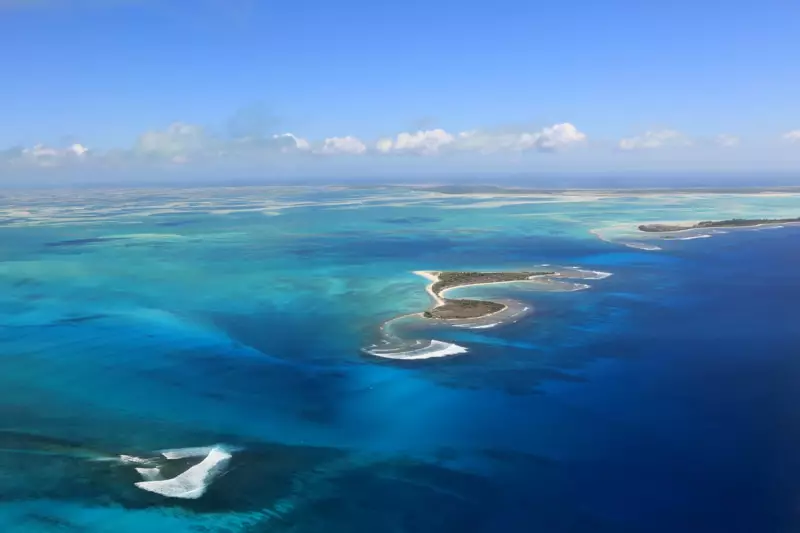
Technology giant Google is advancing plans to construct a significant artificial intelligence data centre on Australia's remote Christmas Island, according to confidential documents and official interviews reviewed by Reuters. The project follows Google's cloud agreement with Australia's Department of Defence signed earlier this year, positioning the tiny Indian Ocean territory as a potential frontline in regional security monitoring.
Strategic Location for Defence Monitoring
The proposed facility, located just 350 kilometres south of Indonesia, represents what military experts describe as a valuable strategic asset for monitoring Chinese submarine and naval movements through critical Indian Ocean passages. Although Google has downplayed the scale of the project, planning documents reveal advanced negotiations to lease land near the island's airport and secure long-term energy supplies.
Christmas Island Shire officials confirmed that Google is in advanced talks to secure a 7-megawatt power supply for the data centre, combining diesel and renewable energy sources. The Australian Department of Infrastructure has acknowledged the proposal, emphasising that discussions are underway to ensure local energy supplies for the island's 1,600 residents remain unaffected.

Military Applications and War Games
Recent military exercises involving Australian, American and Japanese forces have highlighted Christmas Island's growing importance as a forward defence position. Bryan Clark, a former US Navy strategist now with the Hudson Institute, explained that an AI-enabled command centre on the island would be crucial during crises with China or other adversaries.
"The data centre is partly to allow you to do the kinds of AI-enabled command and control that you need to do in the future, especially if you rely on uncrewed systems for surveillance missions and targeting missions," Clark told Reuters. He emphasised that subsea cables provide superior bandwidth and reliability compared to satellites, which could be vulnerable to jamming during conflicts.
The Australian defence department entered into a three-year cloud agreement with Google in July, mirroring similar arrangements recently established by Britain's military to enhance intelligence sharing with the United States.
Community Impact and Economic Diversification
Christmas Island Shire President Steve Pereira stated that local authorities are carefully evaluating the community impact before granting final construction approval. The island, better known for its red crab migration and former asylum seeker detention centre, has historically struggled with limited telecommunications and employment opportunities.
"There is support for it, providing this data centre actually does put back into the community with infrastructure, employment and adding economic value to the island," Pereira commented. Residents have expressed concerns about energy supply impacts on the remote territory, which relies heavily on diesel generation despite limited renewable capacity.
The Department of Infrastructure noted that Google's project aligns with government objectives to diversify the island's economy away from mining, while ensuring all environmental and planning requirements are met to protect the territory's unique ecosystem.
Geographic Advantages and Future Connectivity
Google has applied for environmental approvals to construct the first subsea cable connecting Christmas Island to Darwin in northern Australia, where US Marine Corps personnel are regularly stationed. Planning documents also indicate proposals for "additional future cable systems" linking the island directly to Asia.
Retired Navy Commodore Peter Leavy, who has facilitated defence familiarisation visits to the island, highlighted its strategic positioning: "Christmas Island is quite well positioned to at least monitor what is going through Sunda Strait, Lombok Strait, Malacca Straits. It is a really good location."

While Google maintains that the facility represents part of its broader efforts to enhance digital resilience across Australia and the Indo-Pacific, defence sources acknowledge the dual commercial and military value of establishing infrastructure on the strategically located island between Africa, Asia and Australia.





