Gulf States' Stability Model Disrupted by Escalating Middle East Conflict
The carefully projected image of stability cultivated by Gulf powers like Saudi Arabia, Qatar, and the United Arab Emirates has been dramatically undermined by the escalating war between the United States, Israel, and Iran. What many perceived as static, wealth-fortified monarchies secured by deep American military relationships now face profound challenges to their economic models and regional influence.
The Fragile Foundations of Gulf Prosperity
For years, these nations have pursued ambitious transformation agendas while projecting an aura of geopolitical neutrality. Their strategy relied heavily on attracting international investment, tourism, and business by maintaining the absence of war in their territories. This required delicate balancing acts: not provoking Iran, not antagonizing Israel, and keeping the United States close as a security guarantor.
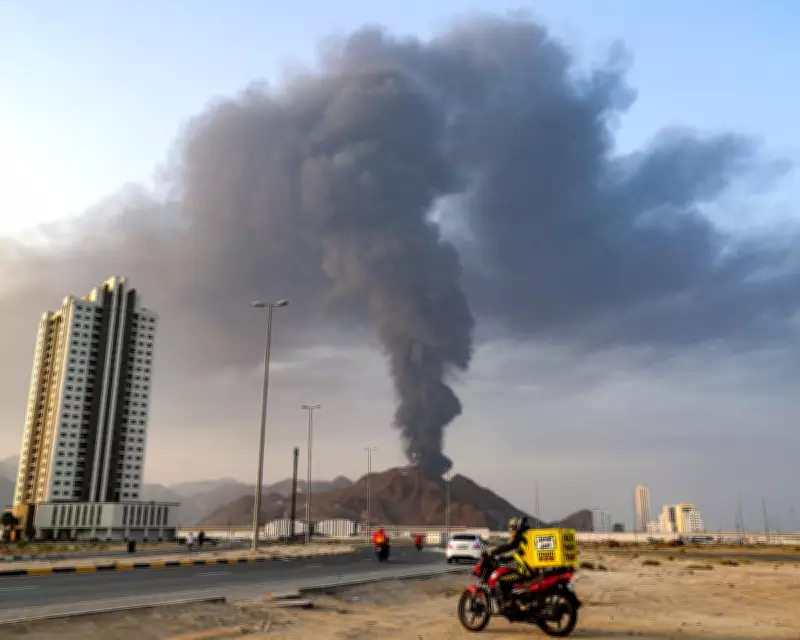
The recent wave of Iranian missile and drone attacks targeting the UAE and Saudi Arabia has fundamentally disrupted this model. The very stability these countries marketed to the world has been compromised, raising questions about their ability to continue as centers of global commerce and finance.

Divergent Paths to Regional Influence
Each Gulf state has pursued distinct strategies that now face unprecedented pressure. Saudi Arabia has undergone dramatic domestic liberalization under Mohammed bin Salman, transforming from a conservative kingdom threatened with pariah status after the Jamal Khashoggi murder to a nation hosting international sporting events and entertainment spectacles.
The United Arab Emirates has taken a more transactional approach, energetically embracing a world order based on might and money. As the only significant Gulf power to sign the 2020 Abraham Accords with Israel, the UAE signaled its willingness to set aside traditional articles of faith like Palestinian statehood in pursuit of strategic advantage.
Qatar walks the thinnest line of all, balancing support for the Palestinian cause through hosting Hamas officials with maintaining the largest US military base in the region and cooperating with Iran over shared gasfields. This precarious position became evident during the 2017 blockade by Saudi Arabia and the UAE, which lasted several years.
Economic Vulnerabilities Exposed
The conflict has exposed critical vulnerabilities in Gulf economies that extend far beyond energy exports. These nations rely on international footfall for their tourism, real estate, and financial sectors. More fundamentally, their drinking water supplies depend on energy-intensive desalination plants that could be compromised by prolonged conflict.
While sovereign wealth funds can absorb some economic shocks, the state of insecurity now permeating the Gulf region presents more complex challenges. The closing of airspaces, halting of liquefied natural gas production, and potential disruption to all oil production represent systemic threats to economic models built on stability.
Geopolitical Reckoning and Regional Ramifications
The war has made increasingly clear that Gulf states have become, actively or passively, recruited to US and Israeli ambitions for regional dominance. This alignment threatens their carefully cultivated image of sovereignty and independent agency. As the conflict continues, maintaining the notion of control becomes increasingly difficult for Gulf leaders.
Beyond immediate security concerns, the conflict risks intensifying existing competitions between Gulf powers. The UAE's drive to secure raw materials through involvement in African conflicts could accelerate, while differences over how far to underwrite US-Israeli ambitions could create dramatic rifts between traditional allies.
The human dimension of this crisis deserves particular attention. These are nations with substantial populations whose lives and livelihoods cannot be reduced to caricatures of energy custodians or destinations for tax avoiders. The assumption that Middle Eastern populations are somehow less entitled to stability and prosperity than Western consumers represents a dangerous colonial mindset that has long influenced regional policy.

Long-Term Consequences for Regional Order
When the immediate conflict subsides, the Middle East will emerge fundamentally transformed. New resentments, competitions, and security arrangements will reshape the region for generations. The political and economic capital accumulated by Gulf states over decades faces potential hemorrhage, with ramifications extending far beyond energy markets.
The Gulf's attempt to neuter geopolitics to underwrite economic stability has reached its limits. What emerges from this crisis will test not only the resilience of these nations' economic models but also their ability to navigate an increasingly polarized regional order where traditional alliances and balancing acts may no longer suffice.