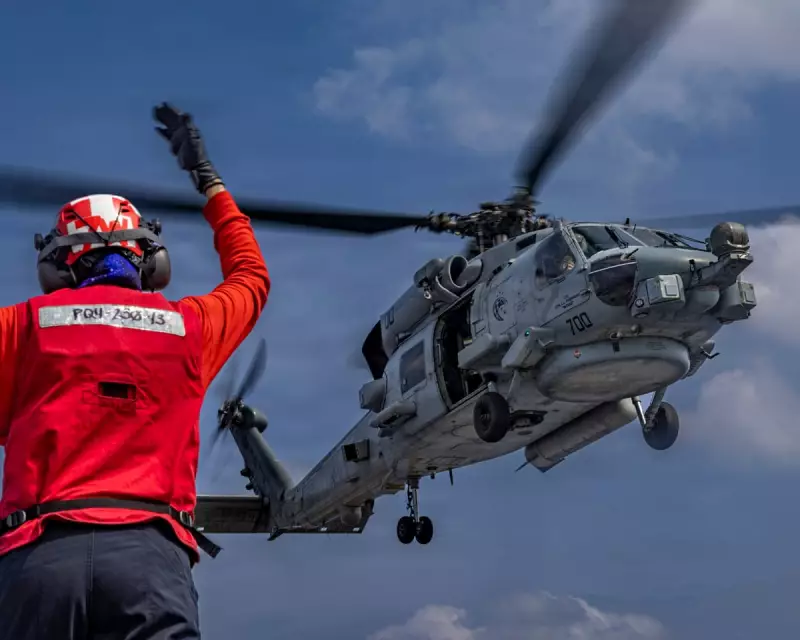
The Iranian government is on high alert, preparing for a potential missile assault from the United States and Israel, following the deployment of the USS Abraham Lincoln aircraft carrier strike group to the region. Observers note that this move places key military assets within striking distance of Iran, raising fears of an escalation in hostilities.
Military Buildup and Strategic Implications
Washington, in coordination with Israeli aircraft, is believed to possess sufficient firepower to launch an attack aimed at destabilising the Iranian regime. The US fleet, which includes several guided-missile destroyers, has not yet reached its final positions but is already capable of targeting Iran from the region. This deployment comes as the US military announced exercises to demonstrate its ability to deploy and sustain combat airpower, signalling a show of force.
Iran's Response and Internal Challenges
In response, Iranian authorities have issued stern warnings. Ali Larijani, secretary of Iran's supreme national security council, accused the US of attempting to undermine social cohesion before any military action. He described protesters as having "terrorist-like characteristics" and warned that external interference could provoke civil war. Meanwhile, Esmail Baghaei, Iran's foreign ministry spokesperson, denied diplomatic contacts with the US and threatened a "comprehensive and regrettable response" to any aggression, emphasising that Iran's armed forces are closely monitoring all movements.

The situation is compounded by severe economic pressures in Iran. Official figures reveal inflation has soared to 60%, exacerbating public discontent over falling living standards. The Iranian stock market recently experienced a record daily fall, reflecting investor anxiety amid the geopolitical uncertainty. With no diplomatic resolution in sight, regional powers like the United Arab Emirates have declared they will not permit their airspace or waters to be used for attacks on Iran, though the carrier group's presence in the Mediterranean reduces reliance on such permissions.
Humanitarian Concerns and International Reactions
Human rights groups report a escalating death toll from ongoing protests, with estimates suggesting over 5,000 fatalities, though figures remain unverified by international bodies like the United Nations. Internet access has been severely restricted since early January, hindering communication and business operations. In Europe, Italy's foreign minister has proposed designating Iran's Islamic Revolutionary Guards Corps as a proscribed organisation, indicating growing international pressure.
Despite the tensions, it is uncertain whether further US attacks would reignite street protests, as many Iranians oppose both the current leadership and externally imposed regime change. The US administration remains divided on pursuing regime change in a nation of 90 million people, highlighting the complex dynamics at play in this volatile region.