Iran Conflict Escalation: Experts Analyze Potential Global Fallout and Next Steps
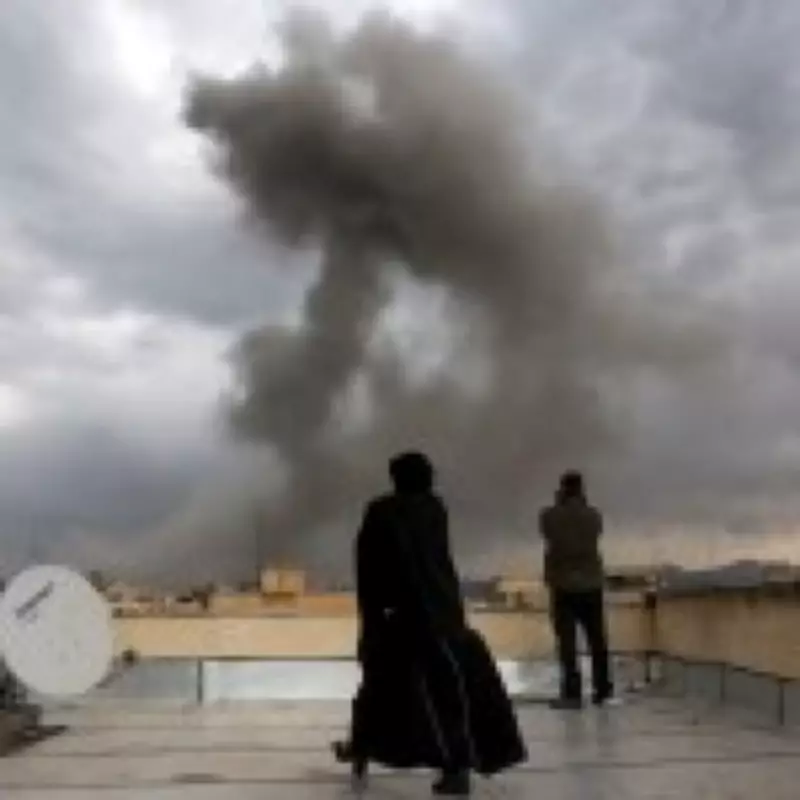
Three days after the United States and Israel launched a devastating aerial campaign against Iran, resulting in the death of Supreme Leader Khamenei and significant damage to the regime, the conflict's ripple effects are already being felt across the region. The chaos has spilled into neighboring countries, with multiple American soldier fatalities reported and missiles targeting British bases in the Mediterranean.
US Secretary of War Pete Hegseth declared earlier today, 'We have launched the deadliest air campaign in history and used strategic bombers.' As the dust settles, the critical question dominating international discourse is: what happens next in this rapidly evolving situation?
Expert Perspectives on Conflict Expansion
Dr. Katayoun Shahandeh from the University of London warns that the conflict could spread beyond Iran's borders. However, she expresses skepticism about direct military involvement from Iran's primary allies, Russia and China. 'I don't believe Russia or China would have any inclination to get involved militarily,' she stated.

Ross Harrison, senior fellow at the Middle East Institute in Washington, DC and author of 'Decoding Iran's Foreign Policy,' identifies China's primary concern as potential disruption to global oil supplies. Approximately 20% of the world's energy currently transits through the Strait of Hormuz, located south of Iran.
Harrison elaborated, 'My hunch is that if the conflict continues for a week or two, they will get involved diplomatically through international organizations like the UN. I don't see this globalizing in a military sense.' He added, 'In terms of economic impact? Perhaps. In terms of the international order going forward? Yes. But in terms of spreading to an actual World War III situation? I doubt it.'
Iran's Strategic Calculations and Contingency Plans
Dr. Shahandeh explains that while Iran hasn't yet shut down the crucial Strait of Hormuz shipping lane, they 'won't think twice' if they feel desperate. 'They would bring the rest of the world into the conflict. Essentially, they want to ensure that if they aren't going to survive, they will damage the world economy as much as possible,' she added.
This aligns with what Dr. Shahandeh describes as a 'fight to the death' mentality for Iran. 'It has always been within the ethos of the Islamic Republic to fight to the end. Given this Shiite militant ideology, they will not go down without a fight.'
The Islamic Republic has maintained contingency plans since the Revolution, as the regime's legitimacy has 'always been questioned.' Currently, the regime clings to remnants of power with 'no signs' of internal strife, though Dr. Shahandeh cautions this could change.
'Iranian proxies (Hezbollah, Houthis and Iraqi militants) will come to Iran's aid and try to inflict damage where they can, particularly against Israel,' she explained. 'To what extent they will be successful is the real question. If neighboring countries get fully involved, we are looking at the equivalent of World War III.'
Regional Dynamics and De-escalation Possibilities
Despite US President Donald Trump predicting another four weeks of conflict that could end the Islamic Republic permanently, Dr. Shahandeh remains doubtful. 'They are more resilient than people think because of their structure and their long history of contingency planning.'
Harrison notes that regional neighbors like Saudi Arabia, Kuwait, the UAE, and Qatar will likely avoid direct involvement unless continuously attacked. 'They don't have the offensive capability; they only have defensive capability. Perhaps the Saudis do to some degree, but the others do not. I don't think kinetic action will spread from the Gulf states to Iran. They simply don't have that capacity at this point.'
In the coming days, tensions are expected to persist. Harrison observes, 'Right now, escalation dominance is in the hands of the United States and Israel. If you're looking for signals, they have to come from those two actors.'

Iran's Definition of Victory and Future Scenarios
Looking ahead, Harrison anticipates Iran 'putting as brave a face as they can on their succession struggle.' He clarifies, 'For the Iranians, winning doesn't mean winning militarily—that's a foregone conclusion, they cannot. Winning for them means the regime coming out of this intact and maintaining some ability to retaliate.'
'If the regime doesn't crack from within and maintains some retaliatory capability over the next week, you might see a potential de-escalation,' Harrison suggested. 'But at this point, I think there is still an appetite on the part of the Israelis and the Americans to try to bring this regime down.'
The coming weeks will be crucial in determining whether this conflict remains contained or escalates into broader regional warfare with significant global economic consequences.