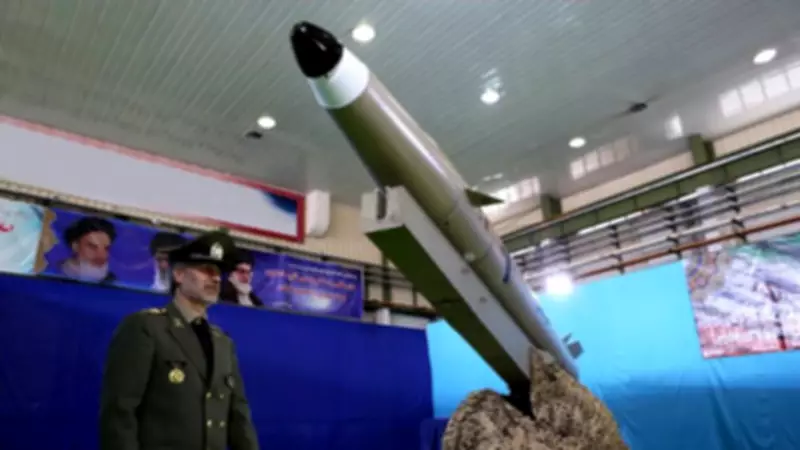
Iran has declared its military forces have their "fingers on the trigger" in response to the United States deploying "very big, powerful ships" toward the region, as tensions escalate between the two nations. The Iranian army is maintaining a high state of readiness while closely observing enemy movements, according to senior commanders.
Trump's Ambiguous Stance on Military Action
President Donald Trump declined to reveal whether the United States would take military action against Iran when questioned by reporters aboard Air Force One. "I certainly can't tell you that," Trump stated, "but we do have very big, powerful ships heading in that direction, as you know."
The US president expressed hope that negotiations might produce an acceptable outcome, saying: "I hope they negotiate something that's acceptable." When asked if Tehran might be emboldened by perceived US hesitation, Trump offered a measured response: "Well, some people think that and some people don't."

Iran's Defiant Military Posture
General Amir Hatami, Iran's regular army commander-in-chief, struck a defiant tone in response to the US naval movements. "Thanks Allah today we are at a high level of military and defensive readiness," Hatami declared. "We are closely watching enemies' movement in the region."
The Iranian commander emphasized that US forces were under complete surveillance and warned: "Since we are aware of their evil intentions, our fingers are on the trigger. If they make a mistake, without doubt they will endanger their security, the security of their forces, the security of the region, and the security of the criminal Zionist regime."
Parliamentary Rhetoric and EU Designation
In Tehran's parliament, the speaker told the assembly that European Union military forces were now considered terrorist groups by the Islamic republic. This declaration follows the EU's recent designation of Iran's Islamic Revolutionary Guard Corps as a terrorist faction over its violent crackdown on protesters.
Mixed Signals from Iranian Officials
While military and parliamentary figures maintained a combative stance, other Iranian officials struck more conciliatory notes. Ali Larijani, a top security official, wrote on social media platform X that "structural arrangements for negotiations are progressing."
However, this apparent openness to dialogue contrasts with the position of Iran's 86-year-old Supreme Leader Ayatollah Ali Khamenei, who has repeatedly ruled out direct talks with the United States.
Explosions Amid Mounting Tensions
As regional tensions mounted, Iran experienced two separate explosions on Saturday, though the government denied that any military leaders were targeted. The first blast occurred at Iran's southern port of Bandar Abbas, resulting in the death of a four-year-old girl and injuries to fourteen other people.
A second explosion, more than 1,000 kilometres away in Ahvaz, killed five people according to state media reports. The Iranian government has not attributed these incidents to foreign military action, maintaining they were unrelated to the escalating tensions with the United States.
The situation remains volatile as both nations maintain military readiness while engaging in diplomatic posturing, with the potential for miscalculation creating significant regional security concerns.