

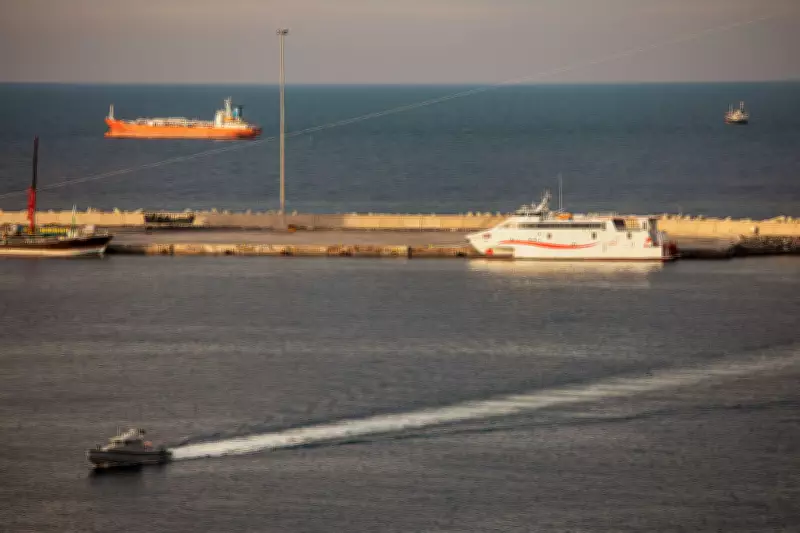
Hopes for a sustained de-escalation in the Middle East were left dangling by a thread on Wednesday night, as Iran abruptly shut the critical Strait of Hormuz shipping lane. This dramatic reversal came mere hours after Tehran had pledged to reopen the passage, in direct response to a series of Israeli airstrikes targeting Lebanon.
Ceasefire Terms Violated Amid Escalating Attacks
The closure effectively blocked oil tankers from traversing the strait, a maritime artery responsible for transporting over one-fifth of the world's seaborne oil and gas trade. Iranian officials squarely blamed Israel for executing its most intensive assault on Lebanon since the war's outbreak.
In a further breach of the ceasefire agreement struck with the White House just hours earlier, Iran also launched an attack on Saudi Arabia's crucial east-west pipeline. This infrastructure carries oil from the Gulf nation's eastern coast to shipping points on the Red Sea. Throughout Wednesday, other Gulf countries reported being targeted by drone attacks, compounding regional tensions.

Market Euphoria Turns to Despair
The short-lived truce, agreed upon late Tuesday night, had seen former President Donald Trump commit to halting the barrage of air strikes on Iran—a campaign that had culminated in threats to end "a whole civilisation." In return, the Iranian regime had agreed to reopen the Strait of Hormuz to shipping.
This initial announcement sent stock markets soaring and caused the spot price of oil to tumble dramatically. The FTSE 100, which closed before news of Tehran's decision to re-block the shipping lane emerged, ended the day 2.5 percent higher. This stunning relief rally propelled the index to its highest level since the onset of the conflict.
Meanwhile, the spot price of Brent crude—the international benchmark for oil—plunged more than 15 percent on hopes that the strait's reopening would unleash a glut of supply into the global market.
Long-Term Economic Scars Loom for UK
Despite the wave of relief that briefly coursed through financial markets, experts are warning that the long-term effects of the war will inflict permanent scars on the UK economy, even if the Strait of Hormuz is eventually opened permanently.
David Mirzai, an energy analyst at SP Angel, described Hormuz's month-long closure as one of the "most severe supply shocks" in the history of global crude markets. "I anticipate very real economic hardship this year because of the recent hostilities and disruption," he told Capital Post.
UK households have been partially insulated from the conflict so far, thanks to the government's energy price cap, which sets the maximum unit price of energy three months in advance. However, refined petroleum products have risen sharply, leading to higher petrol prices at the pump and stoking fears of acute supply shortages in fuel-reliant industries like farming and aviation.
Energy Prices to Remain Elevated
Tom Price, a commodity analyst at Panmure Liberum, noted, "Energy prices will probably hold above their pre-war levels for many months, as damaged production capacity in the Gulf is repaired, trust-in-trade is rebuilt—and the existing war risk-premium across the region's various trade prices eases." He added, "Any post-war trade recovery story will probably take years to play out."
The fragile ceasefire now hangs in the balance, with the rapid re-closure of the Strait of Hormuz underscoring the volatile and tenuous nature of peace efforts in the region. Global markets and economies brace for continued uncertainty as diplomatic and military maneuvers unfold.






