

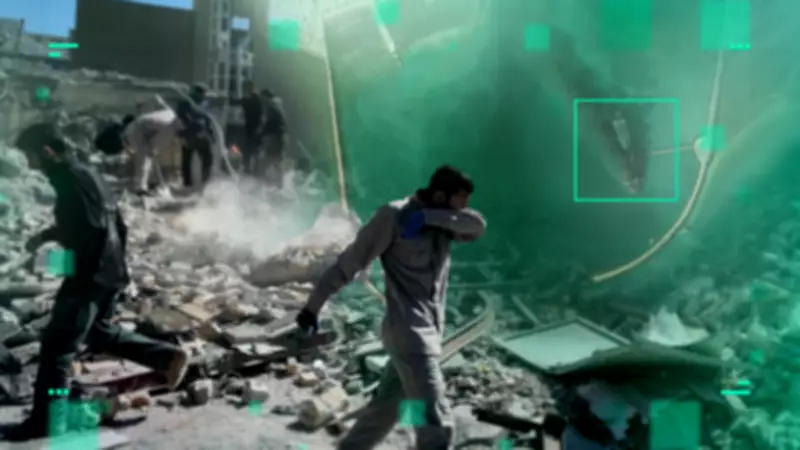
Iran War: A Detailed Analysis of Strikes and Military Assets
Sky News delves into the escalating conflict between the United States, Israel, and Iran, mapping out the precise locations of strikes and the extensive military assets deployed by all sides. With hostilities entering a critical phase, this comprehensive report provides an in-depth look at the tactical maneuvers and strategic implications of the ongoing regional war.
Operation Epic Fury and Initial Assaults
The United States initiated Operation Epic Fury on Saturday morning, launching a series of targeted strikes that resulted in the death of Ayatollah Ali Khamenei at his compound in Tehran. Israel swiftly joined the offensive, executing over 100 aerial strikes over three days, which eliminated dozens of top Iranian military officials. According to Nic Jenzen Jones, director at Armament Research Services (ARES), preliminary analysis indicates the use of a variety of precision-guided munitions.
These included air-delivered weapons such as the AGM-154 Joint Standoff Weapon (JSOW), Blue Sparrow-series air-launched ballistic missiles, and various 500-, 1,000-, and 2,000-pound-class bombs. Additionally, surface-to-surface missiles were deployed, including sea-based Tomahawk-series missiles and the land-based Precision Strike Missile (PrSm).

Iran's Retaliation and Strike Capabilities
In response, Iran has launched drones and missiles targeting Israel, the United Arab Emirates (UAE), Bahrain, Jordan, Oman, and Qatar. The conflict has already claimed the lives of six US service members, and an RAF base in Cyprus was struck by a drone attack. This assault on RAF Akrotiri underscores Iran's military reach, with its longest-range missile, the Sajjil, capable of hitting targets up to 2,000km (1,240 miles) away.
This range places cities like Moscow or Athens within striking distance, though it remains insufficient to target the UK directly. However, the UK's base in Cyprus is vulnerable to Iran's Ghadr and Emad-1 missiles, highlighting the strategic vulnerabilities in the region.
Air Power and Base Deployments
Sky News' Data and Forensics team has meticulously plotted US and UK air bases across the Middle East and Europe that are instrumental in launching attacks on Iran. Flight tracking data reveals the movement of 47 US military cargo and refuelling planes in recent days, with at least 15 passing through British bases, including four via Diego Garcia in the Indian Ocean.
The strategic importance of Diego Garcia has been amplified by this conflict, despite initial reluctance from UK Prime Minister Sir Keir Starmer to permit its use for US strikes. Satellite imagery from Sunday morning shows at least 14 aircraft stationed at the base, including six F-16 fighter jets and two P-8 Poseidon maritime spy planes. Analysts at Jane's Defence Weekly identified additional transport aircraft, such as a C-5 Galaxy and three KC-135 Stratotankers.
Meanwhile, US air bases in Germany have seen a significant reduction in aircraft, with 161 arrivals and 246 departures since 23 February, resulting in a net decrease of 52 planes. Similarly, Al Udeid Air Base in Qatar has experienced more departures than arrivals, as it remains a potential target for Iranian counterattacks. In contrast, bases in Kuwait, Israel, and Jordan have seen an accumulation of military aircraft.
Naval Engagements and Strategic Waterways
The conflict has extended to naval operations, with satellite imagery revealing the aftermath of strikes at two key Iranian naval bases. Fires are visible at the military harbour in Bandar Abbas, the main headquarters of the Iranian Navy, which oversees the strategically vital Strait of Hormuz. A burning ship, the Makran, Iran's largest naval vessel, is also seen, though the extent of damage remains unclear.
If the Makran is rendered inoperable, it would represent a significant blow to Iran's naval capabilities. Sky News has tracked six Iranian ships near Qeshm island in the Strait of Hormuz using data from TankerTrackers, with the most recent sighting on 2 March. Additional damage is evident at the Konarak Naval Base on Iran's southern coast, with strikes reported at other navy installations as well.

The Strait of Hormuz, a critical waterway for oil producers in the Middle East, remains a focal point of military activity. On the US side, at least three military ships are positioned in the Persian Gulf, with 12 more across the Middle East and Mediterranean. The aircraft carrier USS Abraham Lincoln was recently observed near the coast of Oman, accompanied by an unidentified vessel over 200 meters in length.
Furthermore, the USS Gerald R Ford, the largest aircraft carrier in the US fleet, was last spotted in the Mediterranean Sea, approximately 400km (248 miles) from Cyprus, reportedly travelling with three US destroyers capable of carrying over 6,000 personnel.
Conclusion and Ongoing Developments
As the conflict between Iran and the US-Israel alliance intensifies, the strategic deployment of military assets continues to evolve. Sky News' Data and Forensics team, through meticulous data analysis and satellite imagery, provides a transparent and detailed account of the strikes and counter-strikes shaping this regional war. With no clear end in sight, the implications for global security and Middle Eastern stability remain profound.





