Iran Issues Stark Warning as Trump Deploys Warships to Region
Iran's Supreme Leader, Ayatollah Ali Khamenei, has issued a grave warning that the entire Middle East will be engulfed in conflict if the United States initiates military action against Iran. This statement comes in response to US President Donald Trump's announcement that "very big, powerful ships" are heading towards the region, escalating tensions between the two nations.
Khamenei's Defiant Response to US Threats
In comments reported by Iranian state media, Ayatollah Khamenei declared, "America should know that if it starts a war, this time it will be a regional war." He dismissed US threats as nothing new, noting that American officials have historically discussed military options. Khamenei emphasised that Iran does not seek to start a war or attack any country, but warned that if the US harms Iran, the Iranian nation will deliver a strong blow, and any conflict will spread across the region.
He specifically addressed Trump's claims about deploying aircraft carriers and warplanes, asserting that the Iranian people will not be frightened by such displays of force. This rhetoric underscores Iran's longstanding stance of resistance against perceived American aggression.

Trump's Ambiguous Stance on Military Action
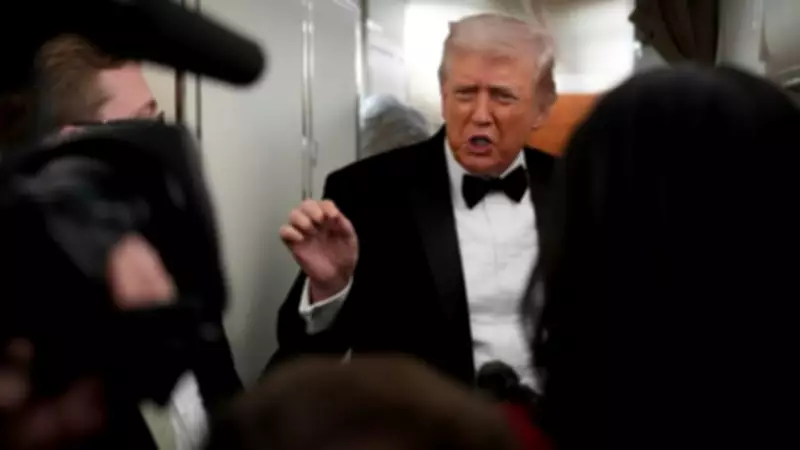
During a flight to Florida on Saturday night, President Trump was asked about his "final decision" regarding Iran but declined to provide a clear answer. He stated, "I certainly can't tell you that, but we do have very big, powerful ships heading in that direction, as you know. I can't tell you, you know. But I hope they negotiate something that's acceptable."
When questioned whether Tehran might be emboldened by US hesitation, Trump replied that some people think so, while others do not. He expressed hope for a negotiated deal that would prevent Iran from obtaining nuclear weapons, mentioning that Iran is "seriously talking" to the US, though he remained uncertain about the outcome.
Iranian Military and Political Leaders Strike Defiant Tone
General Amir Hatami, Iran's regular army commander-in-chief, responded with defiance, stating that Iran is at a high level of military readiness. He warned, "Our fingers are on the trigger. If they make a mistake, without doubt they will endanger their security, the security of their forces, the security of the region, and the security of the criminal Zionist regime." This highlights Iran's surveillance of enemy movements and its preparedness for potential conflict.
In Tehran's parliament, the mood was similarly combative. The speaker declared that European Union military forces are now considered terrorist groups by the Islamic republic, following the EU's designation of Iran's Islamic Revolutionary Guard Corps as a terrorist faction over its crackdown on protesters.
Mixed Signals Amidst Rising Tensions
Despite the harsh rhetoric, there were some conciliatory notes. Ali Larijani, a top security official in Iran, posted on X (formerly Twitter) that "structural arrangements for negotiations are progressing." However, Ayatollah Khamenei, who is 86 years old, has repeatedly ruled out direct talks with the US, complicating diplomatic efforts.
Tensions were further heightened by two explosions in Iran on Saturday. One blast at the southern port of Bandar Abbas killed a four-year-old girl and injured 14 others, while a second explosion in Ahvaz, over 1,000 kilometres away, resulted in five deaths. The Iranian government denies that a military leader was targeted in these incidents, but they add to the volatile atmosphere in the region.
As the situation unfolds, the international community watches closely, with fears that any miscalculation could lead to a broader regional war, impacting global stability and security.