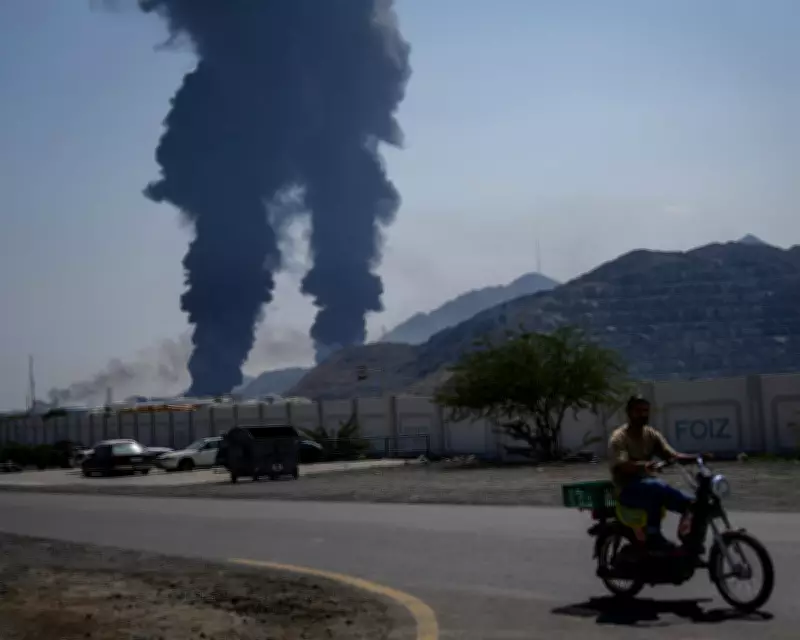
Iran's Islamic Revolutionary Guard Corps has delivered a direct warning to the United Arab Emirates, declaring that American military installations within the country constitute legitimate targets for potential retaliation. This significant escalation follows recent US military strikes targeting Kharg Island, a critical Iranian oil terminal located in the Persian Gulf.
Official Statement and Direct Threat
The warning was formally issued through Iran's semi-official Mehr news agency, which published a statement from an official at the Khatam-al Anbiya central headquarters. This key military body is responsible for coordinating operations between Iran's conventional army and the elite Islamic Revolutionary Guard Corps.
The statement contained a clear directive for residents of the United Arab Emirates, urging them to maintain a safe distance from ports, docks, and areas known to host US military personnel. This precautionary measure was explicitly intended to prevent civilian casualties in the event of any retaliatory action by Iranian forces.

Translation of the Official Warning
A translated version of the official Iranian statement read: "We declare to the leaders of the Emirates that the Islamic Republic of Iran considers it its legitimate right, in defence of its national sovereignty and territory, to strike the source of American enemy missile launches at the ports, docks, and hideouts of US military personnel in some of the cities of the Emirates."
This declaration frames any potential action as a defensive measure to protect Iranian national sovereignty, directly linking it to the recent American military operations against Kharg Island. The terminology used—specifically referring to US "hideouts"—suggests Iran views these installations as covert or semi-covert military facilities rather than openly acknowledged bases.
Geopolitical Context and Implications
The warning represents a significant escalation in regional tensions, directly involving the United Arab Emirates in the ongoing conflict between Iran and the United States. The UAE has maintained complex diplomatic and economic relationships with both nations, positioning itself as a regional hub for business and diplomacy while hosting substantial American military assets.
This development raises serious questions about:
- The security of US personnel and assets throughout the Persian Gulf region
- The potential for broader regional conflict involving multiple Middle Eastern nations
- The diplomatic challenges facing the United Arab Emirates as it navigates relationships with both Tehran and Washington
- The possibility of further military escalation following the initial strikes on Kharg Island
The timing of this warning is particularly significant, coming immediately after confirmed American military action against Iranian territory. This suggests a calculated response from Iranian military leadership, intended to demonstrate both capability and willingness to retaliate against what they perceive as aggression.
Military and Strategic Considerations
From a military perspective, the warning highlights several important strategic considerations. The reference to specific locations—ports, docks, and areas with US military presence—indicates detailed intelligence gathering and potential targeting preparations by Iranian forces. The Islamic Revolutionary Guard Corps maintains substantial missile capabilities and asymmetric warfare assets that could theoretically reach targets throughout the Persian Gulf region.
The statement also underscores the continuing importance of the Persian Gulf as a flashpoint for international conflict, with critical shipping lanes, energy infrastructure, and military installations concentrated in a relatively small geographic area. Any escalation in this region carries immediate implications for global energy markets and international security.
As regional tensions continue to simmer, this explicit warning from Iran's most powerful military organization adds another layer of complexity to an already volatile situation. The coming days will likely reveal how seriously all parties take these threats and what measures might be implemented to prevent further escalation in one of the world's most strategically important regions.