Iranians Express Dismay as US-Israeli Strikes Shift Anti-Regime Sentiment
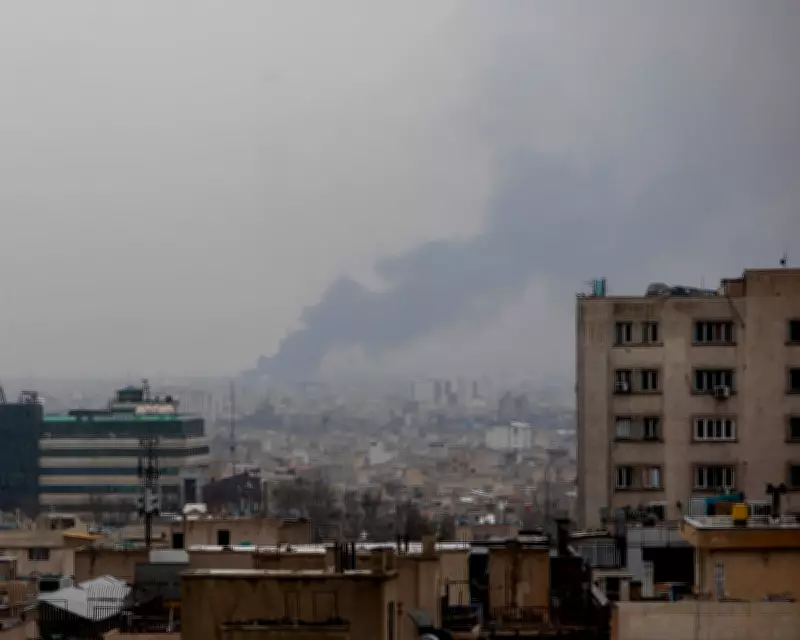
In Tehran, smoke continues to rise from the wreckage of targeted sites, with one resident describing the experience as 'something resembling the idea of carpet bombing.' This dramatic shift in the urban landscape mirrors a profound transformation in political sentiment among many Iranians who once viewed foreign intervention as their salvation.
From Hope to Disillusionment
After enduring years of arrests, disappearances, and mass killings under Iran's hardline regime, many anti-government protesters had placed desperate hope in Donald Trump's promise that the United States would 'come to their rescue.' This hope intensified when US and Israeli forces swiftly eliminated Iran's supreme leader on the first day of the conflict.
However, after two weeks of sustained aerial bombardment that has killed hundreds of civilians and destroyed residential blocks, shops, fuel depots, and even a school, that hopeful anticipation has curdled into bitter disillusionment. The regime persists, with Ayatollah Ali Khamenei's son assuming power, while the scope of destruction widens across the nation of over 90 million people.

'They are also lying! Like the regime has been lying to us,' said Amir, a student at the University of Tehran who requested anonymity. 'You are all worse than each other.' He described a pervasive tension and a strange emptiness following Khamenei's death, lamenting that the leader escaped facing justice for his actions.
Infrastructure and Cultural Heritage in Ruins
The turning point for many came with Israeli strikes on critical fuel depots in Tehran. The attack on the Shahran oil depot blanketed the capital in black smoke, followed by toxic rain that coated trees, homes, and vehicles with oily residue. This assault on civilian infrastructure prompted serious questions about the war's objectives.
'I genuinely believe now they didn't have a plan,' Amir confessed. 'If the regime is what you want to hit, where do you draw the line? What about us, the ordinary Iranians? We rely on this civil infrastructure. Why take away our ability to govern in the future? Who can rebuild utter ruins?'
The destruction extended beyond functional facilities to include priceless cultural heritage. Historical sites like Tehran's 14th-century Golestan Palace and Isfahan's 17th-century Chehel Sotoon Palace sustained significant damage in the attacks. This cultural erasure has provoked outrage and sorrow.
'How will they rebuild a priceless part of history?' asked a Tehran-based student. 'And how will we bring back people who are dying? Is the goal to erase our culture and history?'
A History of Protest Under Repression
Most Iranians have lived their entire lives under the clerical regime that replaced the monarchy in 1979. Despite severe media restrictions and the constant threat of imprisonment or death for dissent, protest movements have periodically surged to the surface.
These uprisings have typically been sparked by political disputes, economic crises, or social repression. The 2009 Green Movement saw hundreds of thousands protest disputed elections, met with violent state suppression. The powerful 2022 Woman, Life, Freedom movement emerged after Mahsa Amini died in custody over hijab regulations.
The most recent protests began in late December as economic strikes in Tehran's bazaar before escalating into nationwide demonstrations. Security forces responded with one of their deadliest crackdowns, killing thousands of protesters.
Three Governments Killing Iranians
While some still hold out hope that the conflict might bring meaningful change, many anti-regime activists now perceive a grim new reality. Reports of newborn babies killed in the strikes have led many to conclude that three governments—Iran's regime, the United States, and Israel—are now responsible for Iranian deaths.
'A significant portion of the people I've been speaking to, after witnessing the killing of civilians, have altered their perception of military intervention,' explained a protester in Tehran who described experiencing wave-like attacks on multiple city center neighborhoods.

An Iranian doctor who treated protesters for gunshot wounds in January expressed concern about the war ending prematurely. 'What we fear most is the war stopping now in its current stage,' he said. 'Then we'll be left with the same people who massacred us last month... only stronger.'
As the bombardment continues, many Iranians who once cried out for foreign intervention now feel profoundly abandoned, caught between a repressive domestic regime and destructive external forces that show little regard for civilian life or cultural preservation.