Iran's Leadership Transition Amidst War and Uncertainty
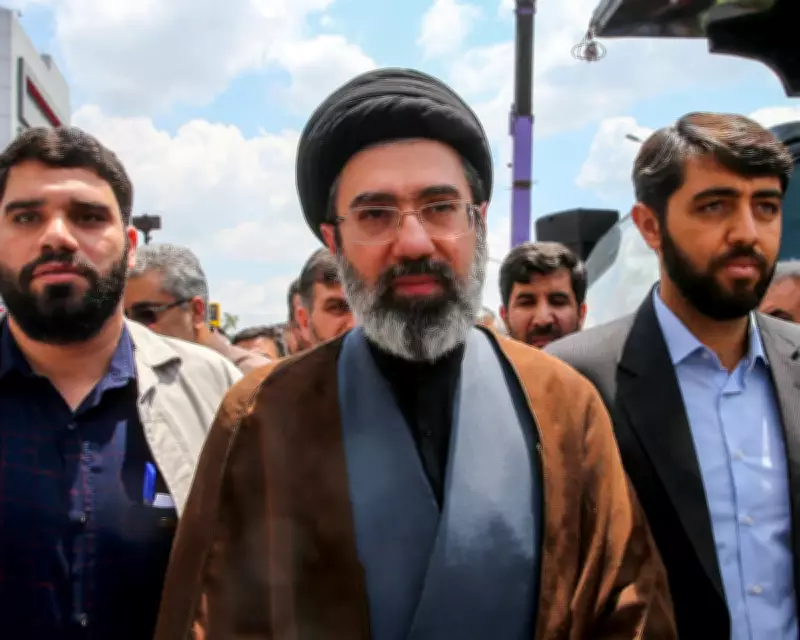
The Islamic Republic of Iran has appointed Mojtaba Khamenei as its new supreme leader following the death of his father, Ayatollah Ali Khamenei. This significant political transition occurs against the backdrop of ongoing regional conflict and raises immediate questions about the new leader's capacity to govern.
Injured Leader Takes Helm During Wartime
Confirmation has emerged that Mojtaba Khamenei sustained injuries during the initial wave of Israeli attacks, revealing the Islamic Revolutionary Guards Corps' determination to install their preferred candidate despite his physical condition. The full extent of his injuries remains undisclosed, though reports indicate at minimum a broken leg and facial trauma.
Ali Larijani, secretary of Iran's supreme national security council, offered carefully worded reassurance, stating "his condition has not been reported as critical" while emphasizing that Khamenei continues to provide "full authoritative guidance and oversight of operations." This phrasing notably avoids confirming whether Larijani has personally seen the new leader.

Speculation Mounts Over Leadership Vacuum
The complete absence of photographic evidence, video footage, or direct communications from Mojtaba Khamenei three days after his elevation has fueled widespread speculation about his actual condition. Opposition groups in the diaspora have circulated claims that Khamenei remains hospitalized in a coma, unaware of both his new position and the devastating losses suffered by his family.
Israeli authorities have openly mocked the situation, with the foreign ministry distributing a cardboard cutout image of Khamenei accompanied by the caption: "You can run, you can hide but cardboard regimes fold." This public ridicule underscores the international skepticism surrounding Iran's leadership transition.
Family Tragedy Compounds Leadership Crisis
The attack that injured Mojtaba Khamenei proved catastrophic for his immediate family. His father Ayatollah Ali Khamenei, mother, wife Zahra Haddad-Adel, and one son perished in the assault. Additional family casualties include a sister, brother-in-law, and niece, with his mother succumbing to injuries three days post-attack. The supreme leader's office itself was completely destroyed.
This profound personal tragedy inevitably raises questions about the emotional and psychological readiness of Mojtaba Khamenei to assume Iran's highest office during wartime conditions.
Constitutional Process and Practical Realities
The Assembly of Experts, comprising 88 senior clerics responsible for selecting Iran's supreme leader, convened under extraordinary wartime circumstances to formalize Khamenei's appointment. However, delays in this process suggest concerns extended beyond mere logistical challenges to include genuine doubts about the candidate's capacity and willingness to accept the position.
Yousef Pezeshkian, son of Iran's president, inadvertently confirmed Khamenei's injuries through a Telegram post that mentioned the new leader's condition alongside casual observations about Tehran weather. This indirect confirmation further highlights the opaque nature of information surrounding Iran's leadership.
Institutional Resilience Versus Personal Leadership
Academic analysis suggests Iran's political system possesses inherent resilience designed to withstand leadership transitions. Maryam Alemzadeh, associate professor in Iranian history and politics at Oxford University, notes that "the resilience has relied on this semi-formal network of IRGC, Basij and other state services that have fulfilled multiple roles."
Alex Vatanka of the Middle East Institute emphasizes that establishing personal authority requires time, noting that "the office does not give you power. It's the personality of the occupant of the office. It takes time" - a process that could require up to four years for the 56-year-old Khamenei to complete.
Military Strategy on Autopilot
Current assessments indicate Iran's military operations continue largely unaffected by leadership questions. The established strategy of asymmetrical warfare targeting economic infrastructure across the Gulf region appears to function with minimal need for direct oversight from the supreme leader's office.

This operational autonomy suggests that, for the immediate future, Iran's war machine can sustain itself regardless of whether its nominal commander is fully functional, injured, or even incapacitated. The critical test will come when strategic decisions about conflict escalation or resolution require definitive leadership input.
The transition to Mojtaba Khamenei's leadership thus represents both continuity and uncertainty - maintaining the existing power structure while raising fundamental questions about how personal capacity intersects with institutional authority during prolonged conflict.