

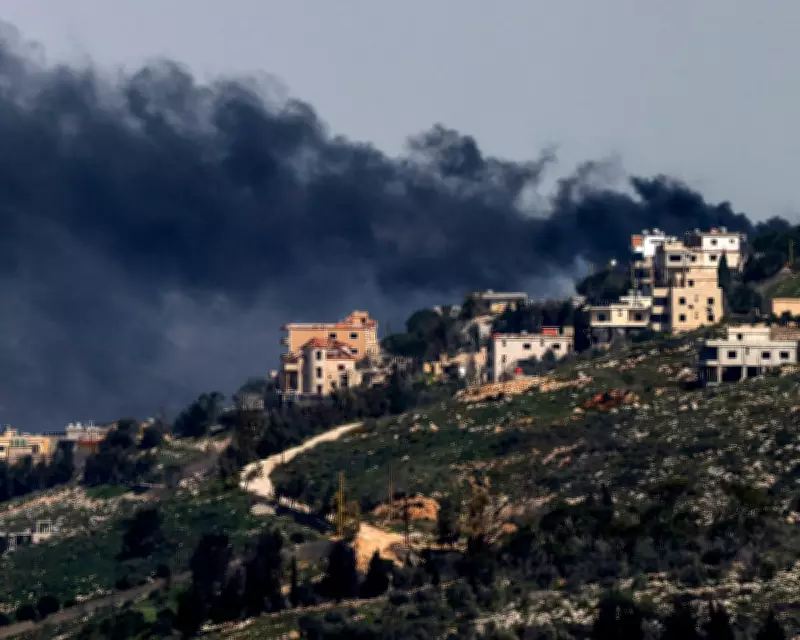
Israel Intensifies Ground Offensive in South Lebanon Amid Hezbollah Resistance
The Israeli military has escalated its ground operations in south Lebanon, targeting civilian infrastructure including bridges and major roads in an effort to sever Hezbollah's supply lines. According to Lebanese security sources and residents of affected border towns, intense fighting has erupted in at least three strategic areas as Israel attempts to push deeper into Lebanese territory.
Strategic Hilltop Battles in Khiam
Much of the recent combat has centered around the strategic hilltop city of Khiam, where Israel Defense Forces have conducted extensive air and artillery campaigns against entrenched Hezbollah fighters. A Hezbollah spokesperson acknowledged "heightened clashes" on the eastern and northern outskirts of the city following days of escalating violence.
Military analysts emphasize Khiam's strategic importance, noting its position overlooking the Hula Valley and key routes toward the Israeli border. Control of this elevated position would effectively divide central and eastern sectors south of the Litani River, disrupting Hezbollah's connectivity with the Bekaa valley and cutting off supply lines to fighters throughout southern Lebanon.

Expanding Ground Operations
As fighting continues in Khiam, Israeli troops have attempted to advance into border towns in both central and western sectors of south Lebanon. Residents of the Aita al-Chaab border village report intense combat between Israeli soldiers and Hezbollah fighters, with Lebanese security sources confirming multiple border towns have become sites of heavy fighting.
The escalation comes as Israel has amassed significant forces along the border, deploying four brigades and tank columns ahead of what appears to be an expanded ground invasion. While Israeli officials describe current operations as "limited," political discussions are reportedly underway regarding further expansion of the military campaign.
Hezbollah's Guerrilla Resistance
Despite more than a year of Lebanese army disarmament efforts and near-daily Israeli strikes on fighters and weapons caches, Hezbollah has maintained a strong presence south of the Litani River. The group has mounted substantial resistance using a combination of anti-tank guided munitions, drones, and artillery systems.
Local officials in southern Lebanon report that every town in the region contains at least several hundred Hezbollah fighters armed with anti-tank missiles, suggesting Israel's advance will face significant obstacles. Many residents of border villages are themselves members of the organization and have joined the fighting since Israel's invasion began.
Buffer Zone Strategy and Long-Term Implications
Israeli military objectives appear focused on creating a buffer zone in southern Lebanon that would push Hezbollah forces away from the border region. According to former IDF officers, this strategy involves occupying territory south of the Litani River while establishing surveillance-dominated zones to the north.
Military experts warn that implementing such a buffer zone would likely require long-term Israeli occupation, which could paradoxically revive popular support for Hezbollah. The organization currently faces domestic isolation and criticism for dragging Lebanon into another conflict with Israel, but prolonged occupation might shift public sentiment.
Civilian Infrastructure Targeted
The Israeli military campaign has deliberately targeted civilian infrastructure throughout south Lebanon, including bridges crossing the Litani River and major transportation routes. Rights groups have documented attacks on medical centers and emergency workers, which they characterize as attempts to degrade living conditions in the region.
Israeli forces have also established "safe zones" along the Lebanese border where residents can remain provided they prevent Hezbollah infiltration. Reports from border villages describe Israeli raids on civilian homes, with residents subjected to searches and occasional detention for interrogation.

The conflict began when Hezbollah launched rockets at Israel on March 2, prompting immediate Israeli military operations with stated goals of eliminating the organization. Hezbollah has framed the war as a defensive struggle for Lebanon's survival against near-daily Israeli airstrikes that have continued despite a November 2024 ceasefire agreement.





