

Unprecedented Evacuation Order Issued for Beirut's Southern Suburbs
The Israeli military has issued a sweeping evacuation directive affecting more than 500,000 residents of Beirut's southern suburbs, ordering them to "save your lives and evacuate your homes immediately." This unprecedented order comes as Israel continues its bombardment of Lebanon and Iran, while Tehran launches retaliatory strikes against Israeli and American targets across the region.
Panic and Gridlock in Beirut Streets
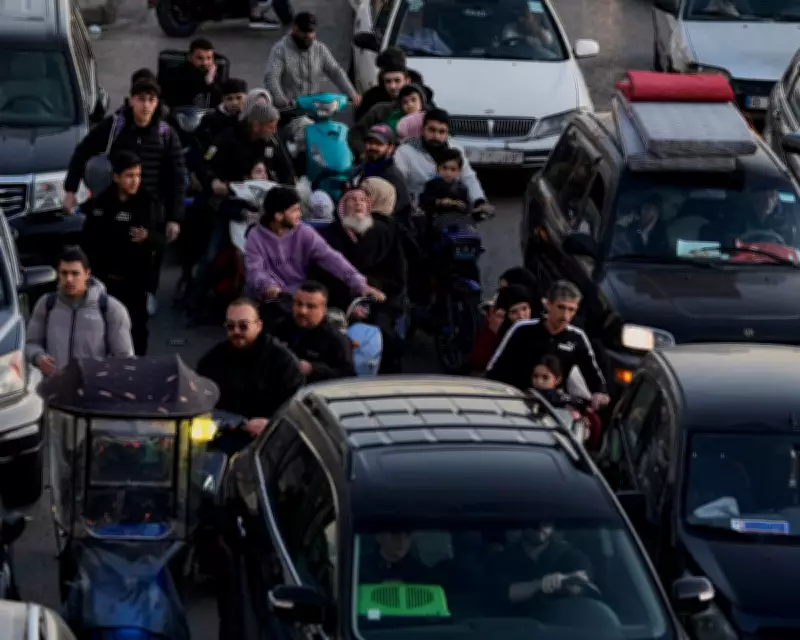
The evacuation order has created chaos throughout Beirut, with traffic at a complete standstill as thousands attempt to flee the affected areas. Eyewitness reports describe families walking through bumper-to-bumper traffic, women pushing strollers with infants, and desperate appeals for rescue services to assist elderly residents unable to leave their homes independently.
The Israeli military provided pre-approved evacuation routes north and east, employing tactics reminiscent of those used during previous conflicts in Gaza. Israeli Finance Minister Bezalel Smotrich escalated tensions further by threatening that "the southern suburbs of Beirut will become like Khan Younis," referencing the Gaza section nearly destroyed by Israeli bombs.

Expanding Regional Conflict
The conflict, now entering its sixth day, has expanded dramatically with Iranian retaliatory strikes targeting locations as distant as Cyprus, Azerbaijan, and multiple Gulf states. Iranian ballistic missiles have struck an airport in Azerbaijan's Nakhchivan region, while drones have been reported near military bases in the United Arab Emirates, Qatar, and Saudi Arabia.
According to Lebanon's Ministry of Health, Israeli airstrikes have killed at least 102 people and injured 638 in Lebanon alone. The broader conflict has claimed approximately 1,230 lives in Iran, about a dozen in Israel, and six American soldiers.
Political Dimensions and International Reactions
Former U.S. President Donald Trump inserted himself into the geopolitical crisis by claiming he should be involved in selecting Iran's next supreme leader following Ayatollah Ali Khamenei's death in a U.S.-Israeli airstrike. Trump specifically criticized Mojtaba Khamenei, the late leader's 56-year-old son, as an "unacceptable" choice for succession.
Iranian Foreign Minister Abbas Araghchi reacted with fury to the U.S. sinking of the Iranian warship IRIS Dena, which resulted in 87 confirmed fatalities. Araghchi warned that "the U.S. will come to bitterly regret the precedent it has set," while a senior Iranian cleric called for "Trump's blood" on state television.
Humanitarian and Legal Concerns
Human rights organizations have condemned the sweeping evacuation orders, arguing they constitute forced displacement—a potential war crime—and expressing particular concern for non-able-bodied residents who may be unable to comply. The evacuation area includes several hospitals and government ministries, raising additional humanitarian concerns.
The World Health Organization reports that at least 13 hospitals and health facilities have been struck during attacks on Iran, further complicating medical response capabilities in the region.
Broader Regional Impact
The conflict has created the largest travel disruption since the COVID-19 pandemic as multiple countries close their airspaces, while oil prices have spiked significantly. The crisis now affects 14 countries across the Middle East and beyond, with fears mounting about further escalation.
In Azerbaijan, President Ilham Aliyev condemned what he called a "groundless act of terror and aggression" following drone strikes near an airport and school, while Tehran denied responsibility for the attacks. Meanwhile, Iran has targeted Kurdish forces in northern Iraq as part of its expanding campaign.
The United States has offered an optimistic assessment of its military campaign despite the escalating violence, with various officials presenting differing timelines and objectives for the conflict in Iran. As Israeli and Hezbollah fighters engage in southern Lebanon according to UN peacekeepers, the region braces for what many fear could be a prolonged and devastating conflict.






