

Israeli military forces conducted a series of airstrikes on southern Lebanon this week, targeting what they described as Hezbollah infrastructure. The attacks come as a critical year-end deadline for the Lebanese state to disarm the militant group in the country's south rapidly approaches.
Strikes Violate Ceasefire Amid Rising Tensions
The strikes, which occurred on Wednesday, focused on the valleys of Houmin, Wadi Azza and Nimeiriya in the Nabatieh area. Israeli drones were reported to have continued hovering over the region and the eastern Bekaa valley following the bombardment. In a statement, the Israeli military asserted it had hit Hezbollah launching sites and military infrastructure, labelling the group's presence a breach of understandings between Israel and Lebanon.
This incident marks the latest violation of a ceasefire that has been in place for over a year, following a 13-month war between Israel and Hezbollah. Data from the independent conflict monitor ACLED reveals a stark pattern: Israel has bombed Lebanon on average once every four hours since the truce was implemented. In contrast, Hezbollah has shelled Israel just once in the week after the ceasefire began in December 2024.

The Looming Litani River Deadline
The military action is accompanied by increasingly aggressive rhetoric from Israeli officials. The focus is a US-approved plan, adopted by the Lebanese army, which mandates that by the end of the year, all Hezbollah infrastructure, weapons, and personnel must be cleared from the area south of the Litani River, approximately 20 miles from the Israeli border.
Israeli Defence Minister Israel Katz set a stark tone in November, telling parliament, "There will be no calm in Beirut, nor order and stability in Lebanon, until the security of the state of Israel is guaranteed … Hezbollah: we will disarm them." While Israeli forces are meant to withdraw under the plan, troops continue to occupy five points in southern Lebanon and conduct regular ground operations.
Lebanese Deputy Prime Minister Tarek Mitri stated on 17 December that the government was nearly finished with disarmament in the south and insisted Lebanon was "strictly observing" the ceasefire, unlike Israel. Lebanese authorities regularly announce the destruction of old Hezbollah weapons caches. However, Israel rejects these claims, arguing that Hezbollah is actively attempting to rebuild its forces along the border.
Diplomatic Friction and Deadly Escalations
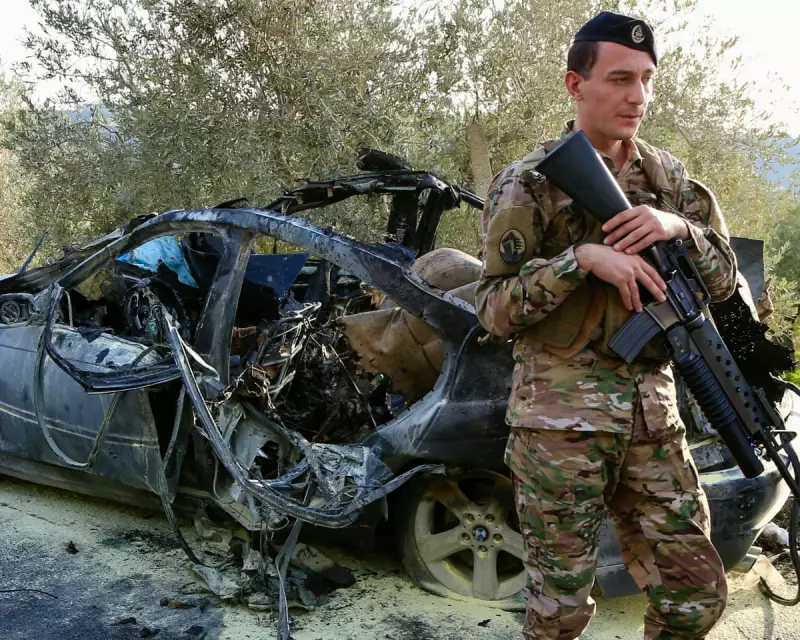
The tensions were further exacerbated by a deadly incident on Monday, when an Israeli drone strike killed three men in a car near Saida, far north of the Litani River. Israel claimed one of the deceased, a warrant officer in the Lebanese army, was a Hezbollah member involved in planning attacks. It cited this as proof of the state's insufficient action against the group.
Both the Lebanese army and Hezbollah denied the soldier had any links to the armed faction, with Defence Minister Michel Menassa calling the accusation a "malicious attack" on the military's integrity.
Amid the violence, diplomatic engagements continue in the southern Lebanese town of Naqoura to discuss the ceasefire. A recent meeting included civilian representatives for non-military talks, a move that caused outrage in Lebanon where any interaction suggesting recognition of Israel remains a political taboo. Israel maintains that its diplomatic track with the Lebanese state is separate from its military campaign against Hezbollah.
With reports suggesting an expanded offensive against Hezbollah may be discussed in an upcoming meeting between Israeli Prime Minister Benjamin Netanyahu and US President Donald Trump, and with Lebanon appealing to the international community over daily sovereignty violations, the region remains on a knife-edge as the deadline draws near.






