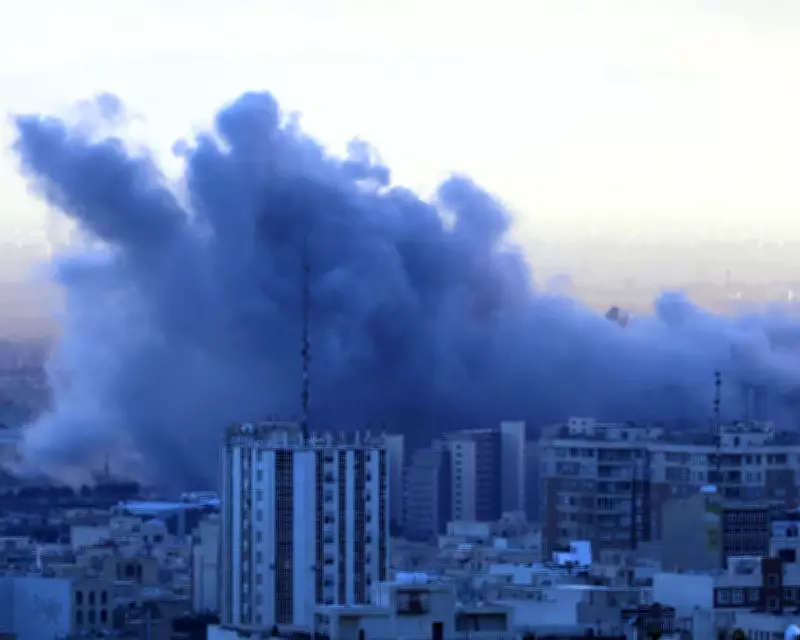
Israel Escalates Military Campaign with Fresh Strikes on Tehran and Beirut
Israel executed a new wave of targeted strikes on Tehran and Beirut early Wednesday, marking a significant escalation in the ongoing conflict with Iran. Simultaneously, Iranian forces launched missile attacks on US military installations across the Gulf region, creating a volatile multi-front confrontation that has entered its fifth consecutive day.
Devastating Impact on Iranian Capital
Residents of Tehran reported hearing multiple explosions throughout the capital city as Israeli military forces announced what they described as "broad-scale strikes" against regime targets. According to Kurdish media sources, police stations and Iranian Revolutionary Guards Corps headquarters in northwestern Kurdish regions were completely destroyed by precision strikes.
The human cost of the conflict has become increasingly severe, with current estimates suggesting between 800 and 1,500 Iranian casualties over the five days of sustained warfare. Rescue operations continue across affected areas, with emergency workers recovering bodies from damaged buildings throughout Tehran.

Political Turmoil and Succession Crisis
Iran faces simultaneous military and political crises as funeral proceedings began Wednesday for Supreme Leader Ayatollah Ali Khamenei, who was killed in US-Israeli airstrikes on Sunday. His body will lie in state for three days at a central Tehran compound for public viewing while senior clerics convene to appoint his successor.
Analysts indicate that Mojtaba Khamenei, the 56-year-old son of the late supreme leader, has emerged as the favored candidate among both clerical circles and the Revolutionary Guards. His potential appointment would signal a hardening of Iran's political stance and increased military influence over state affairs, potentially exacerbating tensions with reformist elements within Iranian society.
Regional Escalation and US Involvement
Iranian forces have expanded their retaliatory strikes to include unprecedented attacks on US diplomatic and military facilities throughout the Gulf region. Targets have included the US embassy in Saudi Arabia, consular offices in the United Arab Emirates, and critical military infrastructure in Bahrain and Qatar.
US Central Command commander Admiral Brad Cooper reported that American forces have struck approximately 2,000 targets in recent days, claiming significant degradation of Iranian air defense systems along with destruction of major weapons stockpiles and ballistic missile launch capabilities.
Lebanon Becomes Secondary Battlefront
The conflict has spread to Lebanon, where Israeli airstrikes targeted multiple locations including southern suburbs of Beirut. Explosions reverberated through the capital into Wednesday morning, with one strike hitting a hotel in Hazmieh located just 700 meters from the presidential palace.
Lebanon's health ministry confirmed six additional fatalities from the latest strikes, bringing the country's total death toll to 46 since Monday. The violence has displaced approximately 58,000 people nationwide, creating widespread panic and confusion as rumors of evacuation orders prompted mass movements of civilians.
Military Assessments and Strategic Objectives
US and Israeli officials have offered cautiously optimistic assessments of military progress while acknowledging unclear strategic objectives. The Trump administration has presented multiple, sometimes contradictory goals including regime change, destruction of Iran's ballistic missile capabilities, naval disarmament, nuclear program containment, and cessation of proxy support throughout the region.
Israeli military spokesperson Brigadier General Effie Defrin confirmed strikes on a building in Qom where religious authorities were reportedly meeting to select Iran's next supreme leader. Israeli forces also targeted sites allegedly used for ballistic missile storage and a secret underground facility purportedly involved in nuclear weapons component development.

Continuing Rocket Exchanges and Regional Implications
Hezbollah forces in Lebanon maintained rocket and suicide drone attacks against Israeli military positions in northern Israel, claiming successful strikes against three Merkava tanks that entered southern Lebanese territory. The militant group also reported downing an Israeli drone operating in Lebanese airspace.
As the conflict enters its second week, regional stability continues to deteriorate with no clear diplomatic resolution in sight. The expanding geographical scope of hostilities and increasing civilian casualties suggest the potential for prolonged regional warfare with unpredictable consequences for Middle Eastern security architecture.