

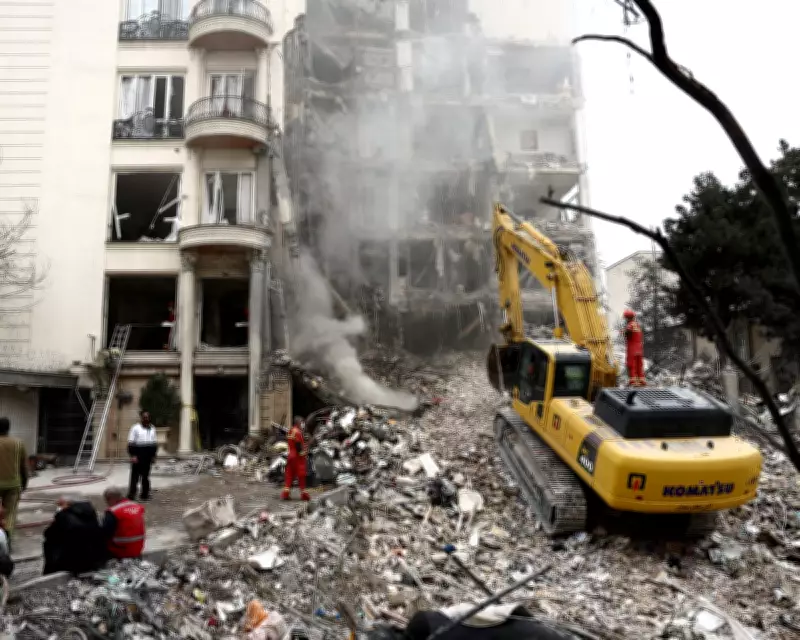
Israel Intensifies Strikes on Tehran as US Pauses Energy Attacks
The Israeli military has initiated a fresh wave of strikes targeting infrastructure in Tehran, even as former US President Donald Trump announced a temporary pause in American attacks on Iranian energy facilities. This development comes amid what Trump described as productive negotiations between Washington and Tehran over the past two days.
Military Operations Continue Despite Diplomatic Moves
The Israeli Defense Forces (IDF) confirmed on social media platform X that they had just begun another series of strikes aimed at infrastructure belonging to what they termed the Iranian terror regime across Tehran. This announcement followed approximately forty minutes after Trump revealed he had extended his deadline to strike Iran's power plants by five days, citing ongoing productive discussions.
An IDF official clarified to the Times of Israel that the military could not comment on the US president's announcement regarding negotiations with Iran, characterizing it as a political matter. The official emphasized that the IDF operates strictly in accordance with directives from Israel's political leadership and will continue striking targets in Iran according to established plans until instructed otherwise.

Unprecedented Explosions Rock Iranian Capital
Al Jazeera Arabic's correspondent in Tehran reported that the size and volume of explosions in the Iranian capital were unprecedented. Meanwhile, the IDF informed the Guardian that energy infrastructure would be spared from their strikes, suggesting Israel might follow Washington's lead in suspending targeting of Iranian power plants and related sites.
Iran's Revolutionary Guards responded by announcing they had launched a new attack on targets in Israel earlier on Monday. Before Israel's latest strikes on Iran, Trump wrote on social media that Washington and Tehran had engaged in very good and productive conversations over the previous two days.
Humanitarian Impact and Regional Escalation
The US-based Human Rights Activists News Agency (HRANA) reported recording at least 206 attacks across 15 Iranian provinces in the previous 24 hours, resulting in at least four casualties including both civilian and military personnel. With the killing of a child on Monday, estimates suggest at least 15% of total human casualties in Iran so far have been under the age of 18.
Since US-Israeli bombs began falling on Iran, estimates of total fatalities including both military and civilian have surpassed 1,500, with some rights groups reporting figures as high as 3,230 as of March 21. At least six people were killed in strikes on homes in Tabriz city according to Fars news agency.
Military Achievements and Regional Expansion
The IDF reported they had destroyed or rendered inoperable approximately 330 of Iran's estimated 470 ballistic missile launchers since the beginning of the conflict. More than half were hit in airstrikes while others were disabled after entrances to underground storage sites were targeted. The military stated the air force continues pursuing remaining launchers as missile fire on Israel has decreased to about 10 daily from roughly 90 at the conflict's outset.
Simultaneously, Israel has continued its military campaign in Lebanon with strikes hitting Beirut's southern suburbs on Monday, marking the first attack on the Hezbollah stronghold in days. The Israeli military announced it was striking Hezbollah infrastructure in Beirut after warning residents to leave the southern suburbs beforehand.
Israeli forces have positioned themselves inside the southern Lebanese village of Aita al-Chaab, deploying a large crane equipped with surveillance cameras facing nearby Ramiyah. Bezalel Smotrich, Israel's far-right finance minister, called for annexation of areas in southern Lebanon, stating Israel should apply sovereignty over territories under its control and suggesting the new Israeli border should extend to the Litani River.
The Israeli prime minister's office did not immediately respond to requests for comment regarding the US-Iran talks or Washington's decision to refrain from targeting specific Iranian sites. The Guardian could not independently verify all claims regarding military strikes and casualties.






