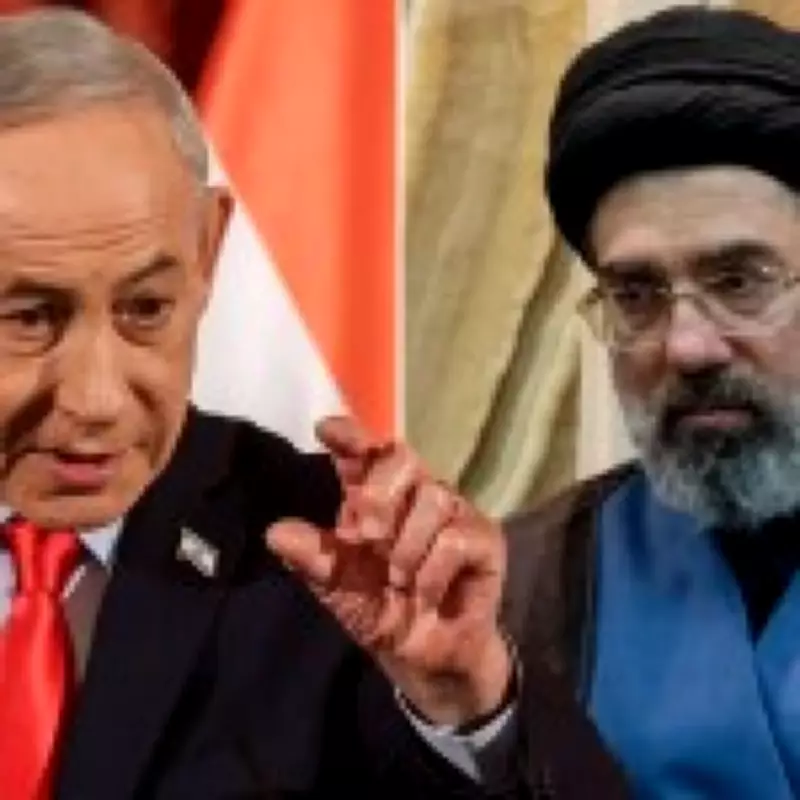
Israel Claims Knowledge of Iranian Leader's Whereabouts Amid Speculation
Israeli security officials have asserted they possess information regarding the location of Iran's Supreme Leader, who has been absent from public view since assuming leadership. This development follows former US President Donald Trump's suggestion that the leader might be deceased.
Disappearance and Doubts
Mojtaba Khamenei has not made any public appearances since becoming Supreme Leader on February 28, following the death of his father, Ayatollah Ali Khamenei, in coordinated US-Israeli military strikes. Although Iranian state media released a statement attributed to Khamenei on Thursday, in which he vowed retaliation for Iranian casualties, no visual evidence of his well-being has been provided.
Tehran officials have stated that Khamenei sustained leg injuries during a strike on Thursday, potentially explaining his absence. However, during a weekend interview with NBC News, Trump cast doubt on the leader's status, remarking, 'So far, nobody's been able to show him.'

Conflicting Reports and Expert Skepticism
In contrast, an Israeli official informed the Daily Mail, 'We know where he is,' while also warning against trusting Iranian news sources, which have circulated unverified reports about Israeli Prime Minister Benjamin Netanyahu's health. Regional experts have expressed skepticism about the authenticity of the statements issued in Khamenei's name, suggesting they may have been crafted by other Iranian figures.
Persistent rumors indicate Khamenei might have been secretly transported to Russia for medical treatment, a claim Iran has firmly denied. Iranian Foreign Minister Abbas Araghchi stated that Khamenei is residing in a highly secure location with restricted communication to ensure his safety, adding that he is in 'good health' and will decide when to make public appearances.
Broader Conflict and Global Impact
The leadership uncertainty unfolds against the backdrop of an escalating American-Israeli military campaign against Iran, now in its third week, which has resulted in over 2,000 fatalities, including Iranian and Lebanese civilians. The conflict shows no immediate signs of resolution, with significant repercussions for global stability and economics.
Key consequences include:
- Oil prices have skyrocketed as maritime traffic through the Strait of Hormuz, a vital channel for one-fifth of the world's oil, has been severely disrupted.
- In response to soaring fuel costs, UK Prime Minister Keir Starmer has announced a £53 million support package for affected households.
- The conflict has expanded regionally, with Iran launching attacks against Dubai in the United Arab Emirates and drones striking a British air base in Cyprus, prompting European nations to deploy warships.
- To conserve energy, restaurants and universities across South Asia, particularly in India and Bangladesh, have temporarily closed.
Khamenei was formally appointed by Iran's Assembly of Experts, a council of 88 senior clerics, earlier this month. Initial reports falsely claimed he had perished in the strikes that killed his father; he survived, but his parents and wife were among the casualties. Notably, a cardboard cutout bearing his image was utilized during his inauguration ceremony, further fueling speculation about his condition and whereabouts.