

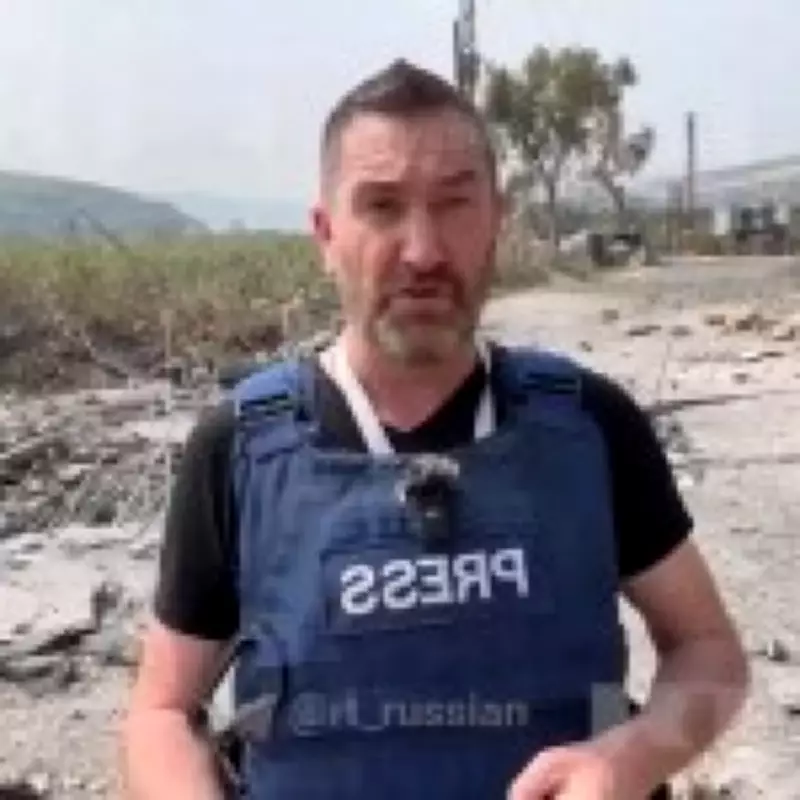
In a harrowing incident captured on camera, a British journalist and his cameraman were hospitalized after an Israeli airstrike exploded perilously close to them during a live report in southern Lebanon. Steven Sweeney, a reporter for RT, and cameraman Ali Rida were covering rocket attacks in the region when an Israeli Defense Forces (IDF) plane fired toward their press vehicle.
Shocking Footage Captures Near-Fatal Blast
The dramatic footage shows Sweeney speaking about ongoing hostilities when the sound of an approaching missile grows louder. Suddenly, a deafening blast throws both men to the ground as debris rains down around them. The strike occurred mere meters from their location, highlighting the extreme dangers faced by journalists in conflict zones.
Pattern of Targeting Journalists
This incident adds to a troubling pattern documented by press freedom organizations. Since the Committee to Protect Journalists began recording deaths in 1992, Israel has been responsible for more targeted killings of journalists than any other government military. In October 2023, shortly after the Gaza war began, Israeli strikes killed Reuters journalist Issam Abdallah.

Amnesty International investigations found no indication of fighters or military objectives at strike sites, raising serious concerns that these attacks may constitute deliberate targeting of journalists—a potential war crime under international humanitarian law.
Escalating Conflict in Lebanon
Israel has intensified operations in southern Lebanon amid the ongoing conflict between the US and Iran, targeting what it claims are Hezbollah positions. However, the human cost has been devastating. Since March 2, at least 886 people have been killed, including 111 children, according to United Nations figures.
The UN emphasizes that international humanitarian law requires clear distinction between military targets and civilians, with feasible precautions to protect civilian lives. Deliberate attacks on civilians or civilian objects constitute war crimes.
Humanitarian Crisis Unfolding
Israeli strikes have displaced more than one million Lebanese citizens—approximately 20% of the country's population—according to Lebanese government reports. Recent attacks have hit multiple apartment buildings in Beirut, exacerbating the humanitarian emergency.
International Diplomatic Response
British Foreign Secretary Yvette Cooper expressed grave concerns yesterday, warning that Lebanon stands "on the precipice of a widening conflict that risks disastrous humanitarian consequences." Speaking in the House of Commons, Cooper called for urgent diplomatic talks to prevent further escalation while condemning rocket attacks by Lebanese Hezbollah into northern Israel.
Cooper reaffirmed support for Lebanon's sovereignty and raised alarms about the impact of IDF operations on Lebanese civilians. The incident involving Sweeney and Rida underscores the urgent need for enhanced protection of journalists and civilians as regional tensions continue to mount.






