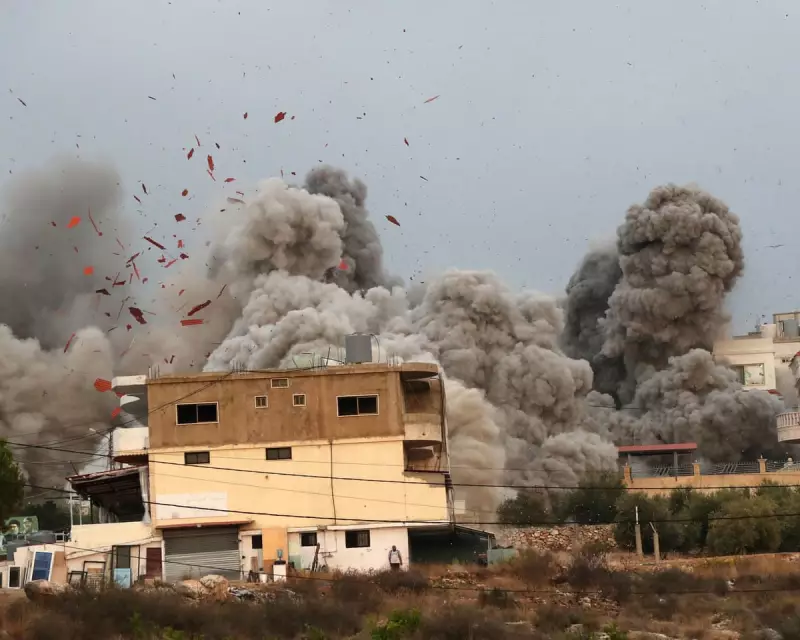
The Israeli military has conducted a significant wave of airstrikes in southern Lebanon, targeting three towns in a move it claims is designed to prevent the militant group Hezbollah from rebuilding its military arsenal.
Precision Strikes and Evacuation Warnings
On Thursday, Israeli warplanes struck the towns of Kfar Dounine, Tayr Debba and Zawtar al-Sharqiya. In an unusual step, the attacks were preceded by evacuation warnings issued to residents approximately one hour before the strikes. An Israeli military spokesperson published maps of the intended targets, advising people to move at least 500 metres away from the specified buildings, which were described as part of Hezbollah's military infrastructure.
While the Israeli military bombs Lebanon on a near-daily basis, the intensity of Thursday's assault and the prior issuance of a public warning marked a significant escalation. Fortunately, no deaths had been reported at the time the information was released.

A Fragile Ceasefire Under Strain
These aggressive actions come despite a ceasefire deal signed between Hezbollah and Israel nearly a year ago, which ended 13 months of intense fighting. The terms of this agreement stipulated that Hezbollah must disarm, both parties should cease firing on one another, and Israel is meant to withdraw from Lebanese territory. However, Israel still maintains five positions within Lebanon's borders.
The strikes occurred just hours after Hezbollah submitted an open letter to Lebanon's leadership. In it, the group reaffirmed its commitment to the ceasefire but asserted its "legitimate right" to resist what it termed the "Israeli occupation". Since the ceasefire was signed in December 2024, Hezbollah has fired at Israel on one occasion.
Accusations and Political Tensions
Israeli officials have recently intensified their accusations, claiming that Hezbollah is actively attempting to restore its military capabilities, which were heavily degraded during the previous conflict. "Israel will continue to defend all of its borders, and we continue also to insist on the full enforcement of the ceasefire agreement between Lebanon and Israel," stated government spokesperson Shosh Bedrosian. She emphasised that Israel would not permit Hezbollah to recover militarily.
On the Lebanese side, the government has reiterated its commitment to the disarmament process, stating it has already disarmed about 85% of Hezbollah's weapons caches in the south and aims for complete disarmament by the year's end. However, the government has cautioned that moving more quickly, as Israel demands, could risk triggering internal civil strife. The political landscape is further complicated by Hezbollah's condemnation of direct negotiations with Israel, a possibility recently suggested by Lebanon's president, Joseph Aoun.