

Israel Escalates Attacks on Medics in Lebanon with Deadly 'Quadruple Tap' Strikes
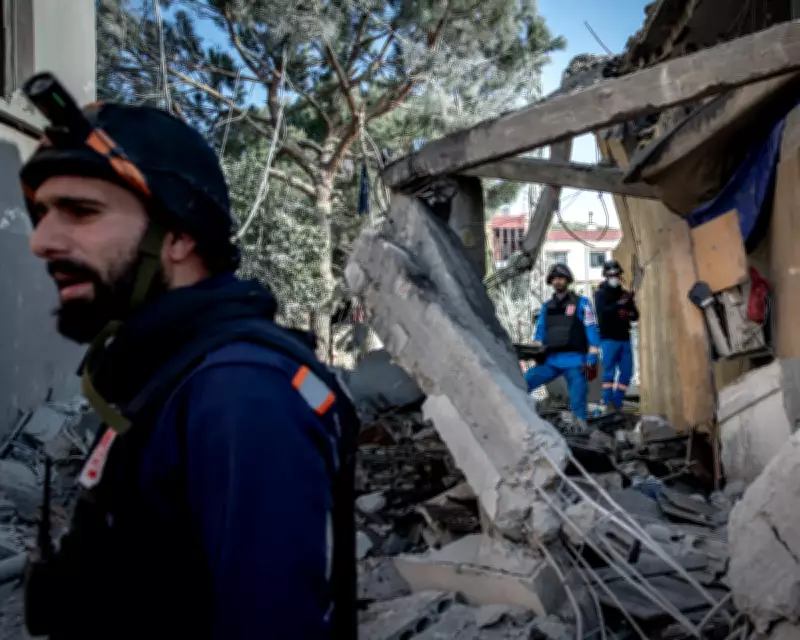
Paramedics in Nabatieh, southern Lebanon, searched a building for survivors on Monday shortly after an Israeli airstrike, highlighting the perilous conditions faced by healthcare workers in the region. This incident is part of a broader pattern of escalating assaults, with the Lebanese health ministry reporting that Israel has killed 91 healthcare workers and wounded 214 since the Israel-Hezbollah conflict began on March 2, demonstrating what it calls a 'total disregard' for international law.
Deadly Ambush in Mayfadoun
When a call came in to respond to an Israeli airstrike in Mayfadoun, most paramedics hesitated, wary of double-tap attacks where rescuers are targeted after an initial strike. However, medics from the Islamic Health Association (IHA) rushed to the scene. By the time other emergency workers arrived, they found the IHA team had been caught in a second strike. As they evacuated wounded colleagues, their ambulances were hit in two further attacks, turning the rescue mission into a nightmare.
One paramedic was seen covering his ears and screaming in pain as shrapnel shattered the ambulance's back window. In total, the attacks killed four medics and wounded six from three ambulance corps: the Hezbollah-affiliated IHA, Amal-affiliated medical corps, and Nabatieh emergency services. Under international law, all medics are protected as non-combatants, regardless of political affiliation.

Coining a Fearsome New Term
Rescuers in Lebanon have long feared double-tap attacks, but Wednesday's three-wave assault after the initial strike has led to the coining of a new term: the quadruple tap. A video from the scene shows paramedics loading wounded individuals into ambulances when a bomb lands nearby. They rush to extract a motionless driver and carry blood-covered medics onto stretchers, with one filmer heard saying, 'Oh God, oh God.'
Among the killed was Fadel Sarhan, 43, survived by his eight-year-old daughter. Ali Nasr al-Deen, head of the Mayfadoun civil defence centre, described Sarhan as a loved and responsible person who cared for animals, calling his loss 'huge.' Medics mourned their colleagues at funerals in Nabatieh on Thursday, events that have become increasingly common with near-daily killings of healthcare workers.
Ongoing Assaults and International Condemnation
Israel has provided little justification for these attacks, accusing Hezbollah of using ambulances and hospitals for military purposes without evidence. The Lebanese health ministry has accused Israel of deliberately targeting ambulance crews, stating that paramedics are 'direct targets' in violation of international humanitarian law. The Israeli military did not immediately respond to requests for comment.
In the video of the quadruple tap, the frame highlighted that the ambulances contained no weapons. Hours later, Israel bombed the vicinity of Tebnine governmental hospital, the only public hospital in the area, for the second time in two days. The strikes injured 11 hospital workers and damaged the emergency department, according to the World Health Organization (WHO).
Mental Toll and Resilience of Healthcare Workers
Tedros Adhanom Ghebreyesus, head of the WHO, reiterated calls for the protection of healthcare facilities and workers, emphasizing the need for safe humanitarian access. An ambulance in Tebnine was also struck on Thursday, critically injuring two medics. The mental toll on healthcare workers is severe, with many facing the trauma of losing friends and colleagues.
Abbas Atwi, head of the IHA's emergency department in Nabatieh, stated after a medical centre was targeted in March, killing his friends, 'We have to go to places to rescue people, but then we get double tapped. But we will stay and keep going, we will not leave.' This resilience underscores the dire situation as attacks on medical infrastructure and personnel continue unabated.






