Japanese Organized Crime Figure Receives 20-Year Sentence for Nuclear Materials Conspiracy
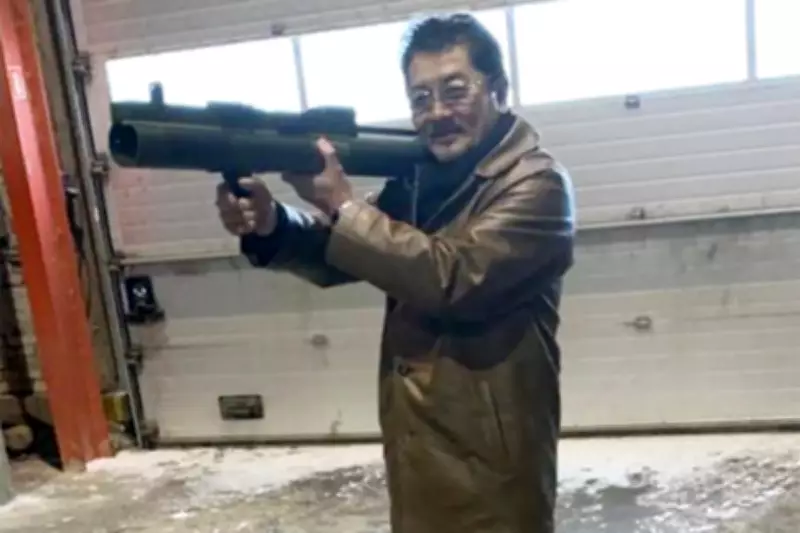
In a dramatic courtroom scene at New York's federal courthouse last week, Takeshi Ebisawa, a 62-year-old man described as a leader in Japan's Yakuza organized crime syndicate, was sentenced to 20 years in prison. The case centered on a transnational plot involving attempts to traffic nuclear materials, including weapons-grade plutonium, to Iran, alongside deals for heroin, methamphetamine, and advanced weaponry.
DEA Sting Uncovers Complex Criminal Network
According to prosecutors, the U.S. Drug Enforcement Administration had been investigating Ebisawa since 2019. He was arrested in New York in 2022 along with three Thai men. Ebisawa pleaded guilty to six counts of conspiracy, including trafficking nuclear materials from Myanmar to other countries, international narcotics trafficking, weapons dealing, and money laundering. The illicit activities spanned multiple nations, including Japan, Thailand, Myanmar, Sri Lanka, and the United States.
Prosecutors revealed that Ebisawa arranged to sell large quantities of heroin and methamphetamine from Myanmar's rebel United Wa State Army to an undercover DEA agent. In exchange, he sought to purchase automatic weapons, rockets, machine guns, and surface-to-air missiles, some allegedly taken from U.S. military bases in Afghanistan, for insurgent groups in Sri Lanka and Myanmar.

Nuclear Trafficking: An Existential Threat
While the drug and weapons deals were significant, it was the trafficking of nuclear materials that drew intense focus from U.S. prosecutors. U.S. Attorney Jay Clayton emphasized the gravity of the situation, stating, "The illicit trafficking of nuclear materials is an existential threat to every New Yorker and every American." Ebisawa had attempted to sell uranium, thorium, and plutonium to fuel a purported nuclear weapons program, while also planning to distribute deadly drugs on U.S. streets.
In intercepted communications, Ebisawa referred to drugs as "cake and ice cream" and weapons as "bamboo." However, his efforts to provide nuclear materials to an undercover DEA agent posing as an Iranian general in charge of Iran's nuclear weapons program were particularly alarming. When asked if the uranium was enriched above 5% for use in nuclear weapons, Ebisawa responded, "I think so and hope so."
Questions Surround the Source of Nuclear Materials
Ebisawa provided photographs of nuclear samples alongside a Geiger counter measuring radiation and promised the "general" that plutonium would be even "better" and more "powerful" for Iran's use. Prosecutors indicated that the nuclear material originated from an unidentified leader of an ethnic insurgent group in Myanmar who had been mining uranium. A U.S. laboratory confirmed that the samples contained uranium, thorium, and weapons-grade plutonium.
However, experts have raised doubts about the availability of such materials in Myanmar. Matthew Bunn, a professor at the Harvard Kennedy School, noted, "It's a mysterious situation because there isn't any plutonium to speak of in Myanmar." He suggested that the samples might contain only small quantities, raising questions about Ebisawa's access to substantial amounts.
Debate Over Ebisawa's Criminal Connections
Jake Adelstein, author of Tokyo Vice: An American Reporter on the Police Beat in Japan, challenged the portrayal of Ebisawa as a Yakuza leader. Based on his research, Adelstein stated, "He's just a conman who was probably introduced to the DEA running a sting operation as a Yakuza and they ran with it." He added that even Ebisawa's friends acknowledge his history as a conman.
Despite this, the prosecution proceeded as part of the Organized Crime Drug Enforcement Task Forces operation, highlighting heightened tensions around nuclear materials falling out of regulatory control.

Global Implications for Nuclear Security
David Kenneth Smith, a former nuclear security officer at the International Atomic Energy Agency, described the Ebisawa case as "a perfect confluence" of international nuclear trafficking cooperation and a "resounding success." However, he warned that it underscores vulnerabilities in global security systems, particularly in regions like the Golden Triangle or along the Black Sea, where weakly protected borders and inadequate radiation detection facilitate criminal activity.
Smith explained, "Whether it's guns, narcotics or nuclear materials, they all get commoditized – and nuclear was the big thing after the breakup of the Soviet Union." He expressed concern about networks with established transit pathways and potential buyers, making it challenging to protect such materials.
The IAEA has recorded 4,390 incidents since 1993 where nuclear and radioactive material was out of regulatory control, with 343 likely connected to trafficking or malicious use. This case emerges amid ongoing attacks by the U.S. and Israel on Iran, partly due to its nuclear program, though Iran denies any intent to build nuclear weapons.
Ongoing Concerns and Future Risks
With the war on Iran threatening potential government collapse, nuclear forensic experts are increasingly anxious about the spread of dangerous materials. Bunn highlighted the worst-case scenario: "The collapse of a state with several bombs' worth of highly enriched uranium is a nervous-making thing." He added that individuals with access to such materials might seek lucrative deals in times of crisis.
Ebisawa's prosecution, led by the OCDETF, concluded with then-DEA administrator Anne Milgram stating that he offered uranium and weapons-grade plutonium "fully expecting that Iran would use it for nuclear weapons." As global conflicts and terrorist networks stress existing security systems, this case serves as a stark reminder of the persistent threats posed by nuclear trafficking and organized crime.