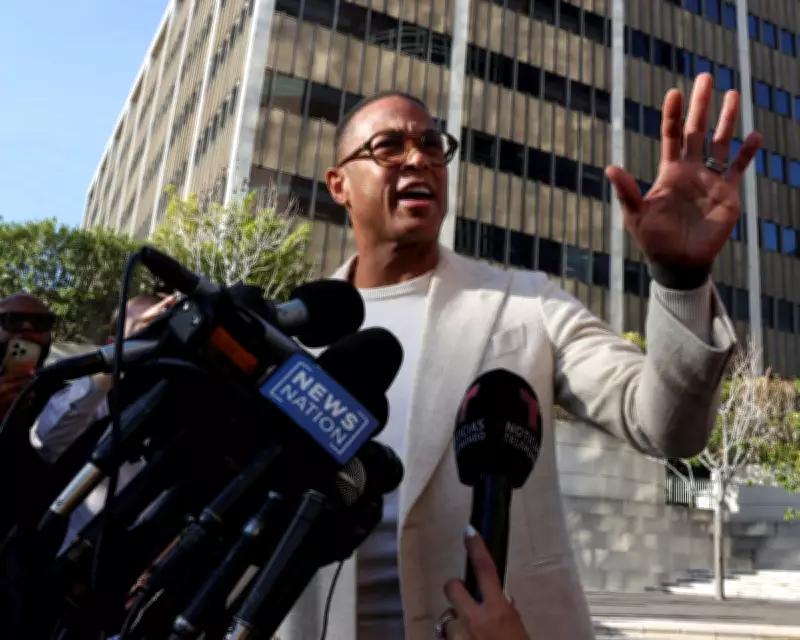
The recent arrests of prominent journalists Don Lemon and Georgia Fort have sparked serious concerns about the erosion of press freedom and constitutional protections in the United States. These extraordinary legal actions represent what many legal experts describe as a dangerous escalation in governmental attacks on journalism and a clear threat to first amendment freedoms that protect all Americans.
Unprecedented Criminal Charges Against Working Journalists
Last week, federal authorities pursued criminal charges against former CNN host Don Lemon and local journalist Georgia Fort for their reporting from a protest scene in Minnesota. The journalists were covering a demonstration at the Cities church in St Paul on 18 January, where protesters interrupted a service with chants against Immigration and Customs Enforcement (ICE) policies.
According to the federal indictment unsealed on Friday, the justice department is accusing both journalists of conspiring to deprive others of their constitutional rights – a felony carrying potential penalties of up to ten years imprisonment, substantial fines, or both. Additionally, they face charges of allegedly obstructing the free exercise of religion in a place of worship.

A Dangerous Precedent for Press Freedom
Legal experts emphasize that this represents an unprecedented application of federal laws to punish legitimate journalistic activity. Theodore J Boutrous Jr and Katie Townsend, partners at Gibson Dunn and co-chairs of the firm's first amendment group, argue that there is no constitutional basis for such charges that would be consistent with first amendment protections.
Remarkably, before the indictment was issued, a federal magistrate judge in Minnesota had already refused to sign an arrest warrant for Lemon. Chief Judge Patrick Schiltz of the federal district court in Minneapolis, a George W Bush appointee, noted in correspondence that Lemon was clearly acting as a journalist and that there was no evidence he had engaged in any criminal behavior or conspiracy.
The Vital Role of On-the-Ground Reporting
Covering demonstrations from the scene represents a vital public service with deep historical roots in American journalism. From the civil rights movement and Vietnam war protests of the 1960s to contemporary demonstrations against immigration policies, journalists have served as essential witnesses, providing accurate, firsthand accounts that inform public discourse.
The US Supreme Court has repeatedly recognized journalists as "surrogates for the public," whose reporting enables citizens to understand protestors' causes, evaluate government actions, and form independent judgments about significant national issues. This function becomes particularly crucial during periods of social unrest and political division.
Chilling Effects on Democratic Discourse
These indictments threaten to severely restrict the flow of vital information to the American public by sending a stark warning to all journalists. The implicit message suggests that covering protests could lead to criminal prosecution and potential imprisonment, creating what legal scholars describe as a "chilling effect" on essential reporting.
As the Supreme Court noted in its landmark Citizens United decision, "The right of citizens to inquire, to hear, to speak, and to use information to reach consensus is a precondition to enlightened self-government and a necessary means to protect it." The current prosecutions directly undermine this fundamental democratic principle.
Constitutional Implications and Historical Context
While the demonstration at the Cities church implicated multiple first amendment freedoms – including rights to worship and protest – the decision to pursue novel criminal charges against journalists covering the event creates unique constitutional concerns. The justice department's actions appear designed to intimidate reporters into abandoning on-the-ground coverage of protests against government policies.
The Supreme Court has consistently emphasized that freedom of speech and press requires "breathing room" to survive, recognizing that fear of legal entanglement can deter individuals from exercising their constitutional rights. These indictments directly contradict this established legal principle.

Nearly sixty years ago, the Court declared that press freedom exists "not for the benefit of the press so much as for the benefit of all of us." The arrests of Lemon and Fort, who were simply performing their professional duties, therefore represent a danger not just to journalists but to every American who relies on a free press to maintain an informed democracy.