

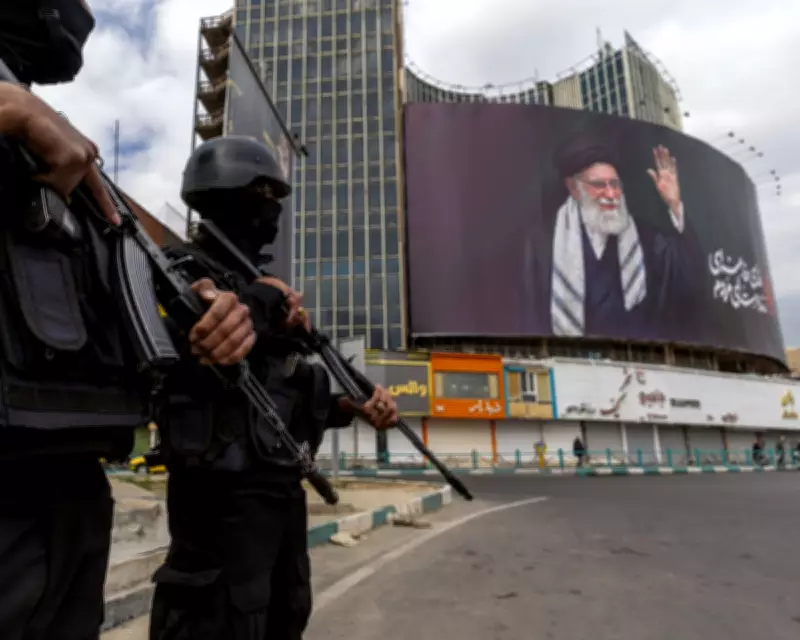
Security personnel stand guard near a large portrait of Ayatollah Ali Khamenei in Iran, a vivid symbol of the regime's pervasive influence. 'During my first visit to Iran in 2019, I witnessed firsthand how deeply the Islamic Republic's authority permeates daily life,' notes an observer. Photograph: Majid Saeedi/Getty Images.
Family Escape from Regime Violence
In Tehran, 1980, my grandfather received an anonymous warning that the Iranian regime sought his execution. That very night, he, my grandmother, and my teenage mother fled their homeland on an emergency flight to Heathrow, using forged documents. With only two suitcases, they escaped, eventually immigrating to Australia after three arduous years in London as asylum seekers. In Sydney, we rebuilt our lives, surviving against the odds, but many others were not as fortunate.
Global Reactions to Ayatollah's Death
Celebrations have erupted worldwide following the death of Ayatollah Ali Khamenei, and understandably so. He led one of the most brutal regimes in recent history, responsible for countless executions, torture, and the forced exile of families like mine. His passing is no loss, yet I fear President Trump's unlawful military intervention in Iran may spell disaster for its people.

While I cannot represent all Australian-Iranians, I am profoundly concerned about the human toll of this attack. The diaspora and Iran itself are deeply divided, with some traumatized by government violence and eager for change at any cost, while others hold opposing views. Regardless, civilians must not be killed—whether by their own regime or foreign powers violating sovereignty.
Impact on Civilians and Diaspora Fears
For Iranians enduring US-Israeli bombings with inadequate shelters and restricted movement, and for diasporic individuals like myself sending frantic, unanswered messages to loved ones as explosions rock major cities, the terror is overwhelming. Western leaders' sudden strikes in the Middle East are not new; comparisons abound between George W. Bush's 'Mission Accomplished' speech and Trump's recent call for Iranians to 'take back your government' amid aerial assaults. How can ordinary people reclaim control under such bombardment and systemic oppression?
Personal Insights from Iran Visit
My 2019 trip to Iran revealed the regime's omnipresence: highways lined with flags honoring war martyrs, colossal Ayatollah portraits on buildings and in homes. Iran is broken and isolated, with depleted resources—Tehran faces water shortages, economic collapse, and an estimated 30,000 protestor deaths. Young Iranians I met echoed a common desire for opportunities and visas, feeling trapped. This sentiment contrasts sharply with Trump and Netanyahu's justifications for attacks while denying entry to individual Iranians.
Returning as a young adult confirmed my family's stories: despite repression, Iran is a land of immense hospitality and generosity. Its people deserve protection. My family's escape to Australia mirrors millions of others' journeys. While solutions to this complex crisis are elusive, I hope the US and allies engage thoughtfully, safeguard civilian lives, and unite for peace. Iranians merit nothing less.






