In the frontline city of Kherson, daily life unfolds beneath a protective canopy of anti-drone nets and within the safety of underground shelters. As the only major Ukrainian city situated almost directly on the frontline with Russian forces, Kherson's 60,000 remaining residents navigate a precarious existence marked by constant threat and remarkable resilience.
A City Under Cover
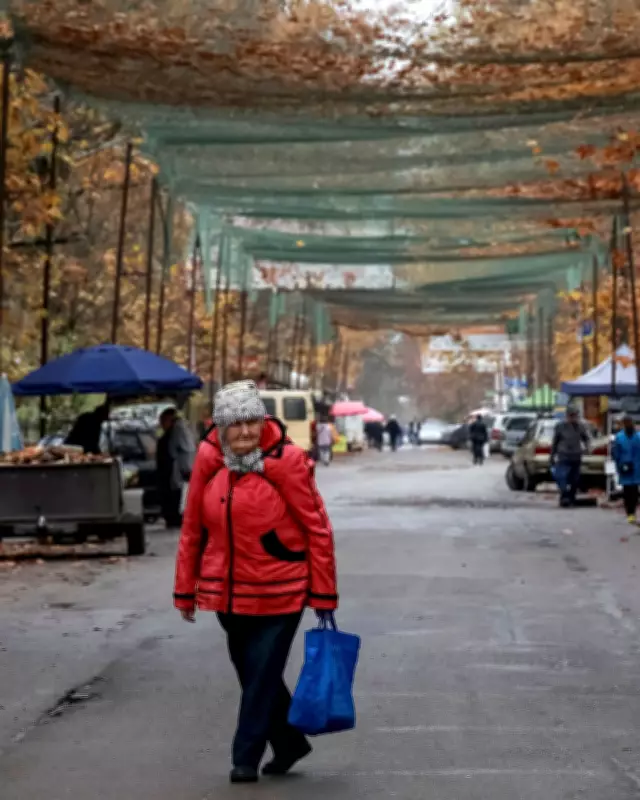
The streets of Kherson present a surreal landscape where everyday activities continue beneath extensive protective measures. Supermarket and shop windows are boarded against shrapnel, while numerous buildings bear the scars of artillery and glide bomb damage. Most strikingly, long stretches of the city's thoroughfares are now draped in anti-drrone netting, creating protective tunnels along key routes including the main coastal approach.
'We are trying to put nets everywhere where people move and walk,' explains Oleksandr Prokudin, Kherson's military governor. 'We have more than 100km of nets already installed. Our goal is to reach 200km within the next two months, with plans for 300km by year's end.'

Underground Sanctuaries
Beneath the city's surface, a parallel world of community and continuity thrives. In one basement shelter, crisis psychologist Galyna Lutsenko works with children using art therapy techniques to help them process the trauma of living under constant bombardment. Her own home was struck by Russian shelling in 2024, leaving her with leg and stomach injuries.
'The children are always under pressure,' Lutsenko observes. 'They experience constant stress, with some becoming too frightened to venture outside after shelling incidents. It's crucial to give them choices that make them feel this isn't just about survival, but about living and experiencing everything around them.'
These underground spaces serve multiple purposes simultaneously. While Lutsenko conducts therapy sessions, other rooms in the same complex host yoga classes, dance rehearsals, and craft workshops where older women screen-print T-shirts bearing the city's name.
The Perpetual Threat
Kherson's unique position just one kilometre from Russian positions across the Dnipro River creates extraordinary challenges. The city was overrun by Russian forces at the war's beginning in 2022, becoming Ukraine's only occupied regional capital before being liberated nine months later during a lightning Ukrainian offensive.
However, the liberation brought no lasting peace. Russian forces dug in on the river's opposite bank have launched escalating attacks, including the notorious 'drone safari' of May 2024 that saw Russian drones pursuing and killing civilians in Kherson's streets. This campaign directly prompted the extensive anti-drone net installation programme.
Medical Care in Bomb Shelters
The city's main perinatal clinic now operates from an old Soviet-era bomb shelter complete with blast doors and a drone-netted entrance. Located within the dangerous 'red zone' - a one-kilometre-deep strip along the Dnipro waterfront facing Russian positions - the clinic serves approximately 1,000 women monthly.
Khrystyna Furman, 23, currently admitted over premature birth concerns, represents the determination of Kherson's residents. 'Life goes on,' she states simply. 'We live on the outskirts, one of the city's most dangerous areas, but everything is OK. I'm local, all my family are local. This is my home.'
Education Underground
With regular school attendance too dangerous within Kherson itself, educational authorities have relocated facilities to safer underground locations in surrounding areas. In Myroliubivka, just fifteen minutes' drive from the city, school director Larysa Rybachuk oversees classes conducted entirely in basement facilities.
'The first challenge when we started teaching underground was the lack of space,' Rybachuk explains. 'Many children who lived under Russian occupation hadn't ventured beyond their courtyards, so resocialising them presented significant difficulties.'

After expanding the basement space, the school now accommodates 120 pupils who benefit from not having to interrupt lessons for shelter alarms. 'When we don't see the drones, it feels like normal life,' Rybachuk adds, capturing the fragile normality residents strive to maintain.
A Fragile Existence
For those choosing to remain in Kherson, daily routines involve calculated risk assessments. Volodymyr Gorbachevsky, director of the perinatal clinic, lives even deeper in the red zone than his workplace and reports that his apartment block, once home to fifteen families, now houses just three.
'I don't visit cafes or restaurants,' he reveals. 'We stay home using the internet and watching television. I only leave the house when absolutely necessary.'
Military governor Prokudin confirms this cautious approach is widespread. 'Most people avoid going out unless essential. This morning I attended two events and twice had to take cover in a church and shop because drones were spotted. Already today we've had five people injured by drones and artillery, including one child.'
Looking Forward
Despite the dangers, authorities are committed to expanding protective infrastructure. Beyond the anti-drone net programme, Prokudin plans to develop more underground facilities across the region, including clinics and schools situated approximately 30 kilometres from the frontline.
'If we didn't have our current anti-drone protection, Kherson would definitely be a 'grey zone' now,' Prokudin asserts. 'Instead, only the river islands hold that status. While we encourage evacuation from the red zone, most people don't want to leave the region entirely.'
This determination to remain, coupled with innovative protective measures and underground community spaces, defines life in contemporary Kherson - a city where survival and daily living intersect beneath protective nets and within reinforced shelters, as residents steadfastly maintain their connection to home despite unimaginable challenges.