Legal Experts Question Legality of US-Israeli Strikes on Iran and UK's Role
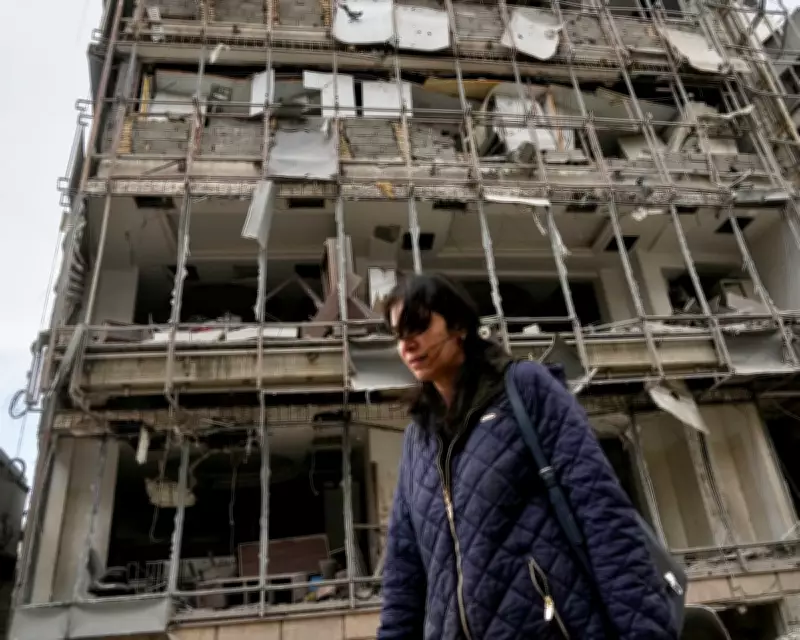
A woman walks past the damaged Gandhi hospital in Tehran, which was hit when a strike struck a state TV communications tower and nearby buildings. The US and Israeli attacks on Iran have reignited tensions in the region, prompting scrutiny from legal experts on the lawfulness of these actions. The UK, while not participating in the initial strikes, announced it would engage in defensive operations, raising further questions under international law.
Were the Initial Strikes by the US and Israel Lawful?
There was a consensus among legal experts consulted that the initial strikes were unlawful. Israeli President Isaac Herzog argued that Iran's alleged plans to develop a nuclear weapon justified the attacks under Article 51 of the UN Charter, which permits self-defense in response to an armed attack. However, experts challenged this interpretation. Susan Breau, a professor of international law, noted that the doctrine of an imminent threat is controversial and lacks evidence in this case. Victor Kattan, an assistant professor of public international law, emphasized that threatening rhetoric alone does not justify pre-emptive force. Several experts pointed to Donald Trump's previous claims about dismantling Iran's nuclear program as countering the notion of an imminent threat.
Is the UK's Position of Conducting a Defensive Operation Lawful?
Legal experts were unanimous in stating that the legality of the UK's defensive operations is unclear. The UK released a summary of its legal position, citing action in the collective self-defense of regional allies who requested support. Under Article 51, such intervention requires a request from the victim. The UK's statement mentioned responding to a US request to facilitate defensive action against Iranian missile facilities. Philippe Sands, a professor of law, expressed concern, arguing that while the UK can defend its own bases if attacked, supporting an unlawful use of force by the US and Israel is problematic. The distinction between defensive and offensive actions remains a key point of debate among legal scholars.

Is Iran in Breach of International Law in Its Response?
Following the attacks, Iran claimed it was acting in self-defense by targeting US and Israeli military bases. However, its response has included strikes on civilian areas, such as a hotel and airport in Dubai, leading to accusations of indiscriminate attacks by figures like Keir Starmer. International humanitarian law prohibits deliberate attacks on civilian targets and actions against countries not involved in the conflict. Legal experts highlight that while Iran may have a right to respond, targeting non-combatant nations and civilian infrastructure could constitute breaches of international law, complicating the legal landscape of the conflict.