

Poll Exposes Australian Skepticism Over US-Israel War and Military Actions
A recent Guardian Essential poll has uncovered significant public dissent in Australia regarding the US-Israel war on Iran and the federal government's military response. The survey, conducted among 1,008 Australians, reveals that only 26% of respondents approve of the bombardment of Iran by the United States and Israel, while 43% disapprove, and 31% remain uncertain or undecided.
Limited Backing for Government's Military Deployment
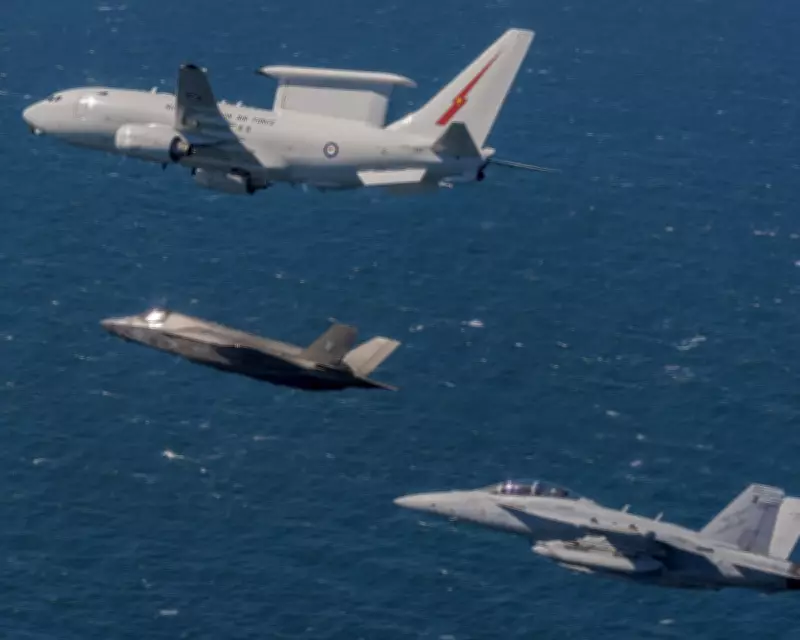
When it comes to Australia's own involvement, support is similarly tepid. Just 32% of those polled endorse the government's decision to send an E-7 Wedgetail surveillance aircraft, missiles, and approximately 85 defense personnel to the United Arab Emirates. In contrast, 35% oppose this move, and a notable 40% express uncertainty about the deployment.
Defence Minister Richard Marles has indicated that the initial four-week deployment of the Wedgetail might be extended, as Australia has received requests from the US to assist in defending Gulf states. However, he emphasized that the aircraft is not directly engaged in the Iran conflict but is providing surveillance support to the Combined Air Operations Centre in Qatar.

Public Prefers Diplomatic Solutions Over Military Escalation
The poll highlights a strong preference for diplomatic initiatives over military intervention. A significant 60% of Australians advocate for working with international organizations to facilitate peace talks and prevent further escalation in the Middle East. Additionally, 37% support offering refuge to civilians displaced by the conflict.
Peter Lewis, Executive Director of Essential Media, commented on the findings, noting that while the US strikes on Iran have some public backing, they are also eroding support for the US alliance. This presents a challenge for the government as it navigates economic pressures and budget considerations.
Shifting Alliances: Australians Favor 'Middle Powers'
The survey also indicates a desire for Australia to recalibrate its foreign relationships. About one-third of respondents prefer distancing from the US in diplomatic and trade ties, with only 21% favoring a closer alliance. Instead, Australians show stronger interest in strengthening bonds with so-called 'middle powers' such as Canada (41%), Japan (37%), and New Zealand (51%).
When asked to choose between prioritizing the US or enhancing ties with countries like Canada, South Korea, and Japan, 65% opted for the latter. This shift comes amid growing global tensions involving major powers like the US, China, and Russia, with recent visits from leaders like Canadian Prime Minister Mark Carney highlighting the potential for increased cooperation among middle-power nations.
Specific Military Actions Face Public Resistance
Detailed responses to potential military actions reveal further public caution. While 37% would support sending naval assistance to address oil supply blockages in the Strait of Hormuz, only 21% back deploying Australian troops for ground operations. Opposition is higher for ground troops, with 50% against such a move, compared to 30% opposing naval support.
Minister Marles remained non-committal on whether Australia would participate in a naval mission in the Strait of Hormuz, stating that decisions would be made in consultation with allies. He underscored the significance of the current Wedgetail deployment as a substantial contribution to regional defense efforts.
Overall, the poll underscores a complex public sentiment in Australia, blending wariness of military entanglements with a clear preference for diplomatic engagement and strengthened ties with alternative global partners.






