

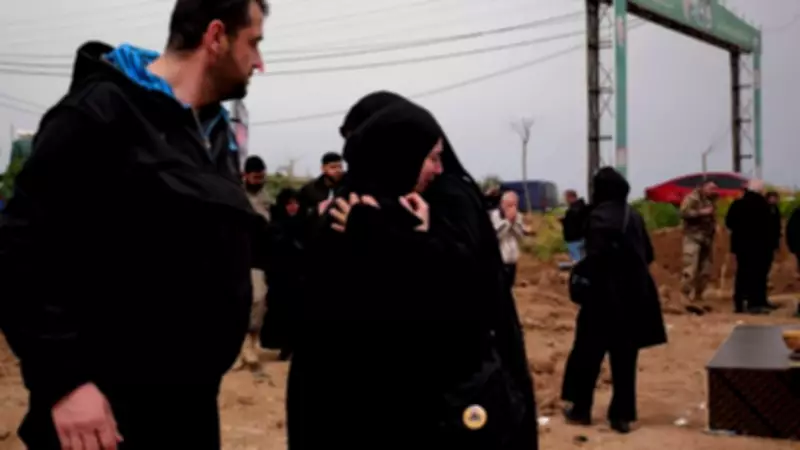
Mourners Gather at Makeshift Cemetery in Lebanon's Evacuation Zone
In the evacuation zone of southern Lebanon, a temporary cemetery has emerged as a stark symbol of the human cost of the ongoing conflict between Israel and Hezbollah. Eyewitnesses report scenes of profound grief, with some mourners weeping openly while others stare blankly ahead, gathered around makeshift memorials along roadsides lined with the yellow and green flags of the Iran-backed militant group.
Mounting Casualties and Mass Displacement
The Lebanese Health Ministry has confirmed that more than 800 people have been killed in Lebanon since Israel launched strikes against Hezbollah militants. This devastating toll comes alongside a massive displacement crisis, with hundreds of thousands of Lebanese civilians forced to flee their homes following Israel's mass evacuation orders.
During a recent burial ceremony for four men described by mourners as medics and social workers rather than fighters, cleric Ehsan Dbouk explained the necessity of using temporary burial sites. "We can't bury our martyrs in their villages on the frontline," he stated. "We are dealing with an enemy that doesn't distinguish between killing fighters and killing civilians."

Expanding Evacuation Zone Raises Invasion Fears
The Israel Defence Forces has significantly expanded the evacuation zone in recent days, extending it from the original border area to the Latani River and now further north to the Zahrani River, approximately 25 miles from the Israeli border. This expansion has heightened concerns about a potential ground invasion and created additional displacement pressures on Lebanese communities.
Hezbollah supporters who have remained in the evacuation zone express a battle-hardened determination. Nada Harb, a mother and Hezbollah supporter, recounted her family's traumatic history: "I won't leave, I didn't in the previous wars. I was born in war. But there was no resistance then like Hezbollah. The Israelis used to come at night, break down the door, they kidnapped my brother, my father, my sister, my uncle."
Civilian Infrastructure Under Attack
While the IDF maintains it is targeting Hezbollah's infrastructure and leadership, the civilian impact has been substantial. Critical bridges and buildings used by both militants and civilians have been struck by airstrikes, leaving hundreds of thousands displaced with limited access to power, shelter, or agency in determining their futures.
Ehsan Dbouk dismissed allegations that Hezbollah is dragging Lebanon into an unwinnable conflict, asserting: "The displaced are part of the resistance. Hezbollah was born from their homes. They are the fathers and mothers of those fighting on the frontlines." This perspective highlights the deep ideological divisions fueling the conflict, with both sides viewing the other as an existential threat.
The expanding evacuation zone, growing casualty numbers, and massive displacement crisis underscore the escalating humanitarian emergency in southern Lebanon as the conflict shows no signs of abating.






