Mass Funeral in Tehran Draws Thousands to Honor Slain Security Chief and Navy Crew
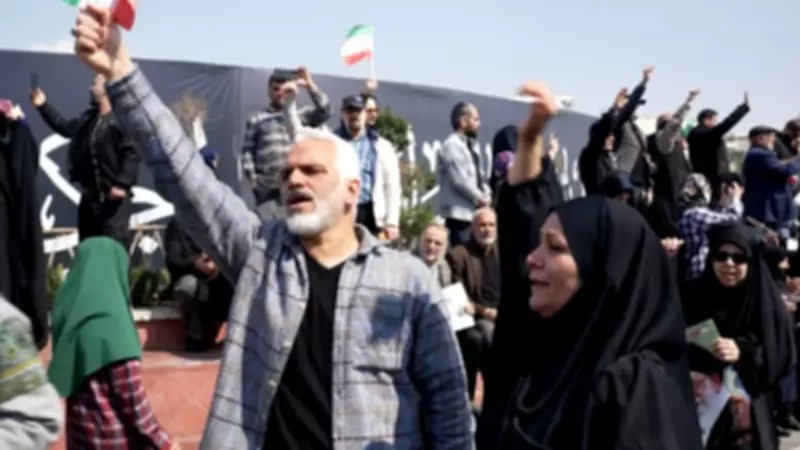
In a powerful display of solidarity, thousands of Iranians flooded Revolution Square in Tehran on Wednesday for the combined funeral of senior security official Ali Larijani and the crew of an Iranian navy ship sunk by the United States. The event, marked by emotional scenes of grief and defiance, highlighted the enduring support for Iran's government as it faces ongoing military conflicts.
Emotional Tributes and Political Messages
Floats carrying the coffins of the slain officials were driven through the square, surrounded by mourners who wept and held posters of Iran's former and current supreme leaders. Women in the crowd were seen clutching images of the leaders, their tears mingling with chants of resistance. One man held a placard with a stark message directed at the US president, stating, "Trump, soon we will kill you; Netanyahu is not our target anymore, our target is you. You killed our children to mock us and we will kill you to teach you a lesson in history." This rhetoric underscores the deep-seated anger and determination among supporters, who view the assassinations as acts of weakness by their adversaries.
Public Unity and Government Resilience
Despite pre-war protests that saw thousands of civilians and hundreds of security forces killed, according to authorities, today's funeral demonstrated significant public backing for the leadership. Mohammed and his wife, Hamideh, attended with their children to express unity against US and Israeli actions. Mohammed commented, "The method of our weak enemy martyring him [Ali Larijani] shows its weakness and impotence. The way he was killed was very unfair and is unacceptable anywhere in the world." This sentiment reflects a broader narrative that Iran's culture of martyrdom, rooted in religious beliefs, fuels resistance rather than submission.

Limitations of Aerial Bombing Strategies
The scenes in Tehran also shed light on the challenges faced by strategies aimed at coercing Iran through airstrikes. Sepora, a protester holding a placard with an old Persian poem, explained its meaning: "It says, 'if we are killed, all of us one by one, it's better than giving our country to the enemy.' It is our country, we will not surrender." This culture of no surrender, vividly on display, suggests that bombing campaigns may harden resolve rather than achieve regime change, as sought by Israel and America.
Broader Context and Support Dynamics
While opposition groups have blamed authorities for crackdowns on past protests, the government maintains that foreign forces instigated the unrest. From today's events, it is clear that many Iranians continue to support the leadership, partly due to economic dependence. The funeral, one of the largest since the war began, underscores the complex interplay of loyalty, survival, and resistance in Iran's current political landscape.