Middle East Conflict Intensifies with Beirut Airstrikes and Regional Attacks
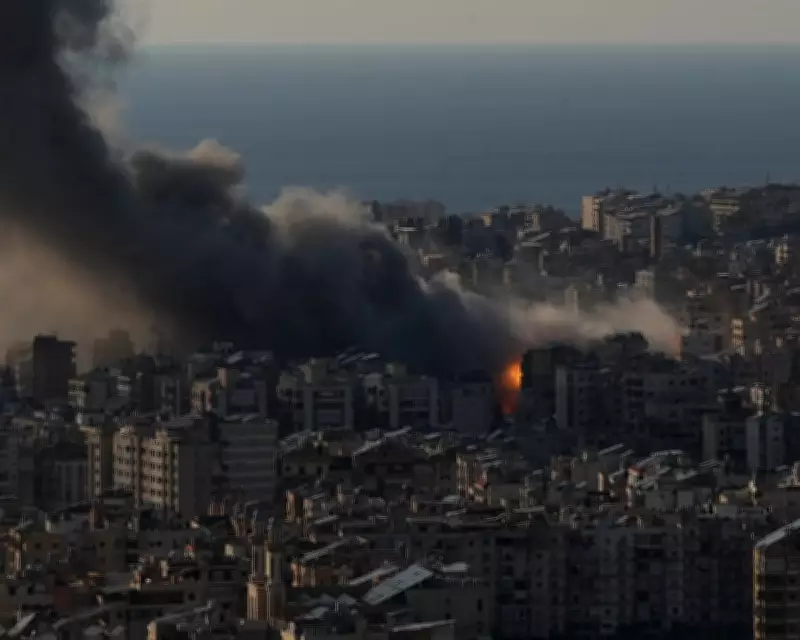
Flames and thick smoke engulfed the skyline of Dahiyeh, a southern suburb of Beirut, Lebanon, on Monday following intense Israeli airstrikes. The dramatic escalation marks a significant expansion of the joint US and Israeli military campaign against Iran, which has now spread across at least nine countries within a mere ten-hour period, resulting in widespread casualties and substantial destruction.
Regional Warfare Expands Rapidly
The conflict, triggered by the US and Israeli assault on Iran, witnessed a fresh wave of strikes targeting Iranian territory. According to the Iranian Red Crescent Society, the death toll in Iran has surpassed 500 individuals since hostilities commenced, with more than 130 cities coming under attack. Israel simultaneously launched aggressive assaults into Lebanon after Hezbollah retaliated against northern Israel for the Saturday strike that killed Iran's supreme leader, Ayatollah Ali Khamenei.
Iranian forces responded with coordinated attacks across a vast 2,000-kilometer region, targeting oil infrastructure and other strategic assets. From the Gulf of Oman, where a drone boat exploded against an oil tanker, to Cyprus, where drones struck a British military base, the conflict's geographical reach expanded dramatically.

Friendly Fire Incident and Allied Targets
In a significant development, Kuwait's air defenses mistakenly shot down three American F-15E fighter jets during an Iranian attack. All six crew members were safely recovered, but video footage captured one aircraft spiraling from the sky with its engine ablaze before crashing and exploding. Black smoke billowed above the area surrounding the US embassy in Kuwait, where emergency services responded with heavy security, ambulances, and fire trucks.
US allies throughout the Gulf region came under direct assault. Loud explosions rocked Dubai and Samha in the United Arab Emirates, along with Doha, Qatar's capital. Saudi Arabia was forced to shut down its largest refinery after drone strikes ignited fires, marking one of several oil installations targeted in the coordinated attacks.
European Theater and Strategic Implications
The conflict reached European allies when a drone struck Britain's Akrotiri airbase in Cyprus overnight. Both British and Cypriot authorities confirmed limited damage and no casualties from this first strike against US allies in Europe. The broader campaign to remove Iran's leadership represents the most significant US foreign policy gamble in decades, with President Donald Trump urging Iranians to overthrow their government and warning that air operations could continue for weeks.
Within Iran, uncertainty prevails as residents clog highways fleeing urban centers under bombardment. The Iranian Red Crescent Society reported 555 fatalities nationwide, while Israeli officials claimed their Monday strikes targeted command centers and senior regime leaders. Casualty figures show 11 deaths in Israel and 31 in Lebanon according to official reports.
Diplomatic Maneuvering and Military Strategy
European allies initially distanced themselves from Trump's decision to initiate warfare, questioning its legal justification against an imminent threat. However, they subsequently committed to suppressing Iran's retaliatory capabilities after Tehran targeted their regional partners. A senior White House official revealed that Washington would eventually engage in talks with Tehran, though not immediately, stating that Operation Epic Fury continues unabated.
Iran's leadership transition remains uncertain following Khamenei's death. Elected President Masoud Pezeshkian announced a temporary leadership council comprising himself, the judiciary head, and a Guardian Council member assuming supreme leader duties. Meanwhile, Ali Larijani, head of Tehran's Supreme National Security Council, declared Iran would not negotiate with Trump, asserting the country has prepared for prolonged conflict.

Economic and Global Consequences
The strategic Strait of Hormuz, through which approximately twenty percent of global oil trade passes along Iran's coast, has seen shipments halted due to Iranian threats and tanker attacks. Oil prices surged by double-digit percentages when markets opened Monday, while stock markets declined worldwide. Iran's Revolutionary Guards claimed responsibility for striking three US and UK oil tankers in the Gulf and Hormuz Strait, along with drone and missile attacks on military bases in Kuwait and Bahrain.
Global air travel experienced severe disruptions as airstrikes forced major Middle Eastern airports to close. Shipping data revealed hundreds of vessels, including oil and gas tankers, anchoring in nearby waters for safety. Despite concerns about nuclear facilities, International Atomic Energy Agency chief Rafael Grossi confirmed no indication that Israeli and US attacks have damaged Iran's nuclear installations, though Iran's nuclear program remains a cited justification for the military campaign.