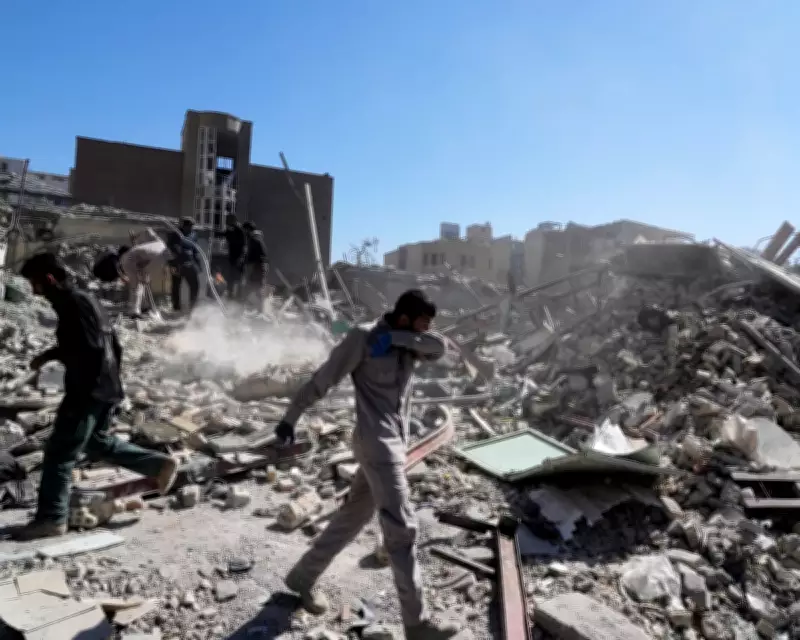
Middle East Conflict Intensifies with Devastating Civilian Toll in Iran
Iranians gathered on Tuesday to survey the wreckage of a police station in Tehran that was destroyed by airstrikes, as the conflict in the Middle East continues to escalate dramatically. The strikes, part of a broader regional war now entering its fourth day, have resulted in significant civilian casualties according to multiple human rights organizations.
Civilian Death Toll Mounts Amid Communication Blackout
A near-total internet blackout across affected areas has made verifying casualty figures extremely challenging. However, the Human Rights Activists news agency, a US-based NGO monitoring Iranian human rights, reports that US-Israeli airstrikes have killed at least 742 civilians, including 176 children, with hundreds more cases currently under review. The Iranian Red Crescent Society has reported a death toll of 787 people, while Norway-based Hengaw organization places the count at approximately 1,500, including 200 civilians and 1,300 Iranian military personnel. All organizations emphasize these numbers are likely to increase as the conflict continues.
Meanwhile, Iranian drones have targeted the US embassy in Riyadh as Tehran continues launching retaliatory strikes against Gulf states and Israel. Concurrently, Israeli military operations have expanded into southern Lebanon, marking a significant geographical expansion of the conflict.

Legal Questions Surround Pre-emptive Strikes
International legal experts have raised serious concerns about the legality of the initial attacks on Iran. There appears to be no evidence of an imminent threat from Iran that would justify these strikes under international law, according to Susan Breau, a professor of international law and senior associate research fellow at the Institute of Advanced Legal Studies. The US Constitution specifically grants Congress the exclusive power to formally declare war, yet President Trump did not seek congressional approval before authorizing the military action.
The justification for the war has shifted significantly since hostilities began. Initially, President Trump cited "imminent threats" to Americans and the need to prevent Iran from developing nuclear weapons, while also encouraging Iranians to overthrow their government. More recently, Secretary of State Marco Rubio stated that Israel's determination to attack Iran independently, combined with the certainty that US troops would be targeted in response, forced the Trump administration to launch pre-emptive strikes.
International Response and Economic Implications
European nations have responded cautiously to the escalating conflict. Spain has denied the United States permission to use jointly operated military bases on its territory for what it termed an "unjustified" assault on Iran. President Trump has criticized the United Kingdom for taking what he called "far too long" to approve American use of its airbases for military operations.
The economic consequences are already becoming apparent, particularly regarding global energy markets. The Strait of Hormuz, a critical global shipping route controlled by Iran through which approximately one-fifth of global seaborne oil passes, is now effectively closed. This closure has caused oil prices to surge dramatically, raising concerns about a new wave of global cost-of-living pressures affecting consumers worldwide.
Regional Security Warnings and Conflict Duration
The US State Department has issued urgent travel warnings, advising Americans to immediately leave more than a dozen countries across the Middle East, including Saudi Arabia and the United Arab Emirates, as the security situation deteriorates rapidly. President Trump acknowledged on Monday that while initial projections suggested the US campaign might last four to five weeks, the conflict could potentially "go far longer than that."
The conflict represents the most significant regional military engagement in the Middle East in recent years, with multiple nations now involved either directly or through proxy forces. The humanitarian situation continues to worsen as civilian infrastructure sustains damage and displacement increases across affected regions.